Flows SE then W into Wood River just below Fortress Lake
52.3697 N 117.9175 W — Map 083C05 — Google — GeoHack
Name officially adopted in 1921
Official in BC – Canada
Boundary Commission Sheet 26 (surveyed in 1920)

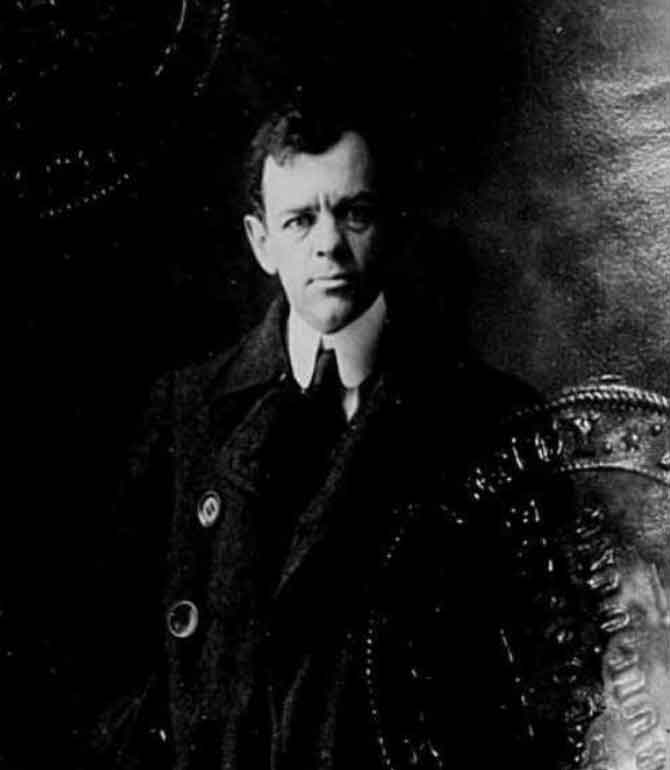
Stanley Washburn,1916
(Passport Application)
Find a Grave

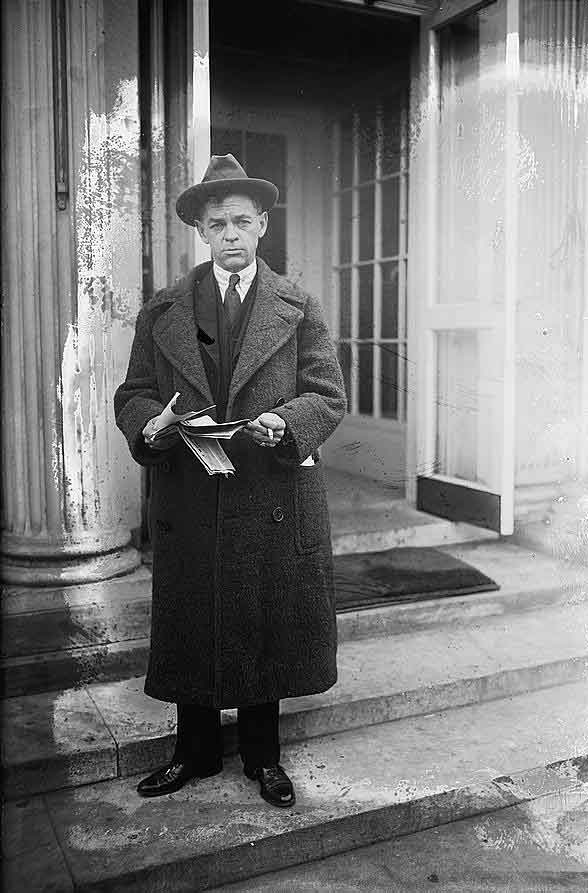
Major Stanley Washburn, 1923
Library of Congress
Stanley Washburn [1878–1950]
b. 1878 — Minneapolis, Minnesota, USA
d. 1950
Journalist. Was born at Minneapolis, Feb. 7, 1878; son of William Drew and Elizabeth M. (Muzzy) Washburn. Educated at Williams Colloge, Mass., class of 1901, also short time at the Harvard Law School. Received degrees: A.B.Honorary Member Japanese Red Cross Society: Decorated by Emperor of Japan with order of the Imperial Crown. Was in local journalism in Minneapolis from 1901 to Jan., 1904, serving as police reporter, market editor, Sunday editor and editorial writer. Went to the Far East and became special war correspondent of the Chicago Daily News, commanding their despatch boat Fawan for four months in front of Port Arthur, being twice captured by the Russians. Later jointed the Third Japanese Army under Nogi at the siege of Port Arthur. Covered a war scare in the Balkans, and in 1905 (Jan.) was at St. Petersburg for the Revolution. Rejoined Army in Manchuria, where he remained until end of hostilities. Commanded despatch boat France in the Black Sea during late fall of 1905, on the occasion of Russian Revolution, carrying dispatches and mails for four powers and bringing out cargo of refugees from Batuum, then in state of anarchy. Occasional contributor to magazines. Member Delta Psi Fraternity, Masons, Minneapolis Club, Commercial Club and numerous other organizations.
Buried in Arlington National Cemetery, Virginia, USA, tombstone inscribed:
“Major, U. S. Army, Lt. Col. Military Intelligence Reserves.”
Author of several books, including Trails, Trappers and Tenderfeet in the New Empire of Western Canada, chronicling trips in the Yellowhead Pass area in 1901 and 1909. Stanley’s friend psychologist Lydiard Horton, his classmate at Williams, was the “Mountain Philosopher” of Trails Trappers and Tenderfeet.
The first European explorers travelling through the Forks were Alexander Mackenzie [1764–1820] in 1793 and Simon Fraser [1776–1862] in 1805.
Aboriginal trails laced the valleys for thousands of years. With the Klondike Gold Rush, the Canadian government sought to identify safe overland routes for prospectors to reach the Yukon from Edmonton. As water transport could be expensive, these were intended as wagon trails. The initial NWMP Trail, surveyed during 1897–98 by Inspector J.D. Moodie with First Nations guides, passed along the northeast bank of the Forks. Hordes coming from the south would join the trail here. Prospectors also passed through the vicinity on their way to gold rushes at Barkerville (1860s), Omineca (1871–72), and McConnell Creek (1907–08).
John Norman Collie [1859–1942]
b. 1859 — Alderley Edge, Cheshire, England
d. 1942 — Sligachan, Isle of Skye, Scotland
Collie was a chemist and mountaineer who lived at London, England. Between 1897 and 1911, Collie pioneered climbing in the Canadian Rockies, making twenty-one first ascents including Mount Victoria and Mount Athabasca.
Elizabeth Parker [1856–1944]
b. 1856 — Colchester County, Nova Scotia
d. 1944 — Winnipeg, Manitoba, Canada
Parker was a Canadian journalist in the early 1900s. She attended school in Truro, Nova Scotia, obtained her teaching certificate, married Henry John Parker at the age of 18, moved to Halifax, Nova Scotia and then to Winnipeg. She co-founded the Alpine Club of Canada in 1906 with Arthur Oliver Wheeler [1860–1945].
Hugh Edward Millington Stutfield [1858–1929]
b. 1858 — Turriff, county of Banff, Scotland
d. 1929
Stutfield was a solicitor, an alpine climber, and an author. He accompanied John Norman Collie [1859–1942] on some of his trips to Canada. Stutfield’s talent as a first-rate marksman saved the party from starvation on many an occasion.
He is listed in Foster’s Men-at-the-Bar (p. 453):
Stutfield, Hugh Edward Millington, B.A., Trin. Coll., Camb., 1881, a student of the Inner Temple 12 April, 1880 (then aged 22), called to the bar 17 Nov., 1884 (3rd son of William Stutfield, of Turriff, N.B.); born 1858.
which volume also contains this fragment about Stutfield’s elder brother:
… 1881 (2nd son of William Stutfield, Esq., of Netherdale, Turriff, co. Banff); born y – 19, Old Buildings, Lincoln’s Inn, W.C.
The location Turriff, county Banff, “N.B.”, presumably refers to “North Britain”, or Scotland, as it was sometime called. Netherdale is the name of the particular dwelling, still extant.
The three adventurers associated with the discovery of the Columbia Icefield were Hugh Millington Stutfield, Hermann Woolley and John Norman Collie. Stutfield was a wealthy British stockbroker who through careful and considered investment was able to retire early from the London Stock Exchange and pursue his interest in travel. He was also a crack shot with a rifle and shotgun, a talent that later allowed him to save his fellow climbers from a difficult predicament in Canada with respect to supplies. It was this same talent, however, that caused him to be hunting instead of climbing when the full extent of the Columbia Icefield was discovered in 1898.
— Sandford
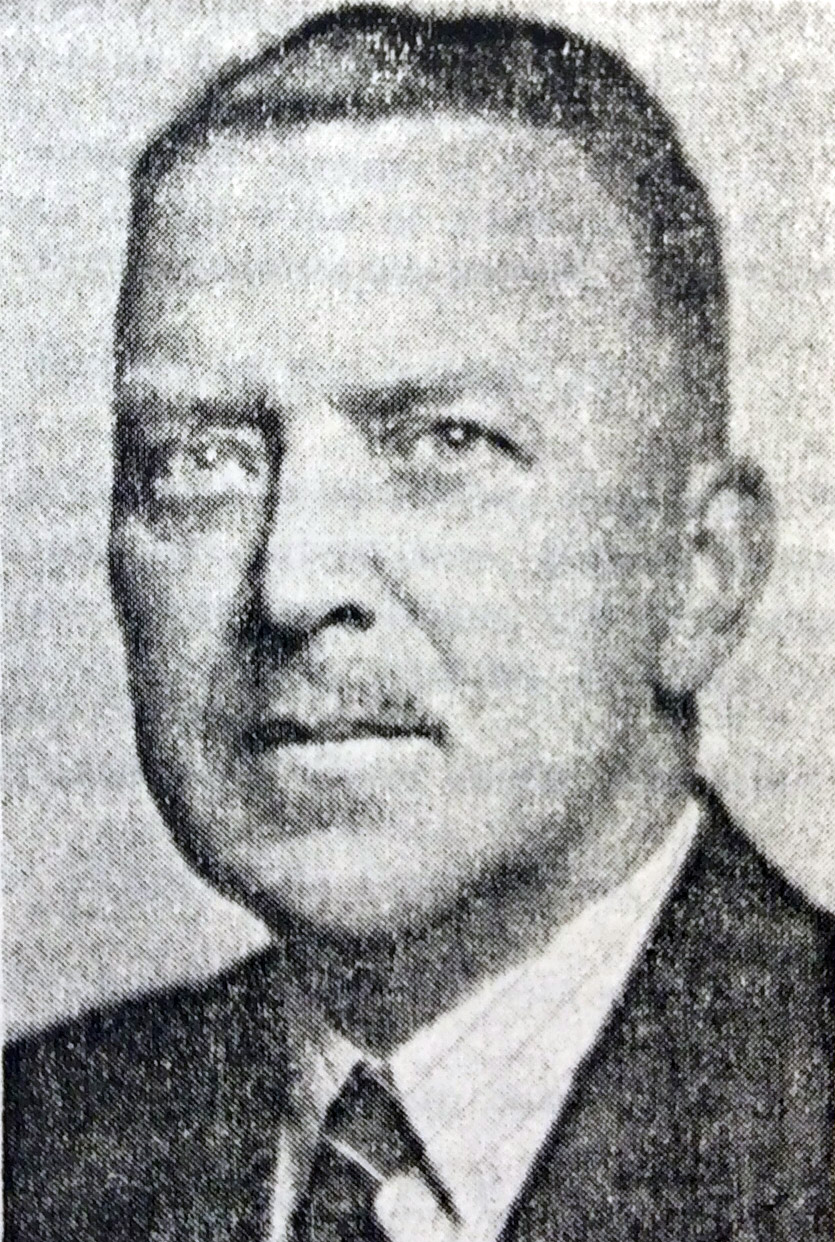
James Alexander Walker B.C.L.S.
b. 1887 — Guelph, Ontario
d. 1959 — Vancouver, British Columbia
Walker was educated in Guelph Public Schools and Collegiate Institute and at the University of Toronto, from which he obtained a diploma in civil engineering in 1908, a bachelor in applied science in 1910, and a post-graduate degree of a civil engineer in 1926. In 1915 Walker entered private practice in civil engineering and surveying, but he gave up this work to enlist with the Canadian Expeditionary Forces. In 1916 he trained in the first course given by the Royal School of Infantry in Esquimalt, B.C. He received his commission as lieutenant in the 72nd Seaforth Highlanders of Canada and trained with Yukon Infantry Company’s 225th Battalion. Being refused for overseas service, he was transferred to the Canadian Field Artillery with headquarters in Ottawa.
After 1919 Walker established a private practice in Vancouver and subsequently served on planning commissions in that city.
Origin of the name unknown, but one can guess.
The Fraser has proved to be invaluable to the building of the Grand Trunk Pacific Railway, despite the fact that so many lives and so much property have been lost in its waters. These accidents have happened mostly through carelessness and ignorance. The chief obstacles to navigation are due to the existence of shifting sand and gravel bars, the Goat Rapids, the Grand Canyon, and the Giscome Rapids, all above Fort George. High water minimizes this danger for the larger craft, but presents sometimes greater dangers for the smaller ones.
— Walker
James Monroe Thorington [1895–1989] visited the area in 1924 with guide Conrad Kain [1883–1934]:
The headwaters of Astoria River are derived in part from Chrome Lake, into which flow rushing streams from the Eremite and Fraser Glaciers; but a somewhat larger creek rises in the Amethyst Lakes, two lovely bodies of water closely connected with one another and lying close below the stupendous east wall of the Ramparts….
Hurrying up some rising grassy slopes we were soon among the enormous morainal blocks below the glacier, and in a few minutes had rounded a tiny blue marginal lake to the ice itself. Past a corner of Outpost the circle of little peaks bounding Eremite Glacier presented themselves in snowy line. Eastward we looked down upon the curious yellow brilliancy of Chrome Lake, and into the Astoria Valley where Mount Edith Cavell raises a shaly, snowless gable to a sharp point wholly unlike the great white face one sees from Jasper.
The area was the site of the Alpine Club of Canada’s Eremite Valley Camp in 1934.