Category Archives: Place

Mount Ross Cox

Alberta-BC boundary. Mount
N of Hooker Icefield
52.4586 N 118.0181 W — Map 083D08 — GoogleGeoHack
Name officially adopted in 1921
Official in BCCanada

Ross Cox [1793–1853] was an Irish clerk in the Pacific Fur Company and the North West Company, later writing of his experiences. Cox was born in Ireland and emigrated to America in 1811, becoming a clerk in the Pacific Fur Company. He arrived in Fort Astoria in 1812, the primary station of the PFC. Due to the War of 1812 the company was liquidated and sold to the North West Company in 1813. He then became a clerk with the North West Company, but he retired 1817, crossing the Athabasca Pass. Cox returned to Ireland. He became the Irish correspondent for the London Morning Herald as well as a clerk in the Dublin police office. He married Hannah Cumming in 1819, and had several children. He died in Dublin.

Cox’s Adventures on the Columbia River (London, 1831) is one of the most important documents relating to the later history of the North West Company.

References:

  • Cox, Ross [1793–1853]. Adventures on the Columbia River, including the narrative of a residence of six years on the western side of the Rocky Mountains, among various tribes of Indians hitherto unknown: together with a journey across the American continent. 1831. University of British Columbia Library
Also see:

Scott Creek

Alberta. Creek: Athabasca River drainage
Flows into Middle Whirlpool River near Continental Divide
52.4842 N 118.1081 W — Map 083D08 — GoogleGeoHack
Name officially adopted in 1935
Official in Canada

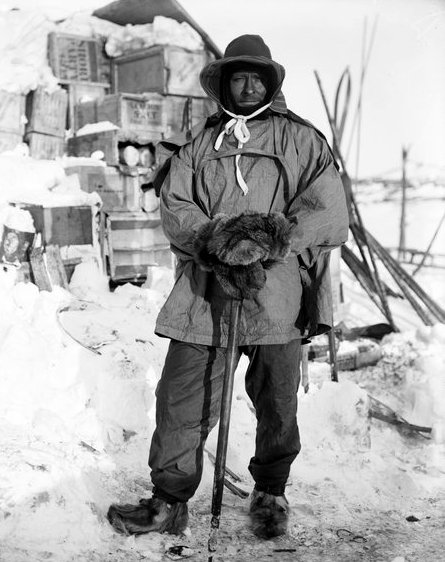
Named in reference to Mount Scott.

Mount Fryatt

Alberta. Mount
Between Divergence Creek and Fryatt Creek
52.55 N 117.9103 W — Map 083C12 — GoogleGeoHack
Name officially adopted in 1947
Official in Canada
Captain Charles Fryatt, ca. 1915

Captain Charles Fryatt, ca. 1915
Wikipedia

Named in 1921 after Charles Algernon Fryatt [1872 –1916], a British merchant seaman who was court martialled by the Imperial German Navy for attempting to ram a German U-boat in 1915. When his ship, the SS Brussels, was captured off occupied Belgium in 1916, Captain Fryatt was court-martialled under German military law and sentenced to death for “illegal civilian warfare.” International outrage followed his execution by firing squad near Bruges, Belgium. In 1919, his body was reburied with full honours in the United Kingdom.

The name was conferred by surveyor Arthur Oliver Wheeler [1860–1945] of the Alberta-British Columbia Boundary Commission, who worked the area in 1920:

The south branch [of the Whirlpool River] is the main stream. …. Near the upper end it turns and leads to a large glacier, being divided into two parts by a thickly forested elevation rising between them. The glacier which has undoubtedly originated the gravel flat, is the surplus discharge of a broad icefield at the northeastern corner of which stands Mt. Scott, and Mt. Hooker at the southwestern. The name “Scott” was given to a mountain and to the glacier by A. L. Mumm, Vice-President of the Alpine Club (England), after the celebrated explorer who lost his life in his famous expedition to discover the South Pole. In 1913 Mumm and Geoffrey Howard visited Athabasca Pass in an endeavour to elucidate the mystery of Mts. Brown and Hooker. It appears, however, that the name Mt. Scott was conferred upon the mountain that was named Hooker by David Douglas and, in consequence, the name has been transferred to the high mountain at the northeastern corner of the icefield. These gentlemen also appear to have conferred the name Mt. Patricia upon the massif here referred to as Mt. Fryatt. The latter is thought to be more appropriate in conjunction with Mt. Edith Cavell, directly opposite on the other side of the valley of the Whirlpool.

References:

  • Cautley, Richard William [1873–1953], and Wheeler, Arthur Oliver [1860–1945]. Report of the Commission appointed to delimit the boundary between the Provinces of Alberta and British Columbia. Part II. 1917 to 1921. From Kicking Horse Pass to Yellowhead Pass.. Ottawa: Office of the Surveyor General, 1924. Whyte Museum
  • Canadian Board on Geographical Names. Place-names of Alberta. Published for the Geographic Board by the Department of the Interior. Ottawa: Department of the Interior, 1928. Hathi Trust
  • Canadian Rockies Databases. Mount Fryatt

Map of Central Part of Jasper Park Sheet 6

Map of Central Part of Jasper Park, Alberta
Department of the Interior Canada
Sheet Five, Southwest

Map of the Central Part of Jasper Park, Alberta
Department of the Interior Canada
From Photographic Surveys by M. P. Bridgland, D.L S. 1915
Sheet Six, Southeast

References:

  • MacLaren, Ian S. Mapper of Mountains. M. P. Bridgland in the Canadian Rockies, 1902-1930. University of Alberta Press, 2005. Google Books