Author Archives: Swany

Robert Chamberlain Westover Lett [1870–1957]

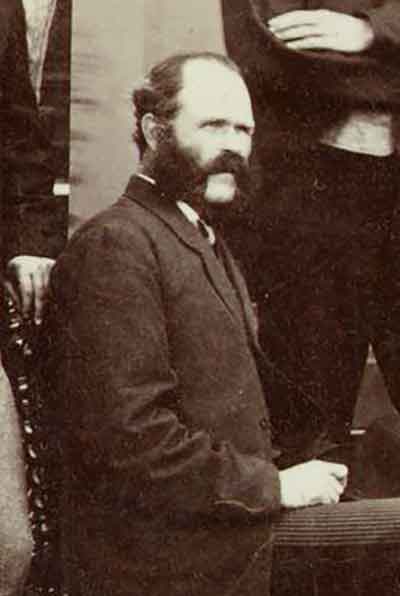
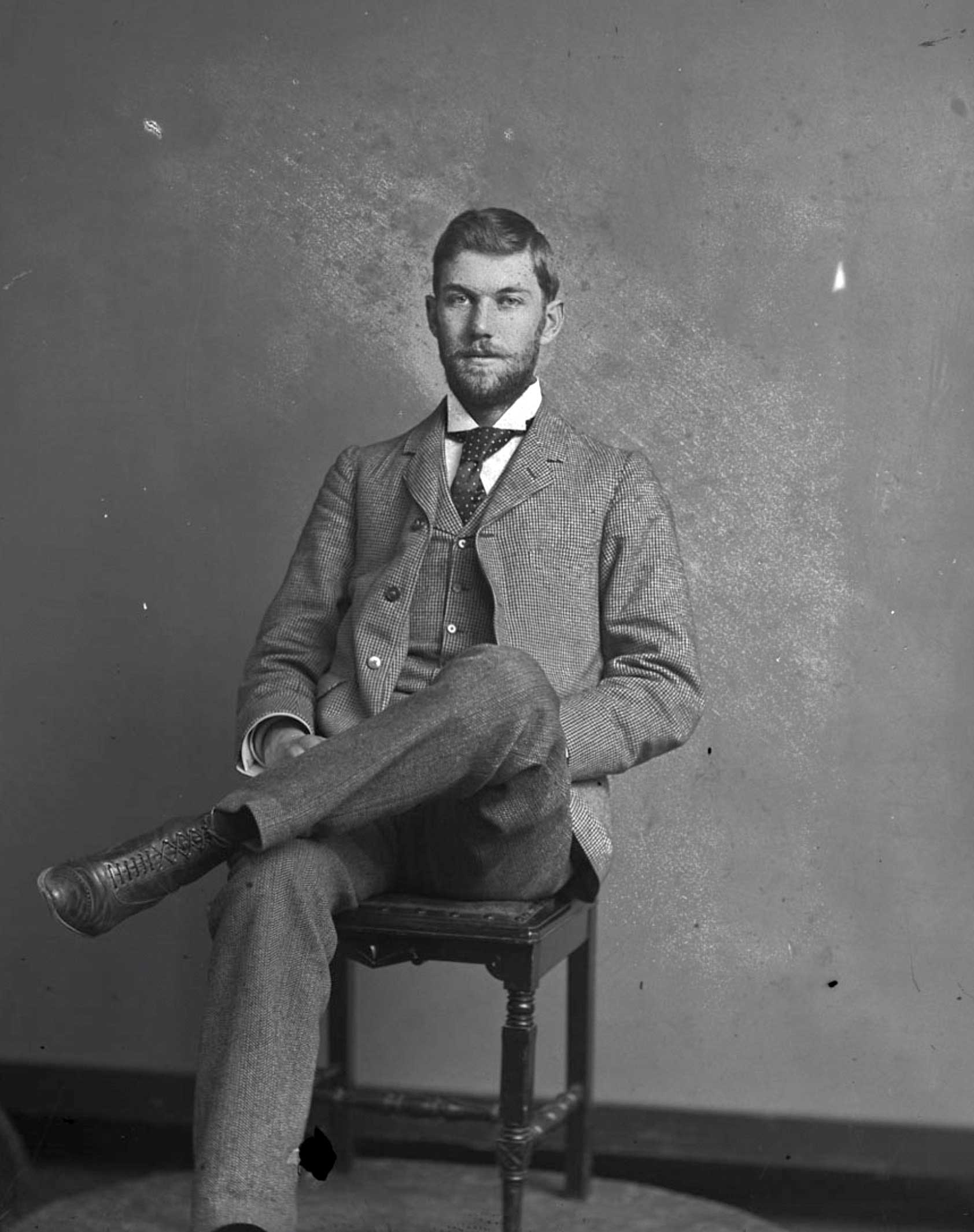
Mr. R. C. W. Lett Photo: William Topley, Ottawa, 1895

Mr. R. C. W. Lett
Photo: William Topley, Ottawa, 1895
Library and Archives Canada [accessed 5 October 2025]


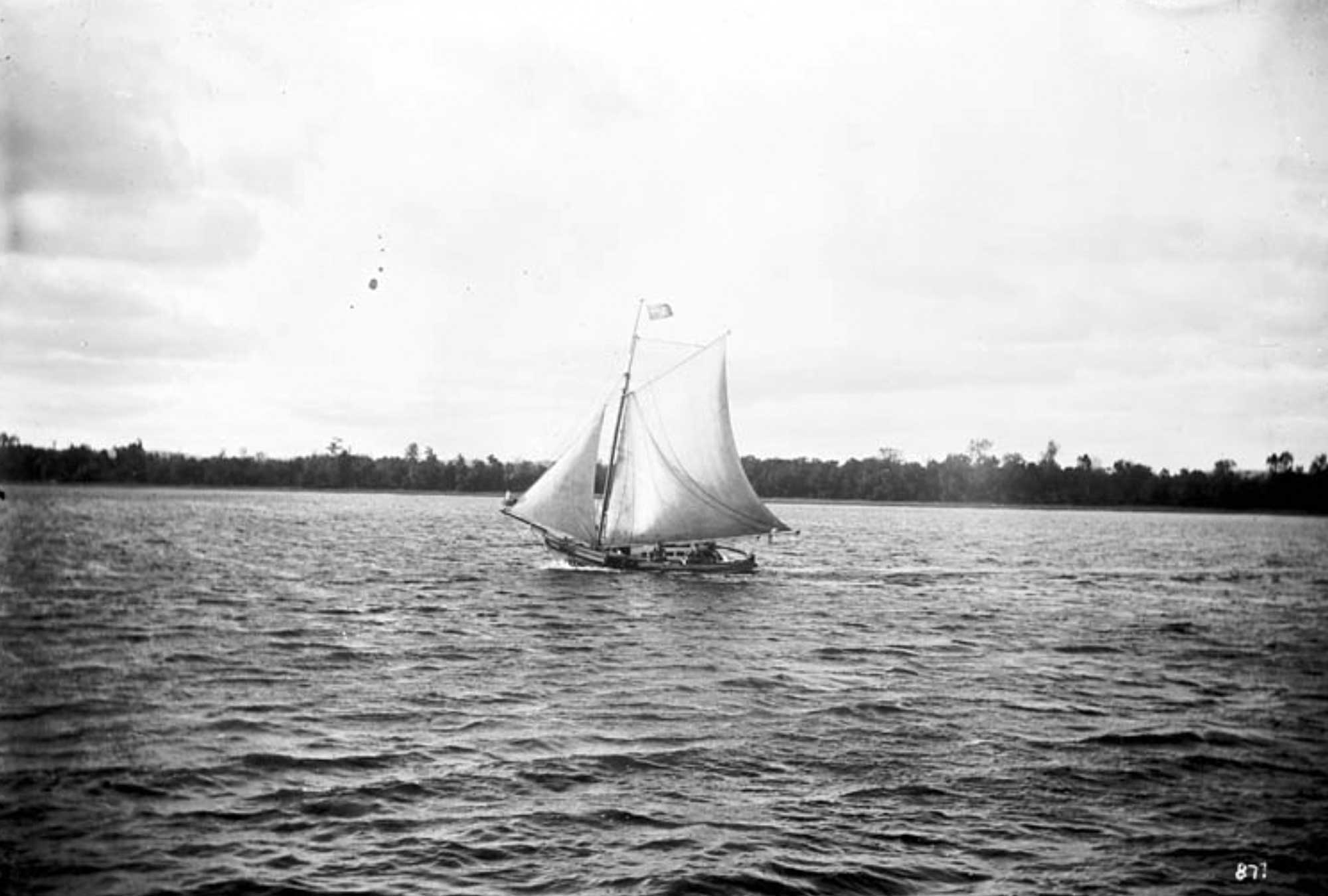
R. C. W. Lett’s Yacht on the Ottawa River Photo: William Topley, Ottawa, n.d.

R. C. W. Lett’s Yacht on the Ottawa River
Photo: William Topley, Ottawa, n.d.
Library and Archives Canada [accessed 5 October 2025]


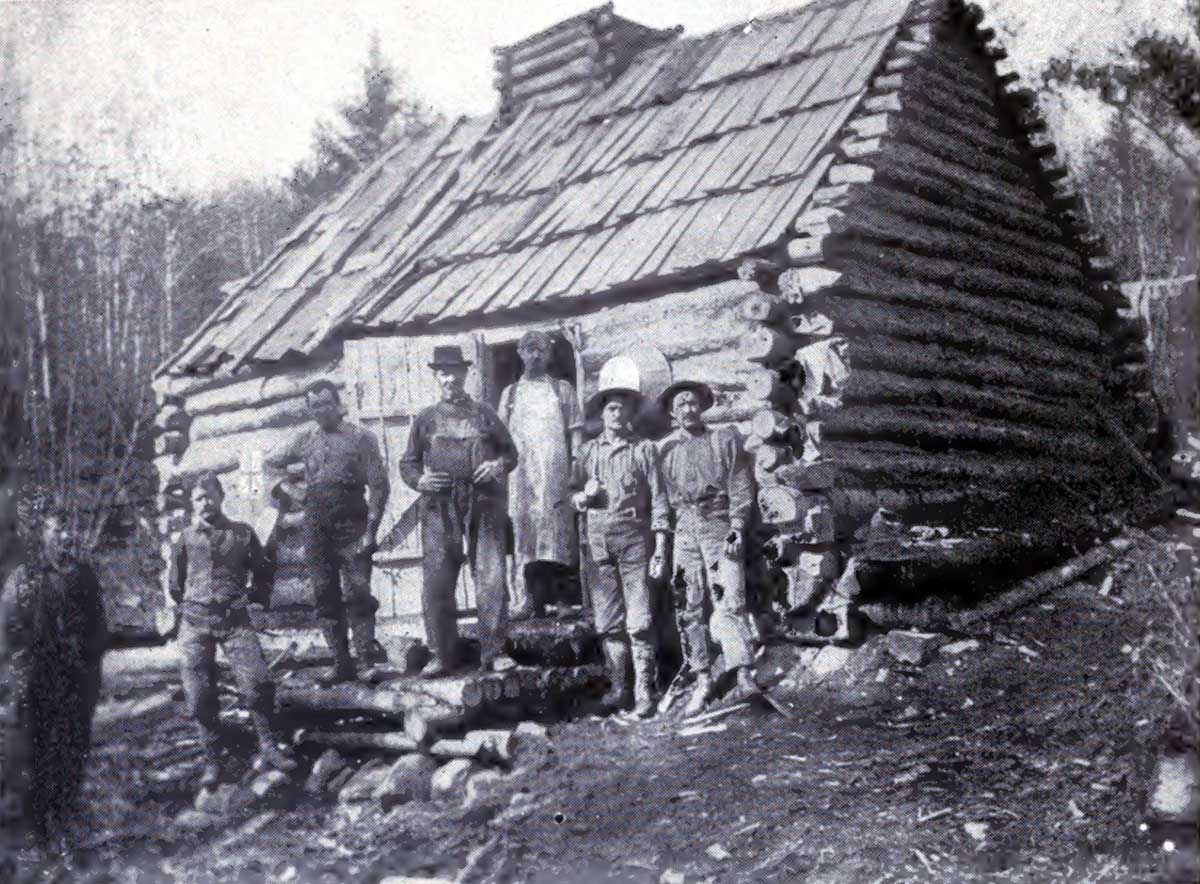
Shack built on Wapoose River by Mr. Lett’s prospecting party with eleven nails. Photo: R. C. W. Lett From Talbot, Making Good in Canada, 1912, frontispiece

Shack built on Wapoose River by Mr. Lett’s prospecting party with eleven nails.
Photo: R. C. W. Lett
From Talbot, Making Good in Canada, 1912, frontispiece
Internet Archive [accessed 4 October 2025]

Robert Chamberlain Westover Lett
b. 21 May 1870 — Ottawa, Ontario, Canada
d. 3 February 1957 — Saanich, BC, Canada

Son of William Pittman Lett [1819–1892] of County Wexford, Ireland, and Maria Hinton [ca. 1828–1881] of Carleton, Upper Canada. In 1912 R. C. W. Lett married Helena Sarah DeCourcy Topley, daughter of photographer William James Topley [1845–1930] of Ottawa, who travelled with the 1914 Arthur Conan Dolye trip to Jasper

Brother of Rebecca Lett, Andrew John Lett, William Pittman Lett II, Anna Elizabeth Lett, Frederick Piercy Austin Lett, Norman Harold Hinton Lett and Maria Dulcibella Lett.
[1].

———— 115 [2]
Frederick Arthur Ambrose Talbot [1880–1924]
The new garden of Canada. By pack-horse and canoe through undeveloped new British Columbia. London: Cassell, 1911

1910:

p. vii
I was one of a party of six which set out from the western fringe of civilisation in Alberta to make the “North-West Passage” by land, threading 1,200 miles of wonderful, practically unknown country-the interior of New Caledonia, or, as it is now officially called, New British Columbia. The party consisted of Harry R. Charlton, Montreal; Robert C. W. Lett, Winnipeg; H. D. Lowry, Washington, U.S.A.; G. Horne Russell, Montreal; a photographer, and myself. The first and third left the party at Tête Jaune Cache to return. The object of my investigations was to form some notion of the economic and scenic value of the country traversed.

Lett, who can manage a dug-out as well as any Indian

shot a bear

p 129
Two legs of bear were lying in the prow, and we were pulling along gaily in the misty morning, when we heard a furious screech over our heads. Looking up, there was a large bald-headed eagle poised about two hundred feet above, and evidently attracted by the sight of the fresh meat. He swooped down a bit, looking a trifle aggressive, and Lett whipped out his Browning automatic and let drive seven shots in rapid succession

p. 209
Lett grabbed up his line and a stick to form an im- promptu rod, ours having been left behind on the Little Smoky River. The dug-out was soon pulling towards the centre of the lake with the troll out. Presently we saw a vicious tug, and an instant later there was a bright flash in the air as the fish made a leap of about ten feet. The fighting and plunging went on for about ten minutes, and then the dug-out came in with a sharp shoot with another quivering specimen lying in the bottom. When weighed it tipped the beam at 8| lb. , and they were two as fine specimens of the trout family as one could desire to land. Our American visitor said they were “fair devils ” when hooked, and would often jump clean over the canoe, while their rushes made the pike’s movements a mere tortoise crawl in comparison. Lett confessed that his catch had given him a lively five minutes, accustomed though he was to all classes of fish found in Canadian river waters.

a competent hunter and fisherman and boatsman

———- 131 [3]

Wheeler, Arthur Oliver [1860-1945 ]. “The Alpine Club of Canada’s expedition to Jasper Park, Yellowhead Pass and Mount Robson region, 1911.” Canadian Alpine Journal, Vol. 4 (1912):9-80

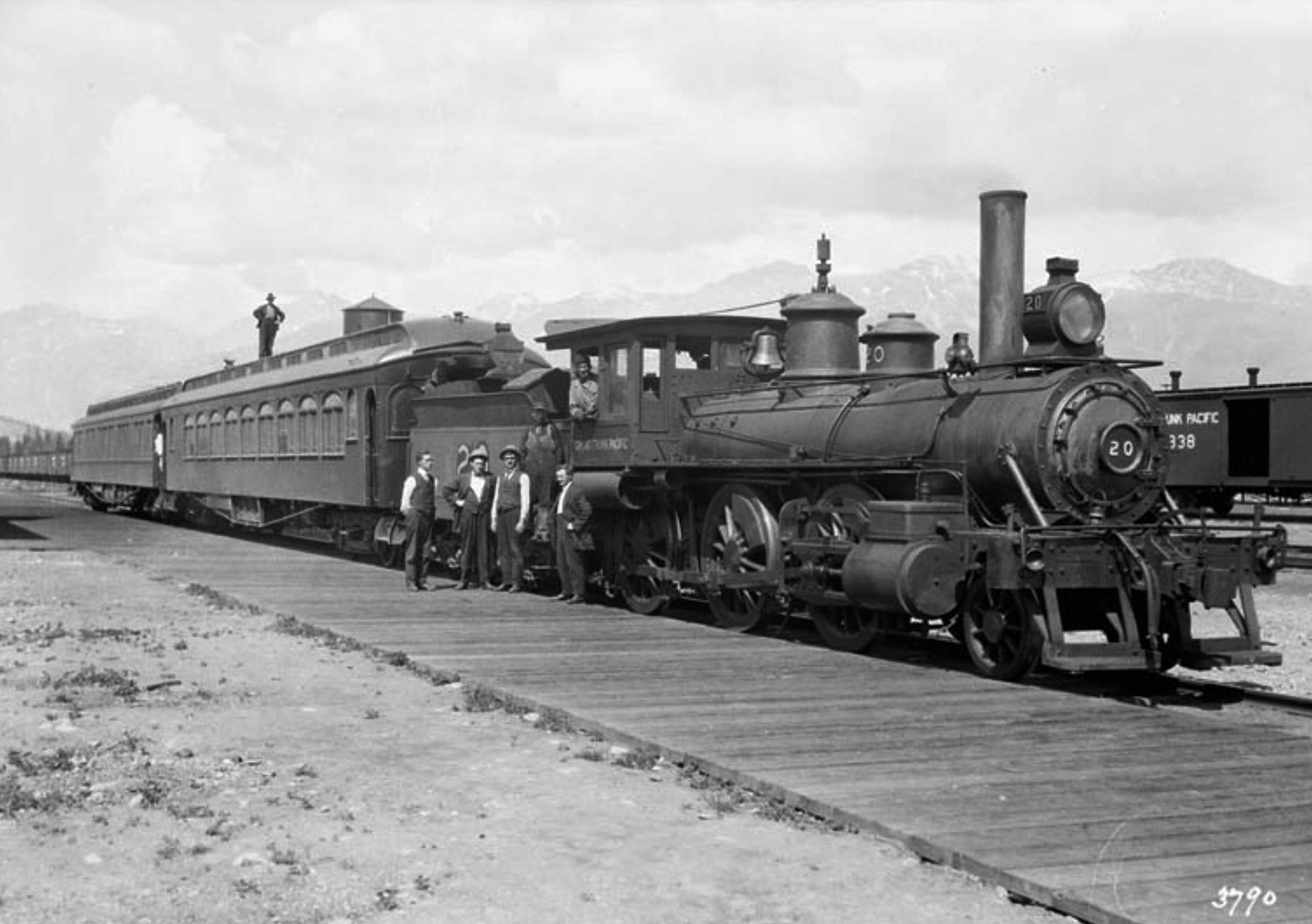
We left Edmonton for the West by the Grand Trunk Pacific train on the 1st July. Attached to the train was the private car of W. P. Hinton, General Passenger Agent. With him were H. R. Charlton, General Advertising Agent, and R. C. W. Lett, Travelling Passenger and Colonization Agent.

——–562 [4]

Talbot, Frederick Arthur Ambrose [1880–1924]. Making Good in Canada. London: Adam and Charles Black, 1912

one of a series of “books for colonists”

The material in the book is undated, other than it is before 1912.

This is the true spirit in which the new arrival must view and attack things Canadian. No calling is too humble ; no occupation should be despised.

Among the occupations: packing, roadbuilding, trapping, wood cutting, game and fre wardens, prospecting, farmingm lumbering, logging, and timber cruising.

let appear in chapter 4, cutting trails and building roads
chapter 5, trapping
chapter 9, game and fire wardens.

p 122
One of the members of our party on this occasion, Mr. Robert C. W. Lett, a few years before had thrown in his lot with these lonely patrollers, for the purposes of restoring his health. The scene of his activity was in Algonquin Park, some way up in the Highlands of Ontario, and he painted me some very powerful pictures of the life of this official under all varying conditions.…

During the summer, life as a game-warden in such a park is enviable to those compelled to drudge in the suffocating and broiling city, because the men spend the whole of their time in the open air, which, bearing in mind the situation and altitude of the reserve, is a most invigorating tonic.

chapter 14, prospecting for minerals
p. 186
A graphic and intimate impression of the adventurous life of the mineral prospector was conveyed to me one night round the blazing camp fire, by my companion on the trail, Robert C. W. Lett. When he broke away from the lonely calling of game-warden in Algonquin Park, he embarked upon a prospecting expedition. Two experienced companions joined him in this pursuit of fortune, the projected field for their labours being one of the innermost recesses of Ontario, which has since gained fame as the Gowganda country.

Shack built on Wapoose River by Mr. Lett’s prospecting party with eleven nails.

————-165 [5]

Grand Trunk Pacific Railway. The Canadian Rockies. Yellowhead Pass Route. Winnipeg: Issued by the General Passenger Department, G.T.P. Railway, 1913
165

R.C.W. Lett, Tourist and Colonization Agent, GTP, Winnipeg, Manitoba

Ealry this year a Bill was passed, setting aside a large area in the Yellowhead Pass district, which will be known as Mount Robson Park. The central feature of this Park will be the famous Mount Robson, the highest peak in the Canadian Rockies, and it is the itnention of the Grand Trunk Pacific Railway Company to build a large up-to-date hotel in the park, from which one of the best views of the mountain will be obtained.

——–260 walcott [6]

With our party in 1912 we had Mr. Harry H. Blagden, who accompanied the expedition in 1911; also Mr. R. C. W. Lett, of the Grand Trunk Pacific Railway, who took many fine photographs the first two weeks of the trip; Sidney S. Walcott, Closson Otto, Dr. I. F. Burgin, and Arthur Brown, all of whom were qualified by experience and physique to overcome the physical obstacles and hardships of the trip.

—-307 Wheeler [7]

The following were in attendance at the Robson Camp:
among the honorary members R. C. W. Lett, GTP Ry,Winnipeg.

———669 doyle [8]

In 1914, R.C.W. held a prominent position with the Grand Trunk Railway and persuaded his father-in-law, the noted Ottawa photographer William James Topley, to photograph Sir Arthur Conan Doyle on his rail trip through Western Canada in June of that year.

——– 920 – dcb topley [9]

Topley and his wife, who died in 1927, spent much of their last years in Edmonton with their daughter, Helena Sarah, and son-in-law, Robert C. W. Lett, an employee of the Grand Trunk Pacific Railway who had probably been influential in the naming of Topley, a community on the GTP line in northern British Columbia.
Events in which Lett took part

References:

  • 1. Robert Chamberlain Westover Lett. 2025. Wikitree [accessed 27 September 2025]
  • 2. Talbot, Frederick Arthur Ambrose [1880–1924]. The new garden of Canada. By pack-horse and canoe through undeveloped new British Columbia. London: Cassell, 1911. Internet Archive [accessed 15 February 2025]
  • 3. Wheeler, Arthur Oliver [1860–1945]. “The Alpine Club of Canada’s expedition to Jasper Park, Yellowhead Pass and Mount Robson region, 1911.” Canadian Alpine Journal, Vol. 4 (1912):9-80. Alpine Club of Canada [accessed 2 April 2025]
  • 4. Talbot, Frederick Arthur Ambrose [1880–1924]. Making Good in Canada. London: Adam and Charles Black, 1912. Internet Archive [accessed 4 October 2025]
  • 5. Grand Trunk Pacific Railway. “The Canadian Rockies. Yellowhead Pass Route.” Whyte Museum 02.6 G76 pam (1913)
  • 6. Walcott, Charles Doolittle [1850–1927]. “The Monarch of the Canadian Rockies.” National Geographic Magazine, (1913):626. Internet Archive [accessed 2 April 2025]
  • 7. Wheeler, Arthur Oliver [1860–1945]. “Report of Mt. Robson camp (1913).” Canadian Alpine Journal, Vol. 6 (1914–1915):179–180
  • 8. Library and Archives Canada. Photo Album 47: Record of a real and a constructed journey to western Canada: a mystery!. 2015. Library and Archives Canada
  • 9. Rodger, Andrew. Topley, William James. University of Toronto, 2005. Dictionary of Canadian Biography, vol. 15 [accessed 28 September 2025]

1906 ACC organized, Mount Robson attempt proposed

March 1906

When the Alpine Club of Canada was organized in 1906, its first president, Arthur Oliver Wheeler [1860–1945], suggested to Arthur Philemon Coleman [1852–1939] that he undertake the conquest of the mountain. [1]

Founding member Elizabeth Parker [1856–1944] presented the rational of the formation of the Alpine Club of Canada:

“The objects of the Club are : (I) the promotion of scientific study and the exploration of Canadian alpine and glacial regions; (2) the cultivation of Art in relation to mountain scenery ; (3) the education of Canadians to an appreciation of their mountain heritage; (4) the encouragement, of the mountain craft and the opening of new regions as a national playground ; (5) the preservation of the natural beauties of the mountain places and of the fauna and flora in their habitat; (6) and the interchange of ideas with other Alpine organizations.”[2]

In addition to these objects, Parker proclaimed the moral virtues of mountaineering:

But the peril is, that men become satiated with wheat, and there, follows that effeteness which is worse than the effeteness of an unbalanced culture. Among other correctives none is more effective than this of the exercise of the mountain-craft. No sport is so likely to cure a fool of his foolishness as the steady pull, with a peril or two of another sort attending, of a season’s mountain climbing in one of those “thrilling regions of thick-ribbed ice” in the wild alpine playground of Canada. The ethical value of mountaineering is a subject upon which our statesmen would do well to ponder; and there is a considerable Canadian Alpine literature from which they may gather data.

Any young man of latent intellectual and moral force, who comes to close grips with the waiting, challenging mountains, and puts one summit after another beneath the soles of his feet, has gained immensely in the Spartan virtues. Moreover, he has, by climbing to these skiey stations and standing face to face with Infinitude, learned some things he may not tell, because they are unspeakable. It is given to very few, to utter such experiences. But there comes to the mountaineer of pure mind and willing spirit the sense of which Wordsworth tells, of the presence interfused in Nature; the presence that dwells among the sheer peaks and in the living air and the blue sky and in the mind of man; the motion and the spirit that rolls through all things.… Browning sums it in his swift way : “which fools call Nature and I call God.

Parker also gave a sketch of the ACC, with a report of its progress up to April 15, 1907:

To begin before the beginning, it was foreshadowed twenty-four years ago on a clear, bracing, sunny day, when Sir Sandford Fleming, K.C.M.G., his son, S. Hall Fleming, the late Principal Grant of Queen’s University, and party with pack train emerged from the slow, difficult forest trail and rested at the welcome meadow on Rogers’ pass. Inspired by the glacier-mountains rising far and high about them, they resolved themselves into a Canadian Alpine Club; elected officers; passed a resolution of gratitude to Major Rogers, discoverer of the pass; proposed the conquest of the most formidable peak in the whole region; drank the Club’s health in a stream sparkling at their feet; and so ended. [3]

References:

  • 1. Parker, Elizabeth J. [1856–1944]. “A new field for mountaineering.” Scribner’s Magazine, 55 (1914)
  • 2. Parker, Elizabeth J. [1856–1944]. “The Alpine Club of Canada.” Canadian Alpine Journal, Vol. 1 (1907):4-6. Alpine Club of Canada [accessed 2 April 2025]
  • 3. Parker, Elizabeth J. [1856–1944]. “Report of the Secretary.” Canadian Alpine Journal, Vol. 1 (1907):124. Alpine Club of Canada [accessed 2 April 2025]

Tah Mountain

Alberta-BC boundary. Proposed name
SW of Moose Pass
53.2333 N 119.0167 W — Map 83E/3 — GoogleGeoHack
Earliest known reference to this name is 1911 (Walcott)
Not currently an official name.
Near view of Tah Peak rising above Moose Pass. On the left Tokana Mountain. Photograph by R. C. W. Lett. Grand Trunk Pacific Railway, 1912. (Walcott p 332)

Near view of Tah Peak rising above Moose Pass. On the left Tokana Mountain.
Photograph by R. C. W. Lett. Grand Trunk Pacific Railway, 1912. (Walcott p 332)

Among the new placenames that Charles Doolittle Walcott [1850–1927] suggested during the 1912 Smithsonian expedition to the Mount Robson area was “Tah (moose) Mountain” (8,817 feet), a peak southwest side of Moose Pass.” Walcott considered Tah to be an “Indian name” for moose

In the photo it’s identified as “Tau Peak,” and Walcott also refers to “Tau Pass.”

The mountain does not have an official name.

References:

  • Walcott, Charles Doolittle [1850–1927]. “Cambrian Formations of the Robson Peak District, British Columbia and Alberta, Canada.” Smithsonian Miscellaneous Collections, Vol. 57, No. 12 (1913):328-343. Smithsonian Institution Archives [accessed 11 April 2025]

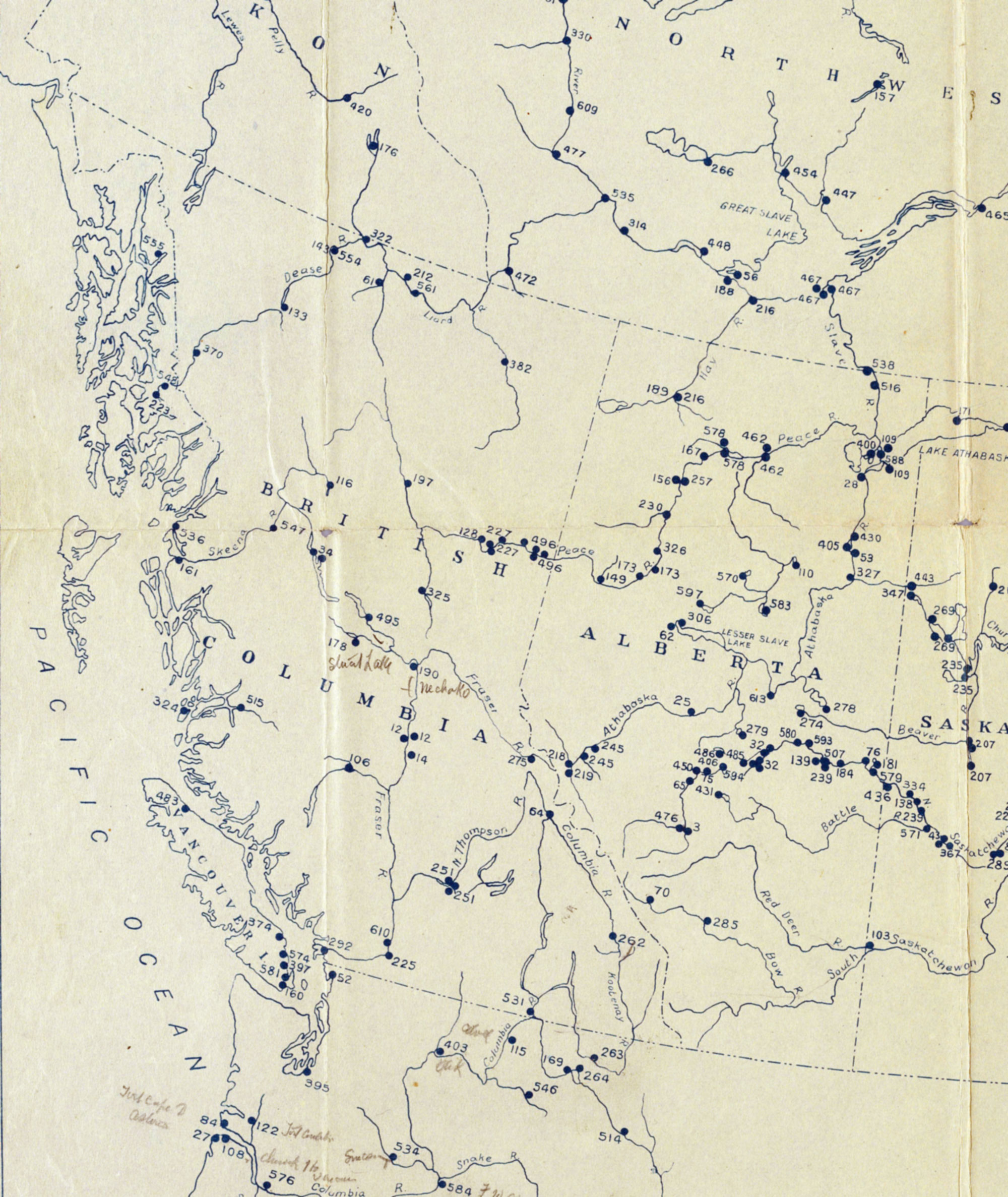
Jörgensen Map Province of BC 1895

Map of the Province of British Columbia, 1895. (Detail)

Map of the Privince of British Columbia, 1895. (Detail) Internet Archive [accessed 16 April 2025]

Map of the Province of British Columbia
Compiled by direction of the Honourable G. B. Martin,
Chief Commissioner of Lands and Works, Victoria, B.C.
Compiled and drawn in the Department of Lands and Works
by Gotfred Jörgensen C.E. 1895

Gotfred Emil Jörgensen (flourished c. 1890–1910) was a Danish-American civil engineer active in British Columbia, Canada, and Washington State in the late 19th and early 20h centuries. Jörgensen is elusive, and there is no record of his birth in Denmark or his relocation to the Pacific Northwest. He lived for a time in Seattle, where he appears in the 1891 directory as a Civil Engineer, but most of his work was done for the British Columbia Department of Lands and Works. In his earliest maps, he appears as a “draughtsman,” by 1891 he is listed as a “civil engineer,” and by 1909 he is the “Survey General of British Columbia.” It is possible he returned to Denmark in the early 20th century. He is most admired for his large-scale maps of Victoria City and British Columbia.

1913 Alpine Club of Canada Camp at Mount Robson

July 28 – August 9, 1913

The Alpine Club of Canada’s eighth camp, organized and superintended by A. O. Wheeler, was held in 1913 in the valley of Lake O’Hara. This “Cathedral Mountain Camp” was followed by a special camp for active members, held at Robson Pass from July 28 to August 9. Sixty-nine persons were in attendance for the full period. The first complete recognized ascent and traverse of Mount Robson was made by one party.[1]

Selected attendees:

References:

  • 1. Wheeler, Arthur Oliver [1860–1945]. “The camps of the Alpine Club of Canada in 1913 and Mr. A.O. Wheeler’s exploratory work.” Alpine Journal, Vol. 28, No.198 (1914):78

1912 Walcott/Smithsonian exploration Mount Robson area

Harry H. Blagden and Sidney S. Walcott skinning ptarmigan at Tah Pass Camp Photo by Charles D. Walcott, 1912

Harry H. Blagden and Sidney S. Walcott skinning ptarmigan at Tah Pass Camp
Photo by Charles D. Walcott, 1912
Archives Society of Alberta

July 26 – September 25, 1912
(Dates based on field notes)

In 1912 Charles Doolittle Walcott [1850–1927] led a Smithsonian Institution expedition exploring the area around the “Monarch of the Canadian Rockies,” Mount Robson. None of his listed publications indicate the dates of the expedition, but his field notes cover the period from July 26 to September 5 [1].

Walcott had already written about the Canadian Rockies in 1911 as a “Geologist’s Paradise” [2], where he noted:

During the past three years an expedition from the Smithsonian has been making an examination of the four miles or more in thickness of bedded rocks forming the main range of the Rocky Mountains that has been pushed eastward by the great mass of the Selkirk ranges to the west.

Walcott was approached by Arthur Oliver Wheeler [1860–1945] to join the 1911 Alpine Club of Canada expedition. Walcott had planned to lead the group of biologists and hunters who did join the expedition, but his wife Helena died in a train accident on July 11. His son Charles Doolittle Walcott Jr. [1889–1913] took part as a hunter.

In 1912 Walcott lead his own expedition. “It was to learn the geology and the record of the life of Cambrian times that led and forced me summer after summer to traverse and live in those grand and beautiful Rockies.” His son Sidney Stephens Walcott, [1892–1977] was among the party, “all of whom were qualified by experience and physique to overcome the physical obstacles and hardships of the trip.” During this trip Walcott proposed many new names and name changes for places in the area, including Tah Pass for Moose Pass.[3]

A Smithsonian Institution publication resulted from the expedition. [4]

People involved:

References:

  • 1. Walcott, Charles Doolittle [1850–1927]. Field notes : Canada, 1907, 1910, 1912-1913, 1916, and undated. 1912. Biodiversity Heritage Library [accessed 12 April 2025]
  • 2. Walcott, Charles Doolittle [1850–1927], and Walcott Jr., Charles Doolittle [1889–1913]. “A Geologist’s Paradise.” National Geographic Magazine, 22, no. 6 (1911). Internet Archive
  • 3. Walcott, Charles Doolittle [1850–1927]. “The Monarch of the Canadian Rockies.” National Geographic Magazine, (1913):626. Internet Archive [accessed 2 April 2025]
  • 4. Walcott, Charles Doolittle [1850–1927]. “Cambrian Formations of the Robson Peak District, British Columbia and Alberta, Canada.” Smithsonian Miscellaneous Collections, Vol. 57, No. 12 (1913):328-343. Smithsonian Institution Archives [accessed 11 April 2025]

Henry John Moberly

Henry John Moberly, July 1926. “When Fur Was King,” frontispiece

Henry John Moberly, July 1926. “When Fur Was King,” frontispiece

Henry John Moberly
b. 2 August 1835 — Penetanguishene, Ontario
d. 9 July 1931 — Duck Lake, Saskatchewan

Henry John Moberly [1835–1931], also known as Harry or Harvey, was a fur trader in the service of the Hudson’s Bay Company [founded 1670 – dissolved 2025] from 1854 to 1894. He entered the Hudson’s Bay Company’s service in 1854, and in 1862 was in charge of the post on Stuart Lake; he gave his name to Moberly Lake in the Peace River country. After nearly 40 years service, retired in Saskatchewan, in 1894 [1].

Henry Moberly’s Métis offspring

John Moberly [1861–1942]

Ewan Moberly [1859–1918]

and grandsons

Adolphus Moberly [1887–?]

and William (Bill) were four of the seven families that were affected by the creation of the “Jasper Forest Park.” An Order in Council was passed in September 1907 by the Canadian Federal Government to create this national park.

  • 1855 HBC trader H. J. Moberly hunting at Jasper
  • 1858 HBC trader H. J. Moberly in charge at Jasper
  • 1862 H. J. Moberly at Fort George
References:

Mount Hardisty

Alberta. Mount
Approximately 26 km south-east of Jasper
52.7047 N 117.8244 W — Map 083C12 — GoogleGeoHack
Name officially adopted in 1912
Topo map from Canadian Geographical Names
This mountain was named by James Hector [1834–1907] in 1859 after Richard Hardisty (1831-1889).

Hardisty was a Chief Trader with the Hudson’s Bay Company [founded 1670], in charge of Fort Charleton, Saskatchewan, in 1857-1858. He was Chief Factor in charge of the Edmonton district for many years after that. He was called to the Senate of Canada 23 February 1888, and died in Winnipeg the following year.

References:

  • Karamitsanis, Aphrodite [1961–]. Place names of Alberta. Volume 1: Mountains, Mountain Parks and Foothills. Calgary: University of Calgary Press, 1991. Internet Archive [accessed 25 February 2025]

James Hector

Sir James Hector at Revelstoke in 1903

Sir James Hector at Revelstoke in 1903
Whyte Museum of the Canadian Rockies

Sir James Hector, M.D., K.C.M.G., F.R.S.,
b. 16 March 1834 — Edinburgh, Scotland
d. 9 November 1907 — Lower Hutt, New Zealand

Sir James Hector, K.C.M.G., F.R.S., was a Scottish-New Zealand geologist, naturalist, and surgeon who accompanied the Palliser expedition[ 1857-1860] as surgeon and geologist. Hector made many important observations regarding the geology and ethnology of the Canadian West and Rocky Mountains, including an 1859 exploration along the Athabasca River from Fort Edmonton almost reaching Athabasca Pass.

At once… Hector went away again with dog-sleds to the northwest. He followed the old Company trail to Fort Assiniboine on the Athabasca River, up that river to Jasper House, on past the mouth of the Miette River, which led to the Yellowhead Pass across the mountains to the Fraser, and on, again, past the mouth of the Whirlpool River. He had hoped to go up this river to the Athabasca Pass, which the Expedition’s instructions had set as the northerly limit of the country to be explored. His guide went lame, so he was forced to content himself with studying the pass from a high vantage-point, from which he thought he could easily identify Mounts Hooker and Brown, on either side of it [1].

Hector returned by Rocky Mountain House and thence back to Edmonton along the route already familiar to him, arriving just in time for the Christmas and New Year festivities, which included a most successful ball given by Mrs. Christie and Palliser.

Fellow member of the Palliser expedition Peter Erasmus [1833–1931] wrote:

Dr. Hector was a tireless worker. His capacity for endurance in any kind of weather was the talk of men around camp. He had four horses to his string and they were not too many for his demands. There was no let up in his persistence, as day after day, all except Sunday, he continued his unending labours to cover as wide a range of territory as possible [2]

He was appointed geologist to the provincial government of Otago, New Zealand, in 1861 and director of the Geological Survey of New Zealand from 1865-1903. He returned to Canada in 1904 to visit some of his previous exploration grounds [3].

Hector’s journals are contained in the Palliser papers:

  • — and Palliser, John [1817–1887]; Spry, Irene Mary Biss [1907–1998], editor. The papers of the Palliser Expedition 1857-1860. Toronto: Publications of the Champlain Society XLIV, 1968. Internet Archive [accessed 3/4/2025]
Hector was involved in these events:

  • 1857 Palliser expedition
  • 1859 Hector to Athabasca River, Henry House
References:

  • 1. Hector, James, M.D., K.C.M.G., F.R.S., [1834–1907]; Palliser, John [1817–1887]; Spry, Irene Mary Biss [1907–1998], editor. The papers of the Palliser Expedition 1857-1860. Toronto: Publications of the Champlain Society XLIV, 1968, p. lxxxvii. Internet Archive [accessed 4 March 2025]
  • 2. Erasmus, Peter [1833–1931]. Buffalo Days and Nights. Calgary: Fifth House, 1999, p. 73. Internet Archive [accessed 9 March 2025]
  • 3. Wikipedia. James Hector

Sekani Indians

Indigenous people

These Indigenous people appear on:
Palliser Map 1863 [as “Beaver and Chickanee Indians”]
James Teit’s map of Shuswap Territory 1909
Map showing the Shuswap Territory. Teit p. 450Map showing the Shuswap Territory. Teit p. 450 [1, /caption]

Sekani or Tse’khene are a First Nations people of the Athabaskan-speaking ethnolinguistic group in the Northern Interior of British Columbia. Their territory includes the Finlay River and Parsnip River drainages of the Athabasca River. The neighbours of the Sekani are the Babine to the west, Carrier (Dakelh) to the south, Dunneza (Beaver) to the east, and Kaska and Tahltan, to the north, all Athabaskan peoples. In addition, due to the westward spread of the Plains Cree Indians in recent centuries, their neighbours to the east now include Cree communities.

Sekani people call their language [tsekʼene] or [tθekʼene] depending on dialect, which appended with Dene (meaning people), means “people on the rocks.” Sekani is an anglicization of this term. Other forms occasionally found, especially in older sources, are Chickanee, Secunnie, Siccanie, Sikani, and the French Sékanais. [2]

Teit’s 1909 map indicates “Area at head of Fraser River, enclosed by broken double lines, temporarily occupied by the Sekanai.”

References:

  • 1. Teit, James Alexander [1864–1922]. The Jesup North Pacific Expedition. Memoir of the American Museum of Natural History. Volume 2, Part 7. The Shuswap. New York: Stechert, 1909. American Museum of Natural History [accessed 10 March 2025]
  • 2. Wikipedia. Sekani