Category Archives: Place
Serpentine Creek
Selwyn (railway point)
Canadian National Railway, W of Red Pass Junction
Not currently an official name.
Grand Trunk Pacific Railway station built in 1912. Formerly Resplendent
Pre-emptor’s map Tête Jaune 3H 1931
Grand Trunk Pacific Railway stations
Probably named after Alfred Richard Cecil Selwyn (1824-1902), director of the Geological Survey of Canada, who in 1871 made a journey from Kamloops to Tête Jaune Cache and ascended the Fraser River some distance above Moose Lake.
Selwyn Range
SW of Moose Lake
52.9167 N 119.1667 W — Map 83D/14 — Google — GeoHack
Earliest known reference to this name is 1898 (McEvoy)
Name officially adopted in 1951
Official in BC – Canada
McEvoy’s map Yellowhead Pass 1900
Wheeler’s map Mount Robson 1912
Jobe’s map Jarvis Pass to Yellowhead 1915

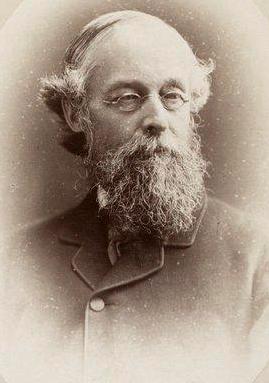
Alfred Richard Cecil Selwyn
Wikipedia

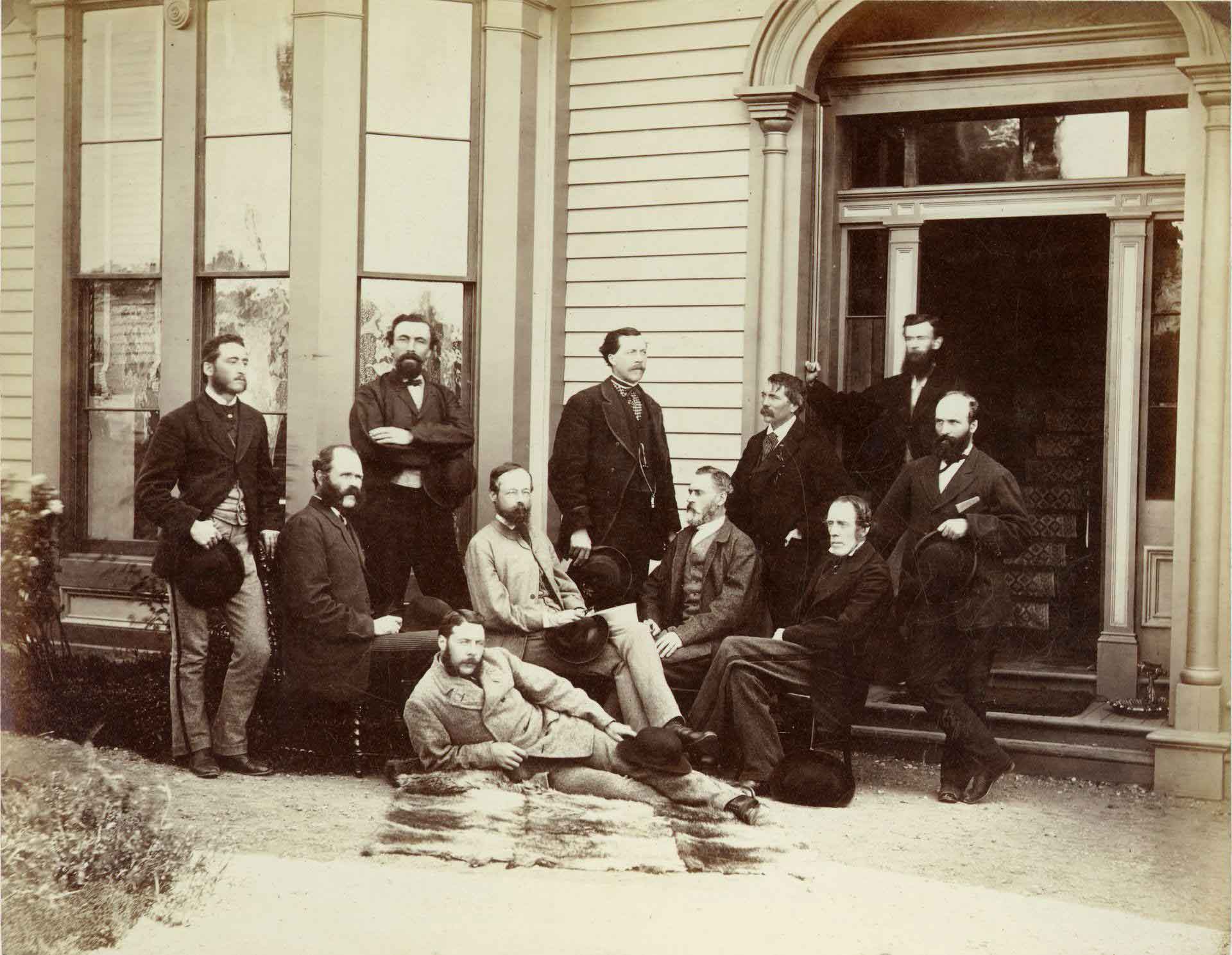
The First Canadian Pacific R.R. and Geological Survey parties for British Columbia, July 22 1871 Left to right : L. N. Rheaumis, Roderick McLennan, A. S. Hall, West West Ireland, Alfred Selwyn, Alex Maclennan, Walter Moberly, C. E. Gilette, James Richardson, — — McDonald, George Watt.
Toronto Public Library
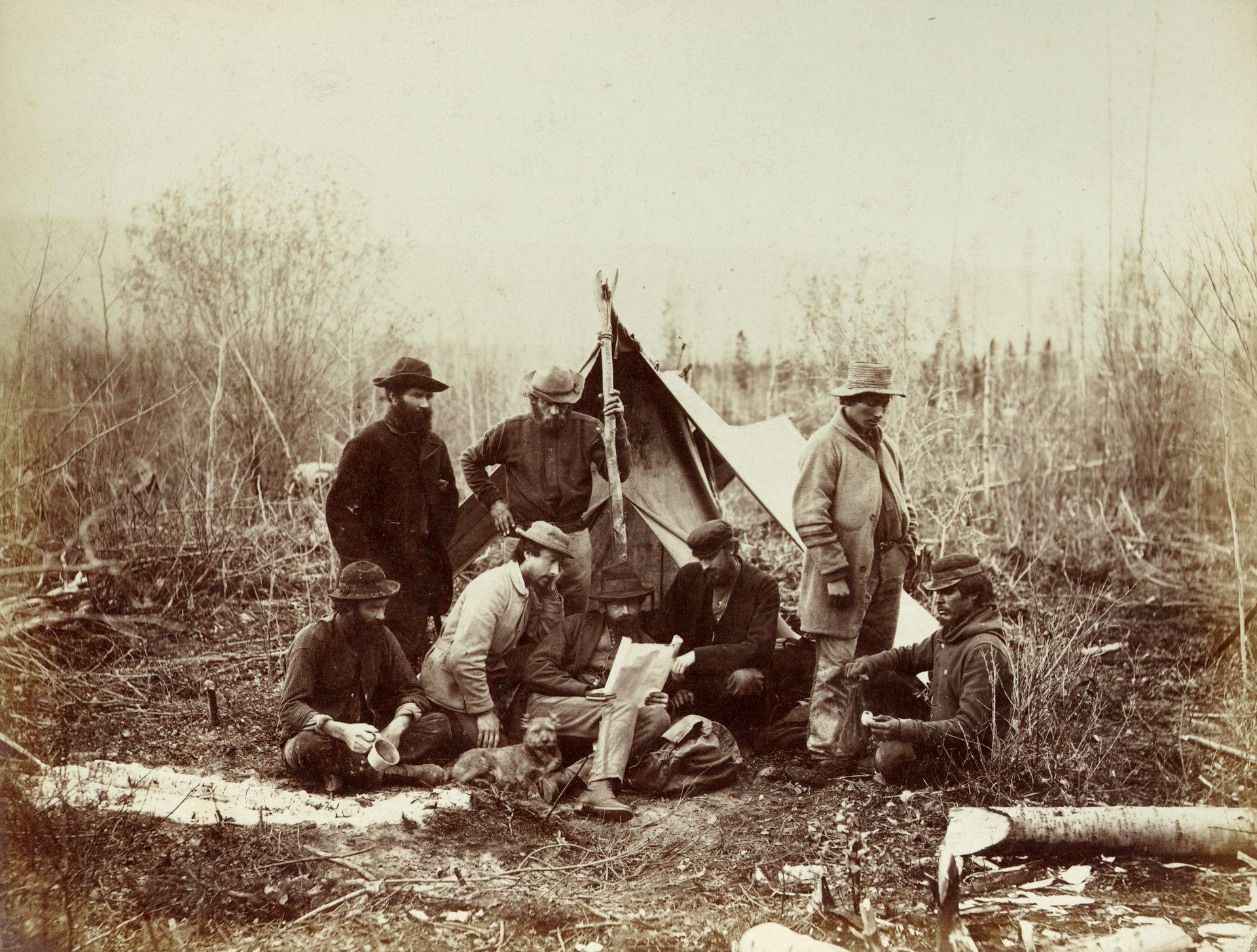
Geological Survey party in camp at Canoe River, October 14, 1871. Alfred Selwyn at centre with John Hammond (left centre) and Benjamin Baltzly (right centre)
Toronto Public Library
“At Moose Lake, the distance to Canoe River is only 18 miles south-westerly in a straight line,” wrote James McEvoy [1862–1935], who surveyed the area in 1898. “The intervening range of mountains, to which the name of Selywn Range is given, delivers most of its waters into the Canoe and McLennan rivers to the south-east, leaving a precipitous descent on the other side from the watershed to the Fraser River.”
In 1871, Alfred Richard Cecil Selwyn (1824-1902), then Director of the Geological Survey of Canada, made a journey from Kamloops to Tête Jaune Cache and ascended the Fraser River some distance above Moose Lake. Selwyn accompanied railway engineer Roderick McLennan on his survey of the Yellowhead Pass, coming along to study the strata of the area. Selwyn made careful notes of the geology in his field book until, somewhere in the Albreda River area, his horse ate the book. In 1875 Selwyn did field work for the Canadian Geological Survey on the Fraser and Peace Rivers.
Selwyn was born at Somerset, England. He was privately educated, and became assistant geologist on the staff of the Geological Survey of Great Britian. From 1852 to 1869 he was director of the Geological Survey of Victoria, Australia. From 1869 until his retirement in 1895 he was director of the Geological Survey of Canada. In 1852 he married Matilda. He was a fellow of the Royal Society, of the Geographical Society, and of the Royal Society of Canada, of which he was president in 1896. He died at Victoria, British Columbia.
- McEvoy, James [1862–1935]. Report on the geology and natural resources of the country traversed by the Yellowhead Pass route from Edmonton to Tête Jaune Cache comprising portions of Alberta and British Columbia. Ottawa: Geological Survey of Canada, 1900. Natural Resources Canada
- McEvoy, James [1862–1935]. “Map Showing Yellowhead Pass Route From Edmonton To Tête-Jaune Cache.” (1900). Natural Resources Canada
- White, James [1863–1928]. “Place names in the vicinity of Yellowhead Pass.” Canadian Alpine Journal, Vol. 6 (1914–1915):107-114
- MacGregor, James Grierson. Overland by the Yellowhead. Saskatoon: Western Producer, 1974. Internet Archive
- Wallace, W. Stewart. MacMillan Dictionary of Canadian biography. Toronto: MacMillan, 1978
- Andrews, Gerald Smedley [1903–2005]. Métis outpost. Memoirs of the first schoolmaster at the Métis settlement of Kelly Lake, B.C. 1923-1925. Victoria: G.S. Andrews, 1985. Internet Archive
Schwarz Ledges
Province: British Columbia
Location: S face of Mount Robson
Perhaps named for Jasper mountain guide Hans Schwarz, who ascended Mount Robson at least 12 times, or perhaps from the German word for black, according to Banff mountain guide Lloyd “Kiwi” Gallagher.
- Jane Lytton Gooch, Mount Robson: Spiral Road of Art, Rocky Mountain Books, 2013
- The Fitzhugh, 19 November 2011
- Personal correspondence
Scarp Mountain
S of headwaters of Geikie Creek
52.6333 N 118.3583 W — Map 083D09 — Google — GeoHack
Name officially adopted in 1951
Official in BC – Canada
Boundary Commission Sheet 28 (surveyed in 1921)
This feature was named by the Alberta-British Columbia Boundary survey in 1921. “Scarp” is short for escarp, a steep bank or wall.
George Monro Grant [1835–1902], on first seeing the Rocky Mountains in 1871, said, “The line was defined, and the scarp as clear, as if they had been hewn and chiselled for a fortification.”
- Grant, George Monro [1835–1902]. Ocean to Ocean: Sandford Fleming’s Expedition through Canada in 1872. Being a Diary Kept During a Journey from the Atlantic to the Pacific with the Expedition of the Engineer-in-Chief of the Canadian Pacific and Intercolonial Railways. Toronto: James Campbell and Son, 1873. Google Books
- Cautley, Richard William [1873–1953], and Wheeler, Arthur Oliver [1860–1945]. Report of the Commission appointed to delimit the boundary between the Provinces of Alberta and British Columbia. Part II. 1917 to 1921. From Kicking Horse Pass to Yellowhead Pass.. Ottawa: Office of the Surveyor General, 1924. Whyte Museum
- Cautley, Richard William [1873–1953], and Wheeler, Arthur Oliver [1860–1945]. Report of the Commission Appointed to Delimit the Boundary between the Provinces of Alberta and British Columbia. Parts IIIA & IIIB, 1918 to 1924. From Yellowhead Pass Northerly. Ottawa: Office of the Surveyor General, 1925. Whyte Museum
Scarp Glacier
Athabasca River and Fraser River drainages
N of Scarp Mountain
52.6483 N 118.3567 W — Map 83D/9 — Google — GeoHack
Name officially adopted in 1951
Official in BC – Canada
Boundary Commission Sheet 28 (surveyed in 1921)
Sawyer Road
Sansom Road
Forks S off First Avenue, SW of McBride
Roads are not in the official geographical names databases
Robert Roland Sansom (1892-1976) and Dorothy (b. 1904) Sansom moved to the McBride area in 1932. Robert, a native of Stanley, New Brunswick, was a conductor on the Canadian National Railway, and a member of the Farmers Institute and Elks. Dorothy, born in North Dakota, was active in the McBride Women’s Institute.
- Wheeler, Marilyn. The Robson Valley Story. McBride, B.C.: Robson Valley Story Group, 1979
Sand Creek
Former name for Tête Creek
52.9694 N 119.4642 W Google — GeoHack
Not currently an official name.
McEvoy’s map Yellowhead Pass 1900
Collie’s map Yellowhead Pass 1912
Pre-emptor’s map Tête Jaune 1919
W. A. D. Munday’s map Cariboos 1925 [now Tête Creek]
- McEvoy, James [1862–1935]. “Map Showing Yellowhead Pass Route From Edmonton To Tête-Jaune Cache.” (1900). Natural Resources Canada