Author Archives: Swany

Mount Mackenzie King

British Columbia. Mount
W of headwaters of Canoe River, Premier Range
52.7758 N 119.7508 W — Map 083D13 — GoogleGeoHack
Name officially adopted in 1962
Official in BCCanada
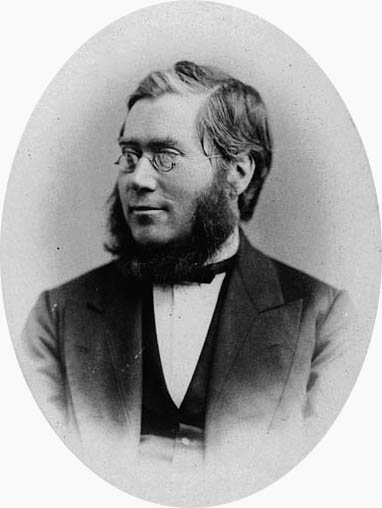
William Lyon Mackenzie King, 1945

William Lyon Mackenzie King, 1945
Wikipedia

The prominence was named in 1962 for William Lyon Mackenzie King [1874-1950], Canadian prime minister 1921-30 and 1935-48.

King was prime minister in 1927, during the celebration of the Diamond Jubilee of Confederation. One of the suggestions from the National Committee for the Celebration of the Diamond Jubilee of Confederation was to name mountains in the area now known as the Premier Range after prime ministers of Canada or Great Britain or premiers of British Columbia. In 1962, King garnered one of the peaks.

The mountain was known as “Hostility Mountain” since Walter Don Munday’s description of his 1925 attempt. In 1963 the Alpine Club of Canada was informed by the director of the Geographical Branch that “Hostility Mountain” was now “Mount Mackenzie King.”

References:

  • Munday, Walter Alfred Don [1890–1950]. “In the Cariboo Range – Mt. David Thompson.” Canadian Alpine Journal, Vol. 15 (1925):130-136
  • Anon. “Place names in the Premier Range, Cariboo Mountains, B.C.” Canadian Alpine Journal, Vol. 46 (1963):20
  • British Columbia Geographical Names. Mount Mackenzie King

Mount John Oliver

British Columbia. Mount
Head of Tête Creek
52.8839 N 119.6853 W — Map 083D13 — GoogleGeoHack
Name officially adopted in 1928
Official in BCCanada

Walter Alfred Don Munday [1890–1950] and Phyllis Munday [1894–1990] named this peak “Mount Aspiration” in 1925, but in the commemorations of the Premier protocol, it was renamed to honour John Oliver [1856–1927], premier of British Columbia from 1921 to 1927.

Born in England, Oliver moved to Ontario with his family in 1870, and five years later moved to Delta, B.C. In 1886, he married Elizabeth Woodward, and they had five sons and three daughters. He was elected to the provincial legislature in 1900. His appearance was that of the successful farmer with his heavy tweeds, solid boots, and cloth cap. As leader of the opposition Liberal party, Oliver lost his seat in 1909. He was re-elected in 1916, when the Liberals formed the government, and was appointed minister of Agriculture and Railways. In 1918, at the death of Harlan Brewster, Oliver became premier. Under Oliver’s leadership, the sale of liquor became a government monopoly, and “John Oliver’s drug stores” opened in various parts of the province.

Oliver visited McBride in 1925. His daughter taught school and was principal in McBride in the early 1920s.

References:

  • Jackman, S. W. Portraits of the premiers: An informal history of British Columbia. Sidney, B.C.: Grey’s Publishing, 1969
  • Robson Valley Courier. Weekly newspaper published by Pyramid Press of Jasper from 1968–88 (1968–1988).

Mount David Thompson

British Columbia. Former unofficial name
Mount Sir John Thompson
52.7333 N 119.7333 W GoogleGeoHack
Not currently an official name.
This former unofficial name appears on:
W. A. D. Munday’s map Cariboos 1925 [now Mount Sir John Thompson]

Originally named “Mount David Thompson” in 1924 by the climbing party of Allen Carpé [1894–1932] and Rollin Thomas Chamberlin [1881–1948], in the mistaken belief that the nearby pass was the true source of the North Thompson River (see W. A. D. Munday’s explanation and sketch map). The mountain was subsequently renamed in the Premier Range commemorations. Oddly, the mountain now sports the name of another Thompson.

Carpé’s other 1924 names, David Pass and David Glacier, were retained.

The names applied by Mr. Carpé have been replaced by the Geographic Board as follows: Mt. David Thompson is Mt. Sir John Thompson…

References:

  • Carpé, Allen [1894–1932]. “Albreda Mountain.” Canadian Alpine Journal, Vol. 16 (1927–1927):177
  • Munday, Walter Alfred Don [1890–1950]. “River Sources in Cariboo Mountains.” Canadian Alpine Journal, Vol. 17 (1928):76

Mount Machray

Alberta-BC boundary. Mount
W of Salient Mountain
53.0475 N 118.7775 W — Map 083E02 — GoogleGeoHack
Name officially adopted in 1923
Official in BCCanada
A formal portrait of The Most Reverend Robert Machray, taken near the end of his life.

A formal portrait of The Most Reverend Robert Machray, taken near the end of his life.
Wikipedia

After Most Reverend Robert Machray, D.D., [1831-1904], an Anglican bishop and missionary and the first Primate of the Church of England in Canada (now called the Anglican Church of Canada). In 1865, he became Bishop of Rupert’s Land (in Canada), becoming archbishop of the province when his diocese was split in 1875. At the first General Synod of Canadian Anglicans in 1893 he was unanimously elected as the first Primate of All Canada, serving in the position until his death. In 1893, he was appointed a Prelate of the Order of St Michael and St George. He died unmarried at Winnipeg.

Honoured in the Calendar of Saints of the Anglican Church of Canada with a feast day on 10 March.

References:

  • Holmgren, Eric J., and Holmgren, Patricia M. Over 2,000 place names of Alberta. Saskatoon, Saskatchewan: Modern Press, 1973. Internet Archive
  • Wikipedia. Robert Machray

Lunn, Mount

British Columbia. Mount
Near headwaters of Castle Creek
52.9936 N 120.4522 W — Map 093A16 — GoogleGeoHack
Name officially adopted in 1966
Official in BCCanada

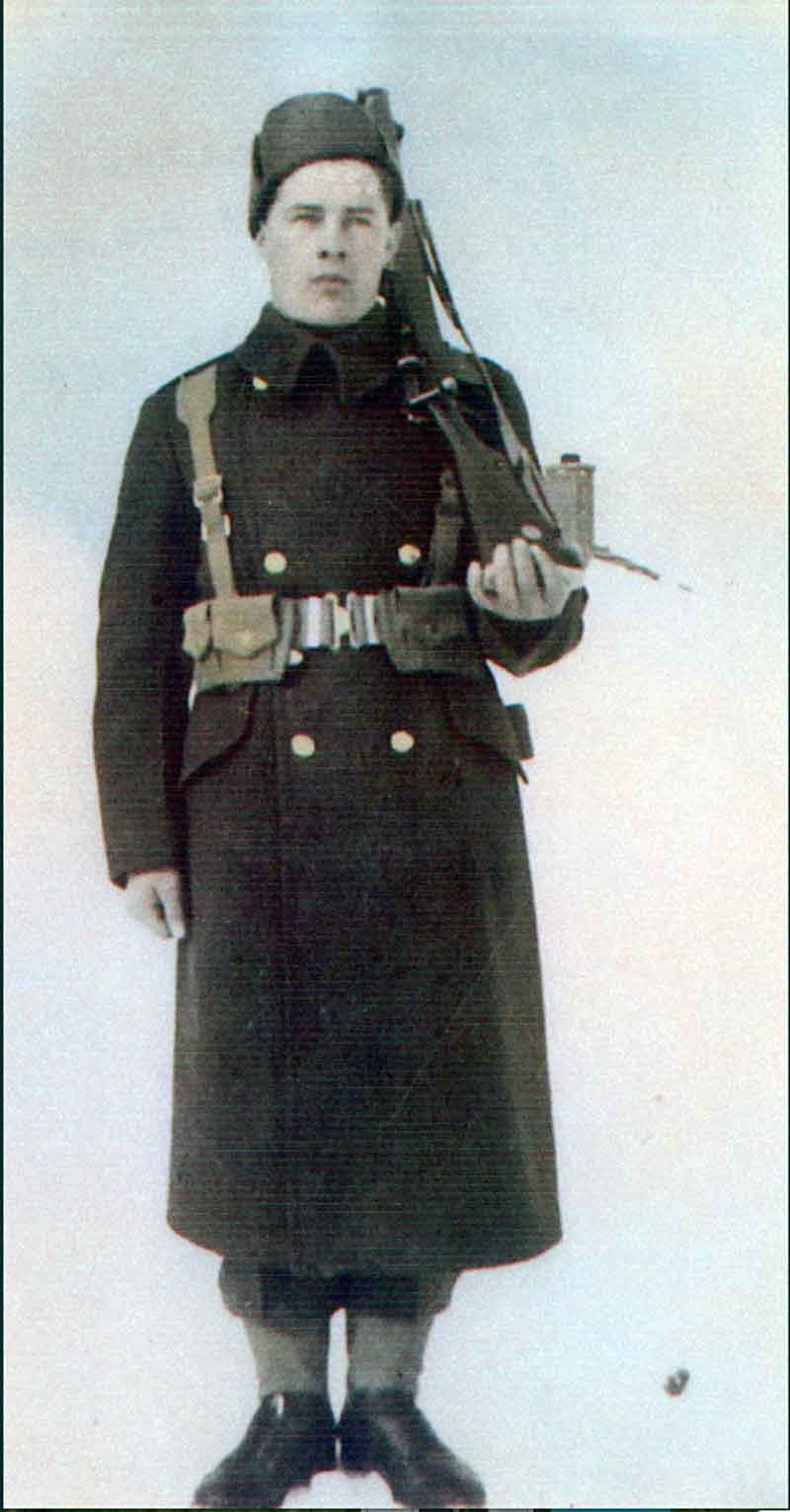
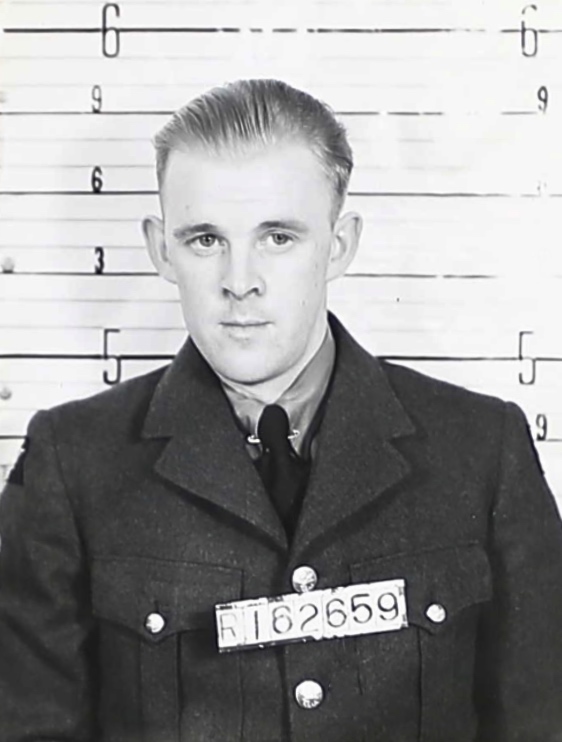
The name was adopted in 1966 to remember Royal Canadian Air Force Flight Lieutenant Gerald Alfred Lunn, J10875, from Quesnel. Lunn served as air gunner with 429 Squadron when he was killed in action 17 April 1943, age 23. Buried in Septmonts Churchyard, Aisne, France.

References:

Mount Lulu

British Columbia. Mount
Headwaters of Albreda River
52.6361 N 119.3647 W — Map 083D11 — GoogleGeoHack
Name officially adopted in 1961
Official in BCCanada

Private Samuel Lulu (Service number K/15302) of Albreda was killed on active service on July 15, 1945.

Lulu was a member of the Royal Canadian Army Service Corps. He is buried in the Holten Canadian War Cemetery, Netherlands. The great majority of those buried in Holten Canadian War Cemetery died during the last stages of the war in Holland, during the advance of the Canadian 2nd Corps into northern Germany, and across the Ems in April and the first days of May 1945. After the end of hostilities the remains of over 1,300 Canadian soldiers were brought together into this cemetery.

Mount Lucille

British Columbia. mount
S of McBride
53.2608 N 120.2508 W GoogleGeoHack
Not currently an official name.

Lucille Johnson was perhaps the first woman to climb the mountain. Her parents ran the first hotel in McBride; Wrigley’s Directory for 1918 lists “Johnston L A prop Hotel Fraser” under its entry for McBride. In 1982 Lucille was living in Florida.

There is a recreation site on the mountain, a popular alpine area for summer hiking and winter snowmobiling.

References:

  • Wrigley Directories, Limited. Wrigley’s British Columbia Directory. Vancouver: 1918. Internet Archive
  • Wheeler, Marilyn [1932–2016]. The Robson Valley Story. McBride, B.C.: Robson Valley Story Group, 1979
  • Wheeler, Marilyn [1932–2016]. The Robson Valley Story. McBride, B.C.: Robson Valley Story Group, 1979

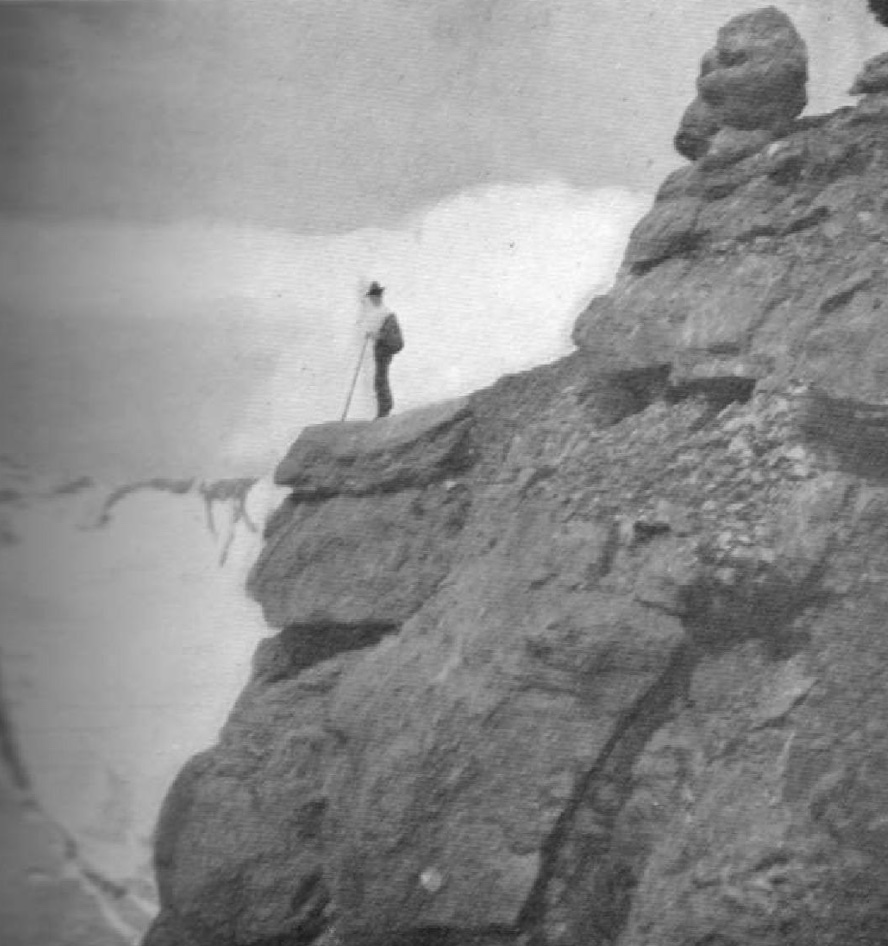
Mount Longstaff

British Columbia. Mount
NW of Berg Lake
53.1667 N 119.3333 W — Map 83E/3 — GoogleGeoHackBivouac
Earliest known reference to this name is 1911
Name officially adopted in 1925
Official in BCCanada
Elevation: 3180 m
Tom George Longstaff

Tom George Longstaff
Alpine Club Photo Library, London


Dr. Tom Longstaff

Dr. Tom Longstaff
Canadian Alpine Journal, Vol. 48 (1965), p. 162

Describing “a distant high peak of which the side towards us was wrapped in snow,” Arthur Oliver Wheeler [1860–1945] wrote during the 1911 Alpine Club of Canada–Smithsonian Robson Expedition, “I named it Mount Longstaff after the well-known mountaineer and explorer, Dr. Tom G. Longstaff.”

Tom George Longstaff [1875–1964] was born in England. He was educated at Eton and Christ Church, Oxford; and studied medicine at St. Thomas’ Hospital where he obtained his medical degree. He served in the British army in both World Wars. President of the <Alpine Club (UK), he climbed in practically all the major mountain ranges of the world — the Alps, Caucasus, Himalaya, Rockies, as well as in Selkirk, Greenland and Spitsbergen. He did not climb in the Mount Robson region.

Longstaff attended the 1910 Alpine Club of Canada camp at Consolation Valley, near Lake Louise. He attempted to climb Mount Assiniboine by a new route, which he climbed “by sheer mental effort. I used up all my credit balance of nervous energy and it took me two years to build it up again. It was the hardest climb I have ever done,” he wrote in This My Voyage. Longstaff later climbed in the Purcell Mountains with Arthur Wheeler, and in 1911, “captivated by the Western Mountains,” returned to climb in the Selkirks. “The trail was the freest form of travel I have known. There was no need for official permits; no pathways to oppose the whim of the moment; no tribes with different languages and customs to be humoured in a dozen ways; no dusty villages to be cajoled for supplies with infinite patience. My companions, packers and hunters, spoke the same language and we were all equal.”

References:

  • Wheeler, Arthur Oliver [1860–1945]. “Report on Mountaineering [1910 camp, Consolation Valley].” Canadian Alpine Journal, Vol. 3 (1911):134-139
  • Wheeler, Arthur Oliver [1860–1945]. “The Mountains of the Yellowhead Pass.” Alpine Journal, Vol. 26, No.198 (1912):382
  • Holway, Edward Willet Dorland [1853–1923]. “Mt. Longstaff.” Canadian Alpine Journal, 8 (1917):109
  • Longstaff, Tom George [1875–1964]. This My Voyage. London: John Murray, 1950
  • Bell, Fred C. “Dr. Tom George Longstaff 1878–1964.” Canadian Alpine Journal, Vol. 48 (1965):161-164
  • Wikipedia. Tom Longstaff
Also see: