Author Archives: Swany

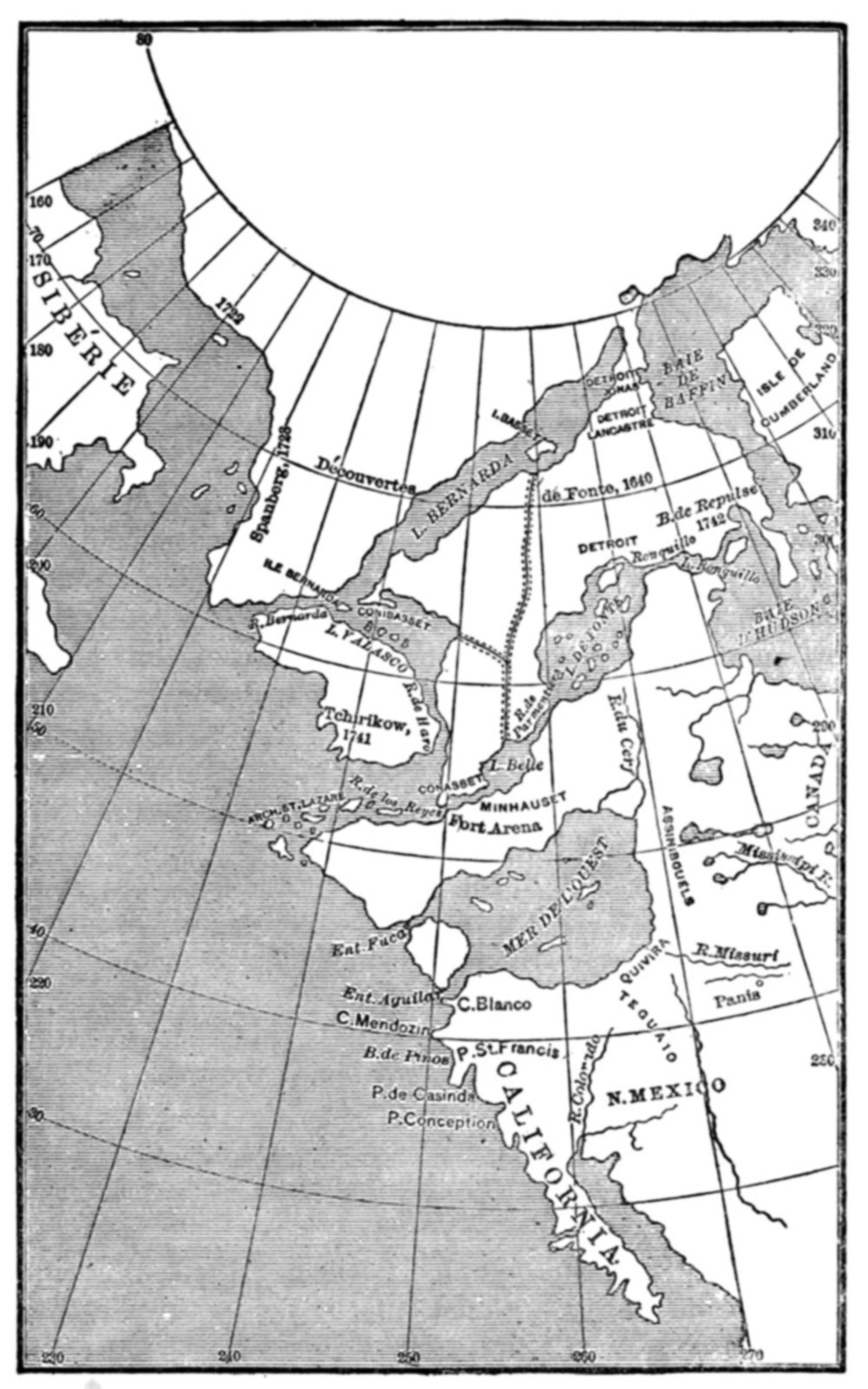
De L’Isle’s map 1752

De L’Isle’s map 1752

De L’Isle’s map 1752
Gutenberg [accessed 17 January 2026]

This map is labeled as “De L’Isle’s Map, 1752” in The Great Company, a history of the Hudson’s Bay Company by Henry Beckles Willson [1869–1942] [1]. Guillaume de L’Isle [1675–1726] was a French cartographer known for his popular and accurate maps of Europe and the newly explored Americas.

This map includes:

References:

  • 1. Willson, Henry Beckles [1869–1942]. The Great Company. Being a History of the Honourable Company of Merchants-Adventurers Trading Into Hudson’s Bay. 1900. Gutenberg [accessed 17 January 2026]

Historic Forts and Trading Posts 1930

Map of Canada showing Historic Forts & Trading Posts. Department of the Interior, 1920

Map of Canada showing Historic Forts & Trading Posts.
Department of the Interior, 1920


Detail

Detail

Map of Canada Showing Historic Forts and Trading Posts
Department of the Interior, 1930
Prepared by National Development Bureau

This map includes:

References:

  • Voorhis, Ernest [1859–1933]. Historic Forts and Trading Posts of the French Régime and of the English Fur Trading Companies. Ottawa: Department of the Interior, 1930. University of Britih Columbia Library [accessed 3 January 2026]

David Thompson’s navigations

From 1790 to 1812, David Thompson [1770–1857] traveled the Northwest using a sextant and compass to record navigational information. Sometime between 1994 and 1998, The Northwest Journal, or, Transactions of the Northwest Brigade Club published an issue with technical details on how Thompson navigated, with ten articles by J. Gottfred, apparently a surveyor himself.


From J. Gottfred’s article “How David Thompson navigated” [1] :

David Thompson is famous for his early exploration and mapping of western Canada and the northwestern United States. From 1790 to 1812, he traveled the Northwest using a sextant and compass to record valuable navigational information. He used this information to make some of the earliest detailed maps of the northwestern U.S. and western Canada. Paradoxically, although his navigational skills gave Thompson his claim to fame, they are poorly understood by both historians and geographers. How did he calculate his latitude and longitude, and how accurate was he? In this issue, I will use examples from Thompson’s notes to illustrate and explain the navigational methods that he used.

The case study examines Thompson’s journey from Boggy Hall [on the North Saskatchewan River] to the Whirlpool River, from October 19, 1810, until January 7, 1811. This is an important period because Thompson was near the end of his fur trade career (he retired in 1812) and had twenty years of navigational experience behind him. He was about to make two of his most important journeys: crossing the Athabasca Pass and descending the Columbia River to its mouth.

Synopsis of David Thompson’s Navigational Routine

Upon arrival at a new camp, Thompson would try to obtain an accurate latitude. If possible, he would observe a meridian transit of the sun (‘noon sight’). If this was not possible, he would make two observations of the sun one hour apart, which he would then use to compute a latitude with the double altitude method.

If the moon was in a convenient location, Thompson would observe the distance between the moon and the sun. Then, within half an hour or so, he would observe the altitude of the sun — a ‘time shot’. When making these lunar distance observations, he checked the index error of his sextant to make sure that it had not changed.

Using the observed altitude of the sun, the latitude computed earlier, and the declination of the sun as determined from the nautical almanac for the approximate Greenwich time as based on his dead reckoning longitude of the observation, Thompson computed the local apparent time. He then reset his watch to the correct local apparent time. This helped to ensure that he did not miss the next day’s noon sight due to the inaccuracy of his watch.

Sometimes, Thompson would note the compass bearing to the sun at the instant of the time shot. From his knowledge of his latitude, the sun’s declination, and the observed altitude, he could compute the sun’s true bearing (azimuth). The difference between the true bearing and the magnetic compass bearing was the magnetic variation (declination) at his position.

From his knowledge of his latitude, the local apparent time, and the declination of the sun, he then computed a close approximation of the sun’s altitude at the instant of the lunar distance observation. Then, from his knowledge of the local apparent time, his latitude, the declination of the moon based on his approximation of the time in Greenwich, and the difference in the right ascensions of the sun and the moon at the approximate Greenwich time of his observation, he computed a close approximation of the true altitude of the moon at the instant of the lunar distance observation.

From the close approximations of the moon’s and sun’s altitudes, combined with a highly accurate observation of the lunar distance, he then ‘cleared the distance’ of the effects of refraction and lunar parallax to determine an accurate true lunar distance between the sun and the moon for the local apparent time of the observation. He then used the nautical almanac to determine the apparent time in Greenwich at which the moon would be at the distance that he observed. The difference between his local apparent time and the apparent time in Greenwich, converted to degrees, resulted in his longitude.

Thompson also used the stars to compute lunar distances and double altitudes. The techniques are generally the same, but with a slight complication for the computation of local apparent time.

Gottfred explains the references to obscure techniques of navigation, and recalculates positions based on Thompson’s observations. “Over the last ten years I have used my own sextant under many different conditions to replicate all of the techniques that Thompson used…. I feel that it should be generally safe to assume that any latitude by meridian transit observation would be correct within 1½ nautical miles, and any latitude from a double altitude observation should be correct to within 2 [nautical miles],” he writes.

The only on-line access to this material appears to be through a website devoted to the Northwest Journal that is hosted by Casinomap — Online Casino Canada. The website does not include any of the numerous illustrations in the original, making it difficult to follow the technical details.

The Hinton Municipal Library has a listing for the Northwest Brigade Club in its archives indicating that it was published in Calgary.

The Northwest Brigade Paddling Club in Prince George does not appear to be related, as searches for “Gottfred” or “Thompson” come up empty.

There is no pertinent listing for “Northwest Journal” or “Gottfred” at the Whyte Museum of the Canadian Rockies, the Internet Archive, the Northern BC Archives, the Provincial Archives of Alberta, or Canadiana.

References:

  • 1. Gottfred, Jeff. “How David Thompson Navigated.” The Northwest Journal, or, Transactions of the Northwest Brigade Club, Vol. 9 (1994–1998). Northwest Journal [accessed 23 November 2025]

Tribes

EDITOR Colonist. – Your correspondent having got over the bustle and excitement consequent upon the arrival and departure of the Canadian Pacifie Railway Survey party en route for the Rocky Mountains at this point, I take the liberty of addressing a few lines to you, hoping the same will be of interest to your readers.…

The Indians all along the route show a thorough knowledge of the Catholic religion. At every camp when we stopped at sunset could be heard the voices of the Nations chanting mass. I was present at one of these masses which was conducted partly in French and partly io Latin by one of tbhe Indians. The singing would do credit to some of the Victoria choirs. The nations in this part of the Colony are much more intelligent than those on the Island, and are strictly honest, but are not long asking for anything which you may have that they covet, particularly tobacco. I was very much amused at the dignified manner in which one of the Chiefs called on Mr McLennan. He stood at the door of the tent and waited until Mr Mohun care out when there was a formal introduction. The chief inquired the business of the party to his ‘Illabee’ and was informed that they were on a ‘Grand Hunt’ for a Closhe Oyhut for a ‘Fire Cuten.’ He seemed perfectly satisfied and retired after a piece of tobacco was given him [1].

References:

  • 1. “Canadian Pacific Railway Survey, Clear Water, North Thompson River (75 km above Kamloops) Sept. 1st, 1871.” The Daily British Colonist and Victoria Chronicle, 20 September 1871, Victoria (1871):p. 2. Internet Archive [accessed 19 November 2025]

Front Ranges

Not currently an official name.

The Front Ranges are a group of mountain ranges in the Canadian Rockies of eastern British Columbia and western Alberta, Canada. It is lowest and the easternmost of the three main subranges of the Continental Ranges, located east of the Bull and Elk rivers and a fault line extending northwest of West Elk Pass to McGregor Pass [1].

The Continental Ranges are a major grouping of mountain ranges in the Rocky Mountains primarily located in the Canadian Rockies of eastern British Columbia and western Alberta, with small portions extending into the U.S. states of Idaho and Montana. It is a physiographic designation primarily geologists and is not used by the general public; it is not recognized in Alberta, and does not appear on topographic maps, although the names of its subranges (the Kootenay, Front, and the Park or Main Ranges) are in common use. It is the largest and best-known of the Canadian Rockies’ three main subdivisions (the others being the Hart and Muskwa Ranges) [2].

References:

Roderick M. McLennan

The First Canadian Pacific R.R. and Geological Survey parties for British Columbia, July 22 1871 Left to right : L. N. Rheaumis, Roderick McLennan, A. S. Hall, West West Ireland, Alfred Selwyn, Alex Maclennan, Walter Moberly, C. E. Gilette, James Richardson, -- -- McDonald, George Watt.

The First Canadian Pacific R.R. and Geological Survey parties for British Columbia, July 22 1871
Left to right : L. N. Rheaumis, Roderick McLennan, A. S. Hall, West West Ireland, Alfred Selwyn, Alex Maclennan, Walter Moberly, C. E. Gilette, James Richardson, — — McDonald, George Watt. Toronto Public Library


Detail: Roderick McLennan

Detail: Roderick McLennan Toronto Public Library

Roderick M. McLennan
b. 1805 — Lancaster, Ontario
d. 1908 — Toronto

The birthdate of 1805 is from [1]. Birth dates of 1823 and 1828 also found .

In 1871-72, Canadian Pacific Railway surveyors Roderick McLennan and Charles Horetzky made a reconnaisance from the Big Bend of the Columbia River up to the North Thompson River. McLennan left Kamloops leading Survey Parties Q and R on August 19, 1871, and in October decided to winter his party in the vicinity of Tête Jaune Cache. He built a camp four or five miles upstream from the Canoe River on what consequently came to be named Camp Creek. In 1872, also leading Q and R, he undertook an expedition to Moose Lake. [2]

  • —   “Progress Report of Exploation from Yellow Head Pass westerly by the Cariboo District and by the North Thompson River. Appendix 4.” In Fleming, Sandford, FRSC KCMG [1827–1915]. Progress Report on the Canadian Pacific Railway Exploratory Survey. Ottawa: Canadian Pacific Railway, 1872. Canadiana [accessed 13 November 2025]
Theses places are named after McLennan:

  • 1871 CPR Surveys – McLennan winters at TJC
References:

  • 1. Fairhall, Charles. “Surveyors of the Past. Roderick M. McLennan, 1805–1908. Civil Engineer, Land Surveyor, Explorer.” Ontario Land Surveyor, Summer (1983):27-28. Krcmar
  • 2. McLennan, Roderick M. [1805–1908]. “Progress Report of Exploation from Yellow Head Pass westerly by the Cariboo District and by the North Thompson River. Appendix 4.” In Fleming, Sandford, FRSC KCMG [1827–1915]. Progress Report on the Canadian Pacific Railway Exploratory Survey. Ottawa: Canadian Pacific Railway, 1872. Canadiana [accessed 13 November 2025], pp. 39-49

Franchère Peak

Alberta. Peak
Astoria River valley
52.7169 N 118.1 W — Map 083D09 — GoogleGeoHack
Name officially adopted in 1935
Topo map from Canadian Geographical Names

Named for Gabriel Franchère [1786–1863].

A French Canadian author and explorer of the Pacific Northwest, Franchère joined the Pacific Fur Company as a merchant apprentice, arriving at Fort Astoria on the Tonquin. After Astoria was sold to the North West Company, Franchère returned to Montréal overland in 1814, crossing the Athabasca Pass on May 14. He was employed for a time by John Jacob Astor in Montréal. He wrote Narrative of a Voyage to the Northwest Coast of America, published in 1819:

On the morning of the 14th of May we began to climb the mountain, which is very steep. Fortunately the preceding night had been cold and the snow was frozen hard enough to carry our weight. We had to rest every few minutes, the climb being very difficult and the exercise exhausting. Finally after two or three hours of unbelievable effort and fatigue we reached the summit and followed in the footprints of those who had gone before us. Our route lay between two high mountains and soon became tiring because of the depth of the snow, which being softened by the sun’s rays, could no longer bear our weight as it had done in the morning, so that we had to walk in the footsteps of those ahead of us, sinking up to our knees as if putting on an enormous pair of boots at each step. At last we came to a hollow that our guide said was a small lake, though we could not recognize it as it was covered in snow, and we stopped there for the night. These lakes (for there are two) are situated at the summit of the face of the mountain [1].

(The lakes are the Committee Punch Bowl.)

References:

  • 1. Franchère, Gabriel [1786–1863], and Lamb, William Kaye [1904–1999], editor. Journal of a Voyage to the Northwest Coast of America, in the years 1811, 1812, 1813, and 1814. Toronto: Champlain Society, 1969, P. 159. Internet Archive [accessed 10 March 2025]

Topley, William James

William James Topley
b. 1845
d. 1930 — Vancouver

William James Topley (13 February 1845 – 16 November 1930) was a Canadian photographer based in Ottawa, Ontario. He was the best known of Ottawa’s nineteenth-century photographers and the most socially prominent one.

Topley was noted for his portraiture of Canadian politicians and was a business partner of William Notman, having taken over Notman’s Ottawa studio in 1872. A large number of photographs by Topley are now in the collection of Library and Archives Canada, including approximately 150,000 glass plates negatives and a set of 66 index albums covering the entire history of his Ottawa studios from 1868 until 1923 [1].

Events in the Mount Robson region in which Topley was involved:

References:

1914 Conan Doyle trip to Jasper

Jasper from top of coal chutes Photo: William James Topley, 1914

Jasper from top of coal chutes
Photo: William James Topley, 1914
Library and Archives Canada [accessed 10 October 2025]


Special Train for Sir A. Conan Doyle to Mount Robson Photo: William James Topley, 1914

Special Train for Sir A. Conan Doyle to Mount Robson
Photo: William James Topley, 1914
Library and Archives Canada [accessed 10 October 2025]


Crossing Athabasca river, Sir A. Conan Doyle and party on horseback Photo: William James Topley, 1914

Crossing Athabasca river, Sir A. Conan Doyle and party on horseback
Photo: William James Topley, 1914
Library and Archives Canada [accessed 10 October 2025]


Press Excursion Party at Summit [Yellowhead Pass] Photo: William James Topley, 1914

Press Excursion Party at Summit [Yellowhead Pass]
Photo: William James Topley, 1914
Library and Archives Canada [accessed 10 October 2025]


Leaving Donald Phillips's Camp near Robson Railway Station Photo: William James Topley, 1914

Leaving Donald Phillips’s Camp near Robson Railway Station
Photo: William James Topley, 1914
Library and Archives Canada [accessed 10 October 2025]


Pack train at Donald Phillips’s camp Photo: William James Topley, 1914

Pack train at Donald Phillips’s camp
Photo: William James Topley, 1914
Library and Archives Canada [accessed 10 October 2025]

June 11 – 19, 1914

In the spring of 1914, Sir Arthur Conan Doyle [1859–1930] (of Sherlock Holmes fame) was invited to travel on the newly opened Grand Trunk Pacific Railway from Montreal to Jasper National Park. Conan Doyle accepted the invitation, and he and his wife, Jean Leckie, conducted the trip between May and July, 1914. The point of the expedition was to promote the Canadian West and its newly minted national park.

The official photographer for the journey was the celebrated William James Topley [1845–1930]. Topley’s son-in-law, Robert Chamberlain Westover Lett [1870–1957], was travelling passenger and olonization agent for the Grand Trunk Pacific, and persuaded Topley to photograph Conan Doyle’s travels.

On June 11, Conan Doyle and his wife travelled to the town of Jasper. A special train was organized to take the Doyle party to visit the area near Mount Robson [1] [2].

Some of the members of the party:

References:

  • 1. Library and Archives Canada. Sir Arthur Conan Doyle Tour of Western Canada – Visit to Jasper National Park. 2015. Library and Archives Canada
  • 2. Library and Archives Canada. Photo Album 47: Record of a real and a constructed journey to western Canada: a mystery!. 2015. Library and Archives Canada