Author Archives: Swany

John Yates

John Yates [1880–]

b. 1880 — Blackburn, England

Yates is the namesake of the following places in the Mount Robson region:

Events in the Mount Robson region in which Yates was involved:

  • 1908 Coleman – Edmonton to Robson
  • 1908 Collie to Robson
  • 1909 English party at Robson (packer)
  • 1910 Mumm and Collie at Robson
Works pertinent to the Mount Robson region of which Yates was author or co-author:

  • —   John Yates fonds V65. 1905–1924

Mount Edith Cavell

Alberta. Mount
Headwaters of Astoria River
52.6672 N 118.0567 W — Map 083D09 — GoogleGeoHackBivouac
Name officially adopted in 1928
Official in Canada
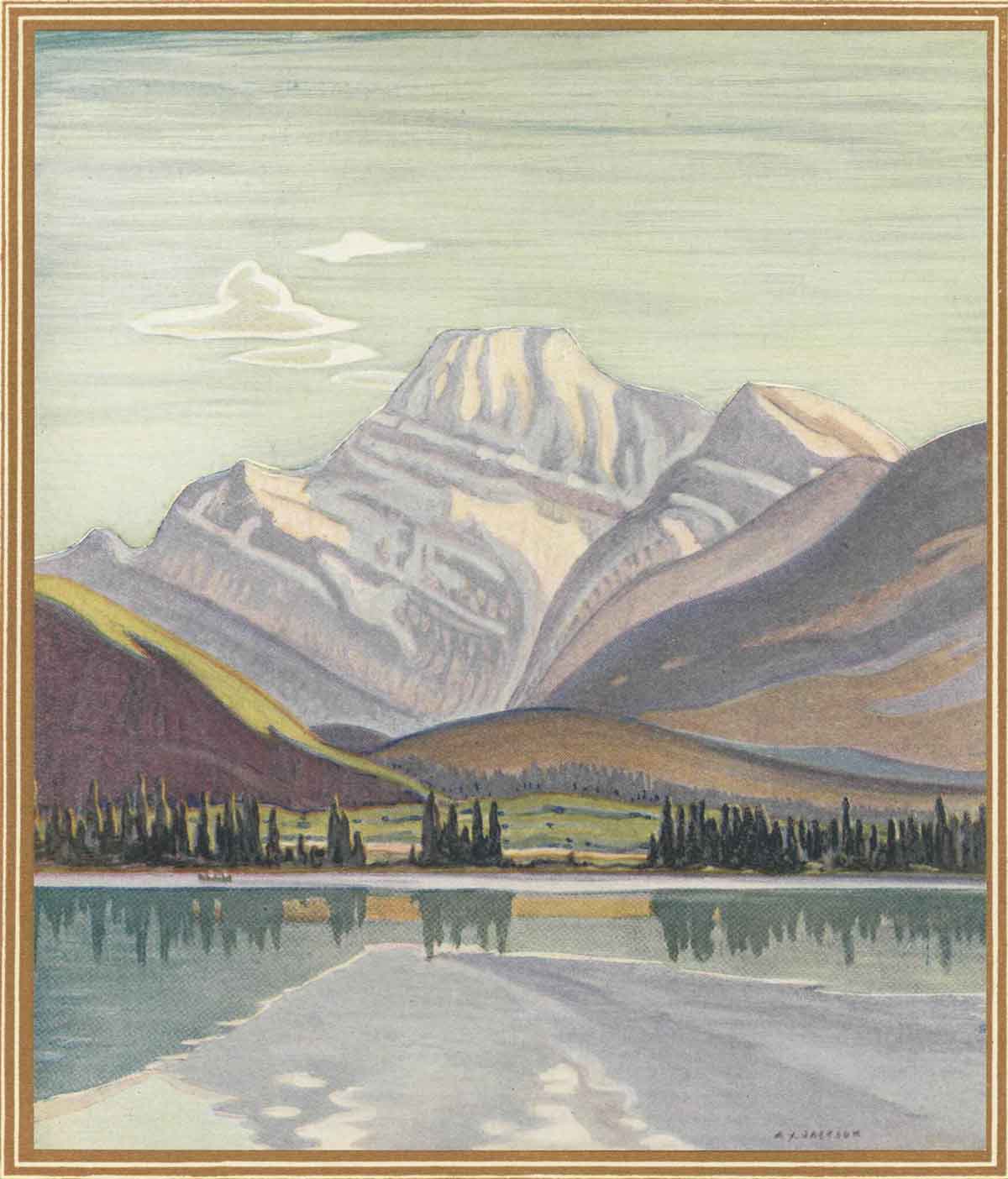
Mount Edith Cavell. A. Y. Jackson, 1927

Mount Edith Cavell. A. Y. Jackson, 1927
Jasper National Park, Canadian National Railways

Named in 1916 for Edith Cavell, a British nurse executed by the Germans during World War I for having helped Allied soldiers escape from occupied Belgium to the Netherlands, in violation of German military law.

References:

Also see:

George Simpson

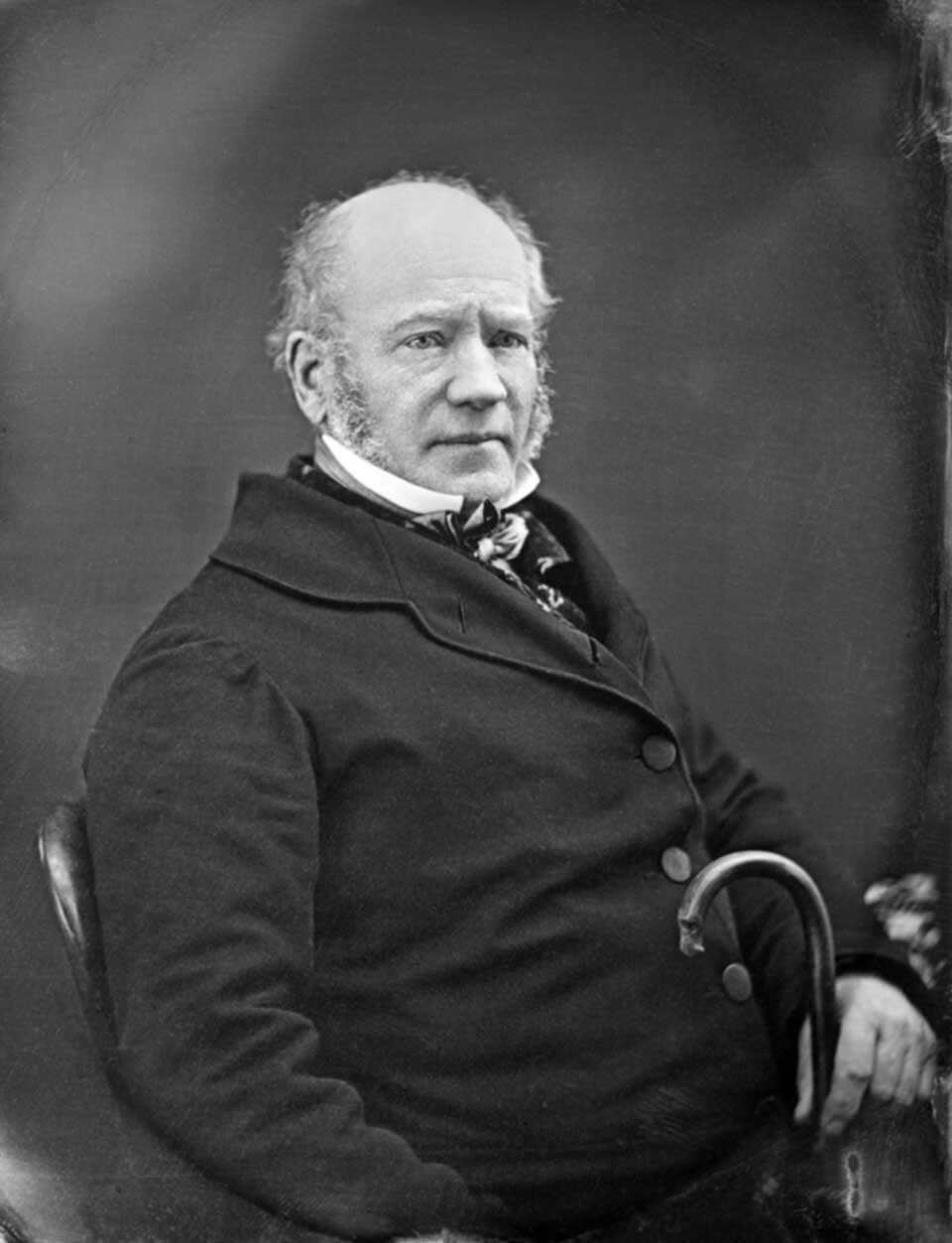
Sir George Simpson Photo by William Notman, 1850

Sir George Simpson
Photo by William Notman, 1850
Wikipedia

George Simpson
b. 1792 — Loch Broom, Ross-Shire, Scotland
d. 7 September 1860 — Lachine, Canada

From the introduction to Fur Trade and Empire by Frederick Merk’s [1887–1977, 1]:

George Simpson who stood at the head of this great field organization [Hudson’s Bay Company] was in 1821 a man with a future rather than a past. He was the illegitimate son of George Simpson, born at Loch Broom in Ross-shire, Scotland, in 1792. Of his early life little is known except that he was given a fair education, was brought to London in 1809, and as a clerk entered the employ of a firm engaged in the West India trade. His native heath in the early nineteenth century was a nursery ground for North American fur-trade leaders, but his own entrance into the industry was the result of his having attracted the favorable notice of Andrew Colvile, an influential member and later governor of the Hudson’s Bay Company. In the spring of 1820 he was sent by the Hudson’s Bay Company to the Athabasca Country to acquire experience in the Indian trade, and there he spent the winter of 1820-21. At that time the war with the North West Company was in the litigation stage, and Governor Williams was under indictment in the courts of Lower Canada. In order to be prepared for the contingency of his removal to Quebec, the Hudson’s Bay Company, in November, 1820, appointed Simpson governor locum tenens. At the coalition, at the age of twenty-nine, he was promoted to joint governorship, with Williams, of the Company Territories, with special charge of the Northern Department of Rupert’s Land including the Department of the Columbia. By 1826 he was governor-in-chief of all the Hudson’s Bay Company Territories in America.

To be governor of the Northern Department of Rupert’s Land in 1821 was to be brought face to face with harassing problems of post-war reconstruction. Rupert’s Land was strewn with the wreckage of battle. There was material wreckage in the form of exhaustion of fur preserves, the duplication of trading posts and the multiplication of equipment and men. More difficult to cope with was the psychological wreckage, mutual bitterness and hate of subordinates of the old companies now brought together in the coalition, habits of drunkenness which competition had fostered among the Indians, relaxed habits of discipline among servants, and the propensity to waste and extravagance formed by the whole fur-trading community. These were the rehabilitation problems of the new governor and they were a test of his quality.

He came to his task with an intellectual equipment that promised much for his success. He had, to be sure, only scant experience in Rupert’s Land, but that was an element of strength rather than of weakness in 1821 since it had as its corollary freedom from the rancors of the war. Indeed, it was one of the chief reasons for appointing him rather than his senior colleague to the great Northern Department. He combined with a sure judgment an exterior of affability that enabled him to heal old wounds and to reconcile men to a new order. As an administrator his talents were exceptional. He had the imaginative vision of a Clive; he drew his plans on a scale that was continental. With vision he combined a grasp of detail that was extraordinary. There was no element of the fur trade from the Athabasca Country to the Sandwich Islands, from Hudson Bay to the steppes of Siberia, that he did not acquaint himself with by personal visit. He was a dynamo of energy, tireless at his work, whether at his desk or on the march. His journeys were famous for their speed; on the present voyage, though he took a route that was unfavorable in passing from Hudson Bay to the Columbia and lost many days by halts for business, he cut the record for the distance from 104 days to 84. On his return, to save time in an emergency, he made a perilous and exhausting overland march from Carlton to the Red River Settlement. His party, when it met relief within a half-day’s march of the Settlement, was half famished and utterly spent, but not the Governor. Without pausing for food or rest he threw himself upon a horse brought by the relief party and galloped off to his duties at Fort Garry. He put the spurs as remorselessly to his subordinates, high and low, as to himself. There is an unsubstantiated legend, which used to circulate in the Red River Colony, that on one occasion his goading drove one of his favorite voyageurs to the point of seizing him by the collar, lifting him into the water, and holding him there until he promised to relent his pace.

Also see [2]

Works pertinent to the Mount Robson region of which Simpson was author or co-author:

  • —  and Merk, Frederick [1887–1977], editor. Fur trade and empire. George Simpson’s journal entitled Remarks connected with fur trade in consequence of a voyage from York Factory to Fort George and back to York Factory 1824-25. Cambridge, Mass.: Harvard University Press, 1931. University of British Columbia Library [accessed 3/10/2025]
Simpson is credited with naming the following places:

Events in the Mount Robson region in which Simpson was involved:

  • 1824 Simpson recrossing Athabasca Pass
  • 1824 Simpson and Ross cross Athabasca Pass from west
  • 1826 Simpson orders use of YHP
  • 1827 Drummond and Douglas meet at York factory waiting for boats home
  • 1828 Simpson’s voyage from Hudson’s Bay to Pacific
References:

  • 1. Simpson, George [1792–1860], and Merk, Frederick [1887–1977], editor. Fur trade and empire. George Simpson’s journal entitled Remarks connected with fur trade in consequence of a voyage from York Factory to Fort George and back to York Factory 1824-25. Cambridge, Mass.: Harvard University Press, 1931. University of British Columbia Library [accessed 10 March 2025]
  • 2. Wikipedia. George Simpson

Hugh Drummond Allan

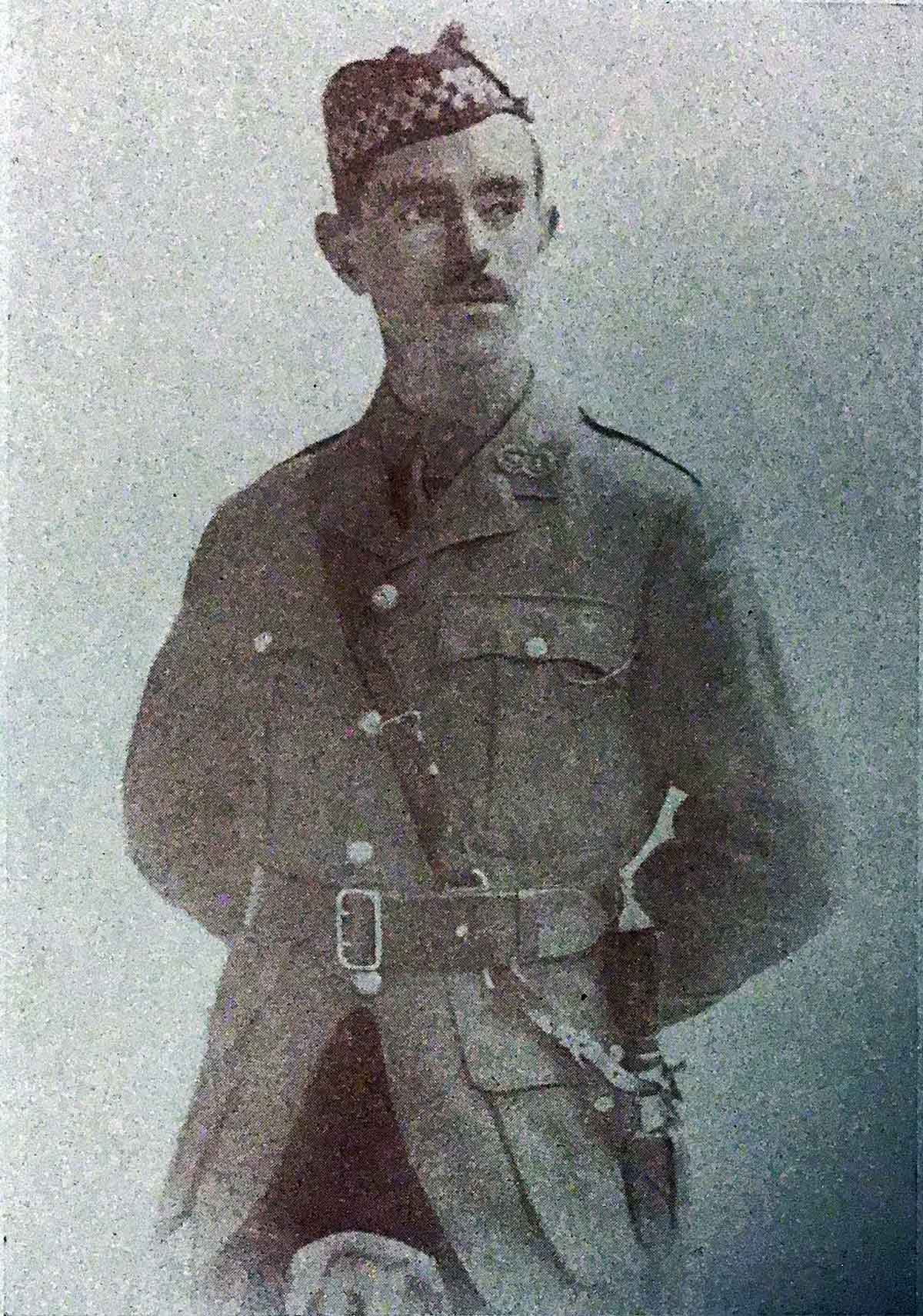
Hugh Drummond Allan, ca. 1914

Hugh Drummond Allan, ca. 1914 BC Archives

Hugh Drummond Allan, B.C.L.S.
b. 1887 — Partick, Lanarkshire, Scotland
d. 17 April 1917 — Croiselles, France

Hugh Drummond Allan was born in Scotland and came to Canada around 1907. He became a British Columbia Land Surveyor in 1912. His professional work was carried on mainly in the Kamloops district, where he resided, and the North Thompson River valley. In 1913 he surveyed in the Canoe River area. “From Mile 49 on the Grand Trunk Pacific I proceeded with my party by wagon and reached the Canoe River in one day,” he reported.

Allan was shortly predeceased by his wife and infant child, whether before or after his enlistment after the start of the first World War in 1914. He returned to Scotland and enlisted in Princess Louise’s (Argyll and Sutherland Highlanders). In March 1916, Allen, then second lieutenant, made a will in which he bequeathed all his fortune to “Mrs. Kelly,” the mother of his late wife, Gladys Irene Frederika Allan. “[A]nd I declare that I leave nothing to my own relatives not from any want of affection but because they are much better provided for than my late wife’s relatives and I have not a great deal to leave.”

Sometime in 1916 he was wounded, and in 1917 he was killed leading his company at Croiselles, France.

His estate was probated in 1917, coming to a value of $5540. In March 1918 his executor discovered that “there was due to the said deceased from the Imperial Pensions Department the sum of $532.96.”

The National Archives of the U.K. has officer service records pertaining to Lieutenant Hugh Drummond Allan of Princess Louise’s (Argyll and Sutherland Highlanders).

There is another Canadian figure of Scottish birth named Hugh Allan [1810–1882], a shipping magnate.

Works pertinent to the Mount Robson region of which Allan was author or co-author:

  • —   “Canoe River Valley.” Report of the Minister of Lands for the Province of British Columbia for the year ending 31st December 1913, (1914)
  • —   Officer Service Records. Princess Louise’s (Argyll and Sutherland Highlanders). 1917. National Archives of the U.K.
  • —   Medal Card. Argyll and Sutherland Highlanders. 1917. National Archives of the U.K. [accessed 2/1/2025]
  • —   Probate record from Kamloops Supreme Court, 1918. 1918. BC Archives
Allan is the namesake of these places in the Mount Robson region:

Events in the Mount Robson region in which Allan was involved:

References:

  • Allan, Hugh Drummond, B.C.L.S. [1887–1917]. Officer Service Records. Princess Louise’s (Argyll and Sutherland Highlanders). 1917. National Archives of the U.K.
  • Allan, Hugh Drummond, B.C.L.S. [1887–1917]. Probate record from Kamloops Supreme Court, 1918. 1918, Reference code GR-1562.21. BC Archives
  • Association of British Columbia Land Surveyors. Annual Report (1956).

A. L. Withers

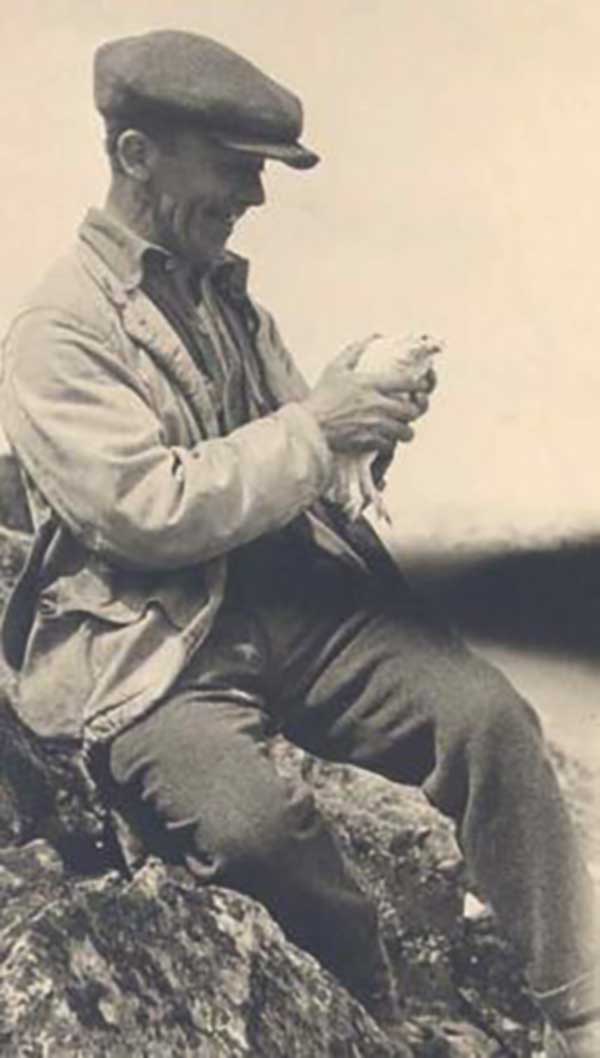
Park Warden Pete Withers, Jasper National Park Jasper-Yellowhead Museum and Archives, PA-23-28

Park Warden Pete Withers, Jasper National Park
Jasper-Yellowhead Museum and Archives, PA-23-28
Archives Canada [accessed 17 October 2025]


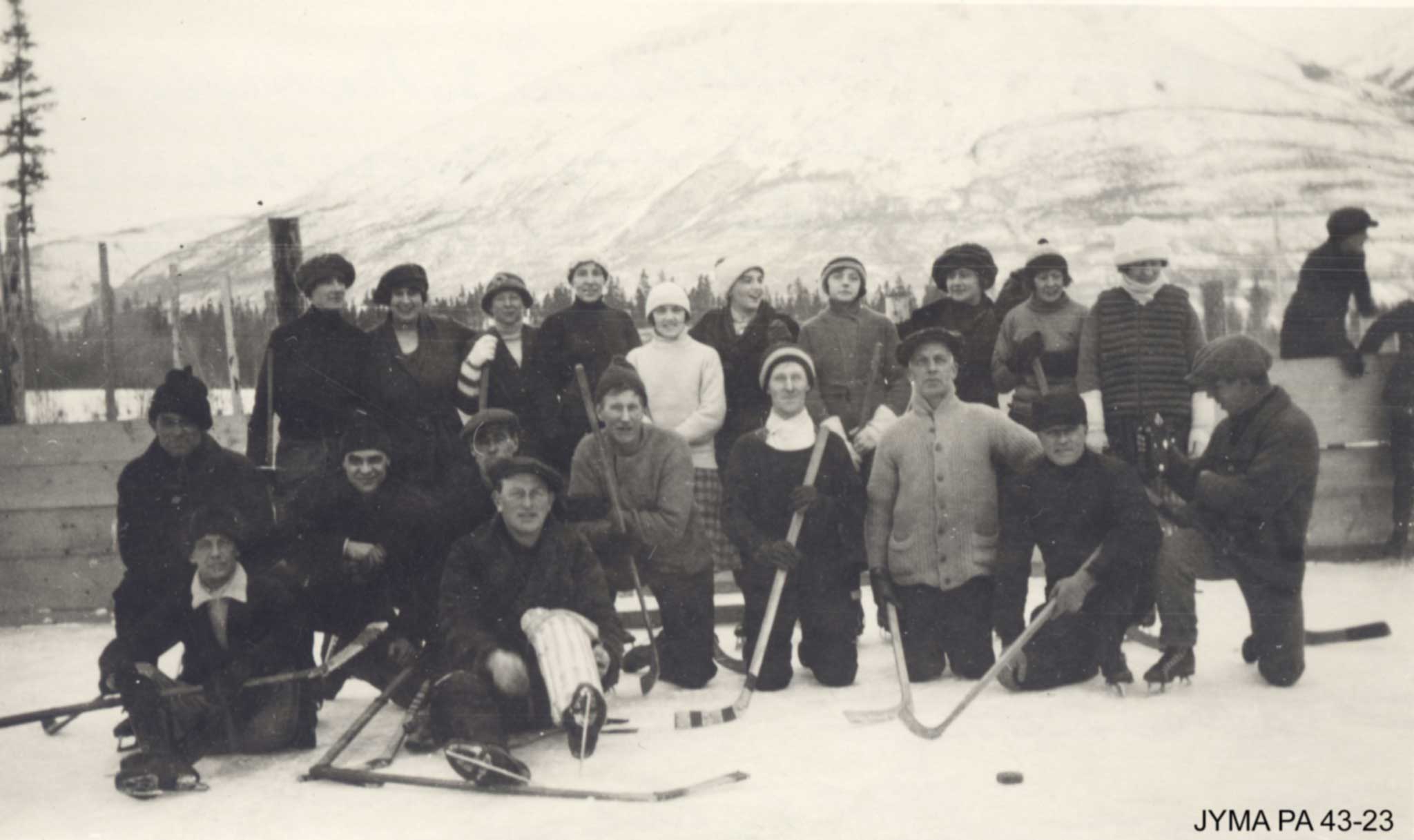
Jasper hockey game including Mrs. Roy Hargreaves, Mrs. Robert Blewett Sr, Mrs. Digby Harris, Mrs. Fulton, Mrs. Noble Findlay, Mrs. W. Grieves, Phyllis Lofts, Mrs. Nathan Nunn, Mrs. Fred Smith,  Miss Parks, Digby Harris, Tom Jones, V. Woodcock, H.B. Webb, Walter Huggins, Harry King, Nat Munn, Pete Withers and Paddy Bateman. 1921

Jasper hockey game including Mrs. Roy Hargreaves, Mrs. Robert Blewett Sr, Mrs. Digby Harris, Mrs. Fulton, Mrs. Noble Findlay, Mrs. W. Grieves, Phyllis Lofts, Mrs. Nathan Nunn, Mrs. Fred Smith,  Miss Parks, Digby Harris, Tom Jones, V. Woodcock, H.B. Webb, Walter Huggins, Harry King, Nat Munn, Pete Withers and Paddy Bateman. 1921
Jasper-Yellowhead Museum and Archives PA43-23 [accessed 17 October 2025]


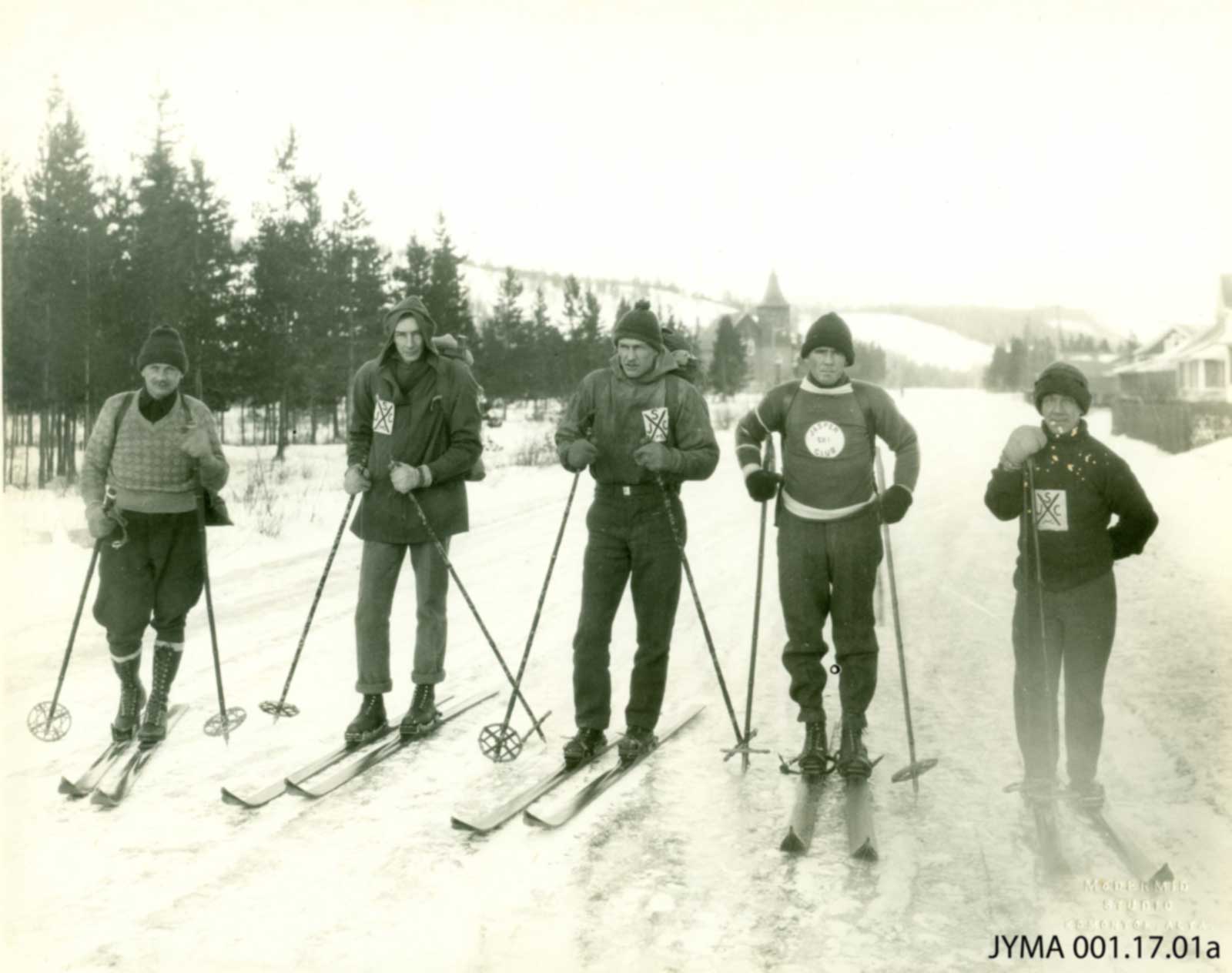
Joe Weiss, Doug Jeffery, Vern Jeffery, Frank Burstrom and Pete Withers on Geikie Street at the start of their ski trip. 1930

Joe Weiss, Doug Jeffery, Vern Jeffery, Frank Burstrom and Pete Withers on Geikie Street at the start of their ski trip. 1930
Jasper-Yellowhead Museum and Archives [accessed 17 October 2025]

A. L. (Pete) Withers

A. L. (Peter) Withers was a national park warden in Jasper from 1920. He owned one of the two pairs of skis in town, and during the winter of 1921 he used his skis to make his winter patrols [1]. Withers appears in a 1921 photo of a Jasper hockey game [2].

In 1924 he accompanied Allen Carpé [1894–1932] and Rollin Thomas Chamberlin [1881–1948] in climbs in the Cariboo Mountains, including first ascents of Mount Titan (now Mount Sir Wilfrid Laurier), Mount Challenger (now Mount Stanley Baldwin) and Mount Albreda [3, 4].

In 1930 Withers was one of a group of five Jasper men who skied to Banff, leaving Jasper on 14 January 1930 and following what is now the Icefields Parkway. Joe Weiss, Vern and Doug Jeffery, and Frank Burstrom were his partners. During the previous summer they had travelled by horse to several cabins in Jasper and Banff and stored bags of food for the trip. Near Saskatchewan River Crossing they were met by two Banff wardens who had snowshoed out to look for them. The trip was a bit easier after that as they had broken trails to get them to Bow Lake and then to Lake Louise and Banff. They arrived just in time for the Banff winter carnival on 4 February [5].

In March of 1930, Withers assisted in packing the party of Russell Hoadley Bennett [1896–1981] of Minneapolis, Clifford White [1902–1964] of Banff, and Joe Weiss of Jasper on their “attack on Snow Dome,” which failed “because of faulty planning conjoined with protracted bad weather” [6].

Withers is the namesake of the following places in the Mount Robson region:

Events in the Mount Robson region in which Withers was involved:

  • 1924 Chamberlin party Cariboos
References:

  • 1. Gainer, Brenda. The human history of Jasper National Park, Alberta. Manuscript report 441. Ottawa: Parks Canada, 1981. Parks Canada [accessed 28 January 2025]
  • 2. Hockey History. 2025. Jasper-Yellowhead Museum and Archives [accessed 19 October 2025]
  • 3. Carpé, Allen [1894–1932]. “Climbs in Cariboo Mts. and Northern Gold Range, Interior Ranges of British Columbia.” Alpine Journal, Vol. 37 (1925):63
  • 4. Carpé, Allen [1894–1932]. “Albreda Mountain.” Canadian Alpine Journal, Vol. 16 (1927–1927):177
  • 5. 1930 Jasper to Banff Ski Trip. 2025. Jasper-Yellowhead Museum and Archives [accessed 17 October 2025]
  • 6. Bennett, Russell Hoadley [1896–1981]. “The Ski Ascent of Snow Dome.” Canadian Alpine Journal, Vol 20 (1931):100-101

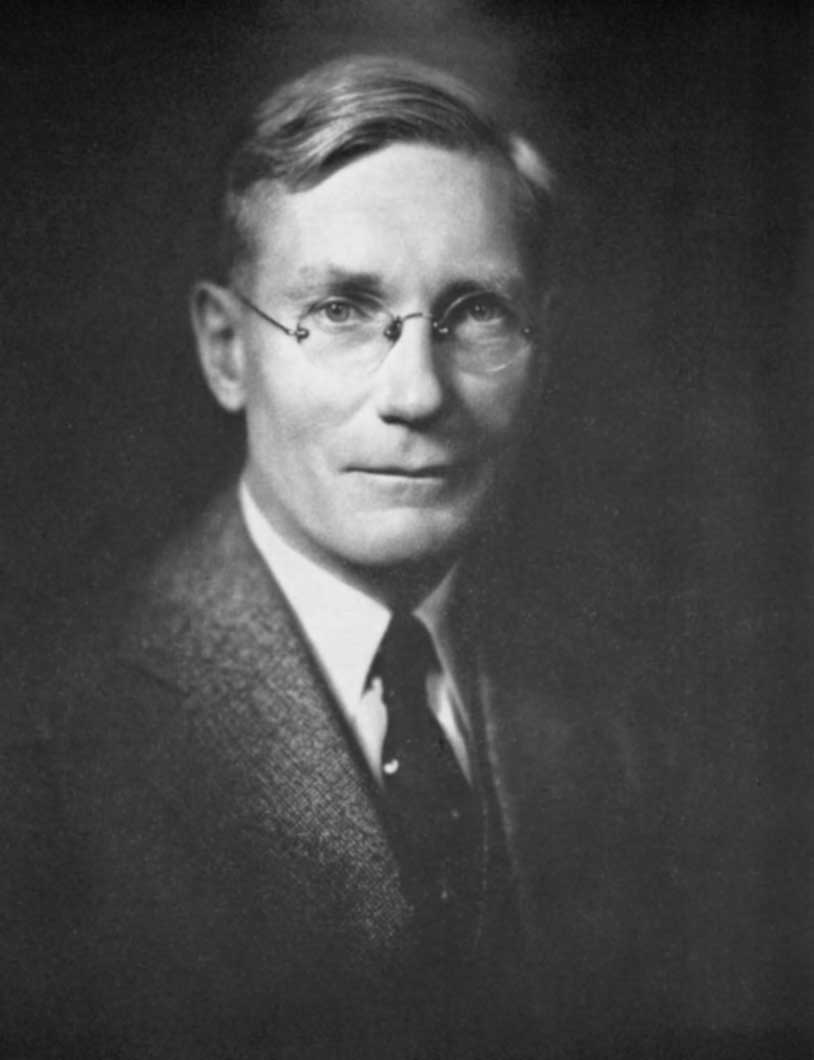
Rollin Thomas Chamberlin

Rollin Thomas Chamberlin

Rollin Thomas Chamberlin

Rollin Thomas Chamberlin
b. 20 October 1881 — Beloit, Wisconsin
d. 6 March 1948 — Chicago, Illinois

Rollin Thomas Chamberlin was a professor of geology at the University of Chicago who made numerous guided climbs in the Rocky and Selkirk Mountains in 1910, including the Lake Louise, Lake O’Hara, Field and Glacier areas. In 1924, Chamberlin, Allen Carpé [1894–1932] and A. L. (Pete) Withers made a number of first ascents in the Cariboo Mountains, including Mount Titan (now Mount Sir Wilfrid Laurier) and Mount Challenger.
Works pertinent to the Mount Robson region of which Chamberlin was author or co-author:

  • —   Rollin T. Chamberlin fonds V22. 1910–1927
  • —   “Exploration of the Cariboo Mountains of British Columbia.” Bulletin of the Geographical Society of Philadelphia, 25 (1925):59-76
Chamberlin is the namesake of the following places in the Mount Robson region:

Events in the Mount Robson region in which Chamberlin was involved:

  • 1924 Chamberlin party Cariboos
References:

  • Chamberlin, Rollin Thomas [1881–1948]. Rollin T. Chamberlin fonds V22. 1910–1927. Whyte Museum
  • Pettijohn, F. J. “Rollin Thomas Chamberlin: a Biographical Memoir.” (1970). National Academy of Sciences