Author Archives: Swany

Rearguard (railway point)

British Columbia. Railway Point
Canadian National Railway, E of Tête Jaune station
52.9667 N 119.3667 W — Map 83D/14 — GoogleGeoHack
Not currently an official name
44 miles west of the Yellowhead Pass on the Canadian National Railway
Mile 18 in Tete Jaune Subdivision (Red Pass to McBride as of 1977)
This railway point appears on:
Pre-emptor’s map Tête Jaune 3H 1923

A previously official name.
A Japanese internment camp was built here during World War II, but it was not utilized.

References:

  • Wheeler, Marilyn [1932–2016]. The Robson Valley Story. McBride, B.C.: Robson Valley Story Group, 1979
Also see:

Rearguard Mountain

British Columbia. Mountain
E of Berg Lake, NE of Mount Robson
53.1439 N 119.1264 W — Map 083E03 — GoogleGeoHack
Name officially adopted in 1923
Official in BCTopo map from Canadian Geographical Names
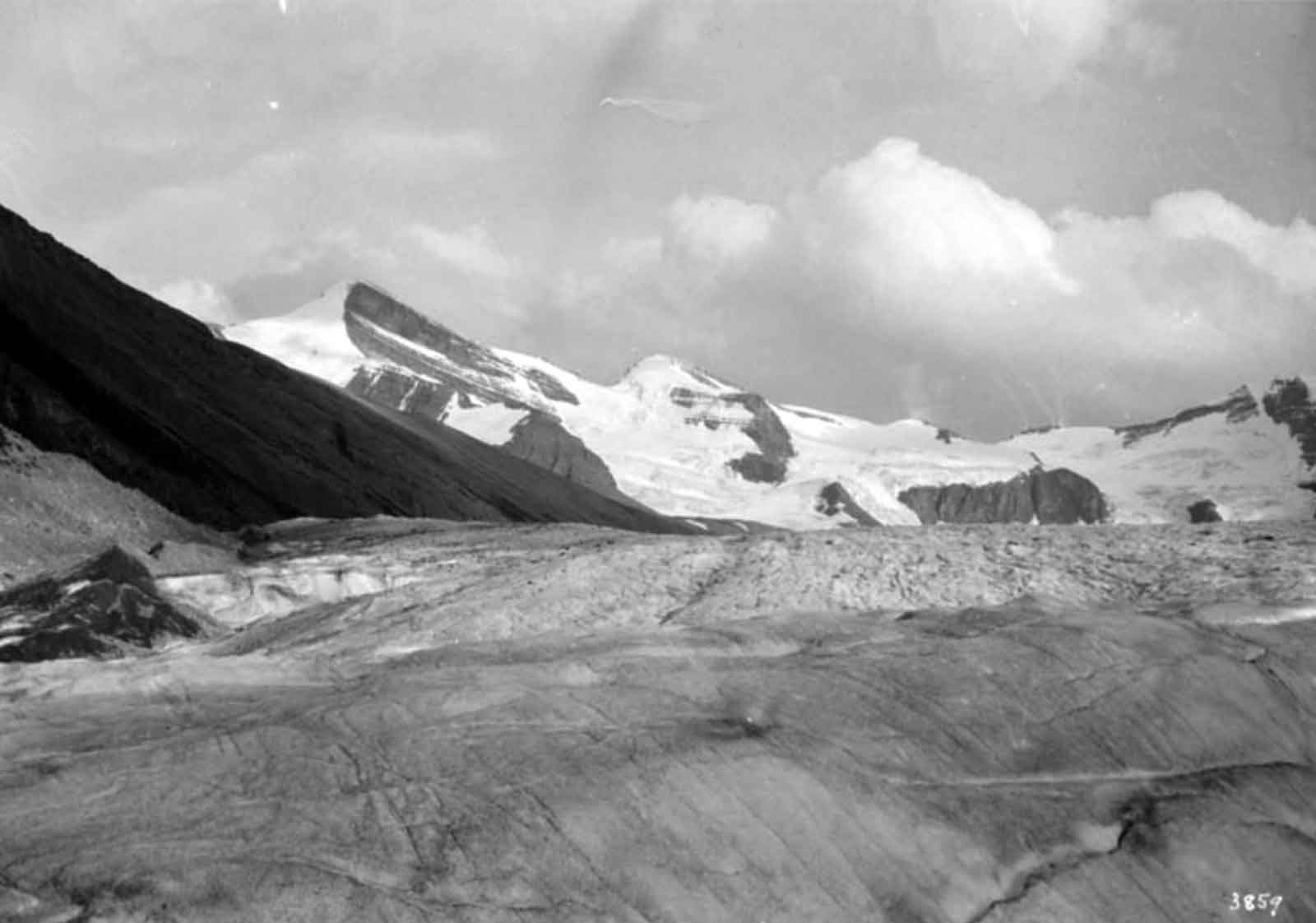
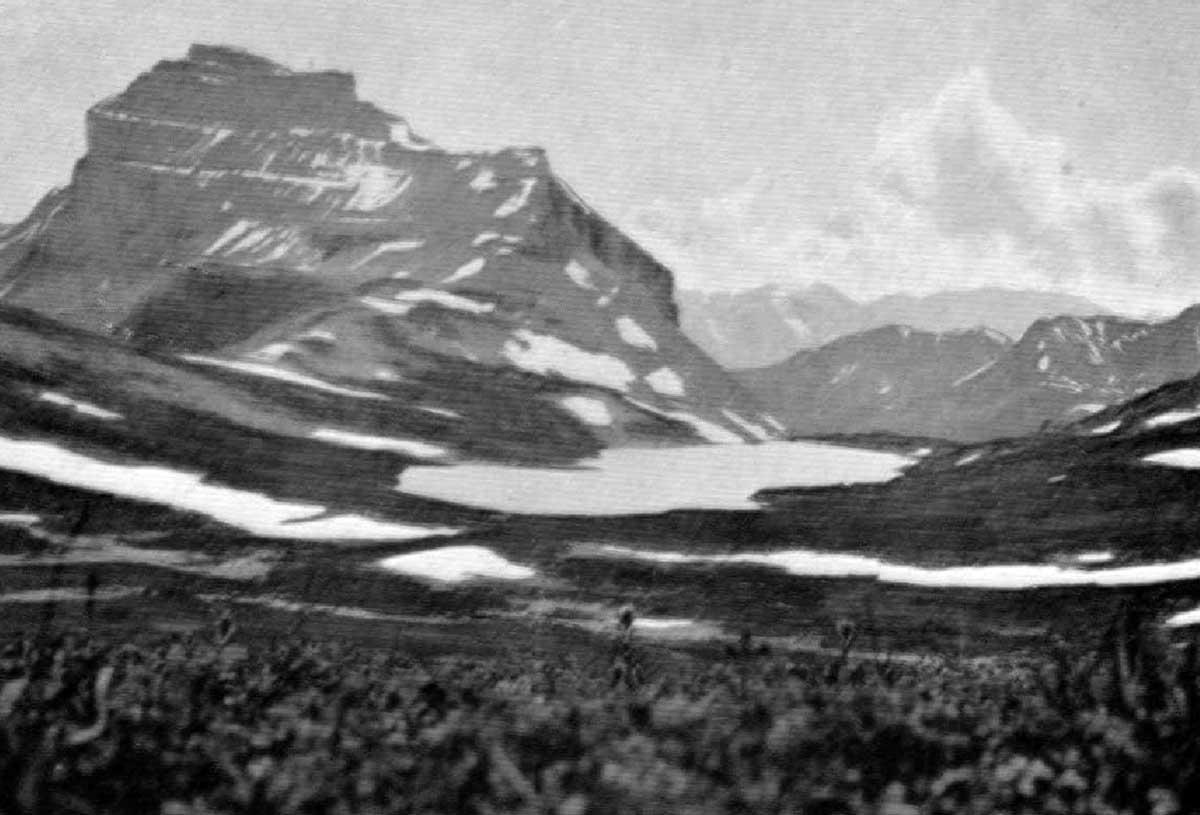
Robson Glacier, Rearguard Mountain and Mount Robson. Smithsonian-Alpine Club of Canada Mount Robson expedition.Photo: Byron Harmon, 1911

Robson Glacier, Rearguard Mountain and Mount Robson. Smithsonian-Alpine Club of Canada Mount Robson expedition.Photo: Byron Harmon, 1911 Whyte Museum of the Canadian Rockies

In 1917, while serving in the Canadan Army Medical Corps in France, George R. B. Kinney [1872–1961] wrote to Arthur Hinks, the secretary of the Royal Geographical Society in London, that he would be pleased to deliver a lecture on mountaineering in the Canadian Rockies, illustrated by “100 choice colored lantern slides, second to none (by report), and taken from my own negatives.… Mine are the original photographs taken of these hither to unexplored regions, and names like ‘Berg Lake,’ ‘Tumbling Glacier,’ ‘Robson Glacier,’ ‘Mt. Rearguard,’ ‘the Helmet,’ and ‘the Extinguisher’ that now have a permanency, were my suggestions, while Dr. Coleman gave the name of Lake Kinney on Mt. Robson’s western foot.” [1] Kinney delivered the lecture in January 1919, and was subsequently elected a Fellow of the RGS.

Kinney had accompanied Arthur Philemon Coleman [1852–1939] and Coleman’s brother Lucius on the first mountaineering expedition to Mount Robson in 1907, when they approached from the Fraser River side and got little further than Kinney Lake. They returned in 1908, guided by Adolphus Moberly [1887– ?] and John Yates [1880– ?], who took them up the Moose River valley and approached Robson from the north. They became the first people to report on Berg Lake, Tumbling Glacier, Robson Glacier, Rearguard Mountain, The Helmet, and Extinguisher Tower, features Kinney named after their appearances.

By walking a hundred yards from our camp into the valley Mount Robson came into view during the rare intervals when the clouds drifted away, disclosing an imposing dome of white rising eight thousand feet above our valley, the lower part banded with courses of rock. Immediately behind our little grove a half-mile of glacier flowed, separating us from the cliffs of the Rearguard, one of the subordinate peaks, which reached a height of about nine thousand feet.

— Coleman [2]

From his vantage on Mumm Peak during the 1911 Alpine Club of Canada–Smithsonian Robson Expedition, Arthur Oliver Wheeler [1860–1945] described the rugged ridge running from the centre of Mount Robson’s north-east face. “The ridge ends in a semi-detached rock mass, aptly named by Coleman ‘Rearguard.’”

Coleman did not claim to have named Rearguard.

Paleontologist Charles Doolittle Walcott [1850–1927] explored in the Mount Robson area in 1912:

Directly above Blue Glacier a point of rock was named by Dr. Coleman “The Helmet,” and the great black mountain in the center, which he called the “Rearguard,” is now given the Indian name of Iyatunga (Black Rock) (note: name approved by the Geographical Board of Canada, December, 1912.) [3]

“Iyatunga” is no longer official. No one seems to have used it except Walcott.

References:

  • 1. Kinney, George Rex Boyer [1872–1961]. London, England: Royal Geographical Society Archives. Letter to Arthur Hinks (1917).
  • 2. Coleman, Arthur Philemon P. [1852–1939]. The Canadian Rockies: New and Old Trails. London: T. Fisher Unwin, 1911, p. 315. Internet Archive [accessed 3 March 2025]
  • 3. Walcott, Charles Doolittle D. [1850–1927]. “The monarch of the Canadian Rockies.” National Geographic Magazine, (1913):626. Internet Archive

Rearguard Falls

British Columbia. Falls: Fraser River drainage
Fraser River, E of Tête Jaune Cache
52.9736 N 119.3639 W — Map 083D14 — GoogleGeoHack
Name officially adopted in 1991
Official in BCCanada

The name does not appear to be associated with Rearguard Mountain, nor does it appear on early maps. Keddie mentions in the report on his archeological survey, 1971:

In the upper Fraser, Chinook salmon head upstream from July 1 to August 31 and return down-stream from mid April to early June. The migration goes as far as Rearguard Falls (east of Tête Jaune Cache) and spawning occurs in almost every stream flowing into the Fraser below this point.

There is a sign at these falls indicating that they mark the limit of the upward migration of chinook salmon on the Fraser River. Hence the name “Rearguard.”

But according to naturalist Art Carson of Valemount:

The falls are now believed by Canada Fisheries and Oceans Department to be an insurmountable barrier to perhaps 90 percent of the salmon which attempt it, however. Of the successful ones (perhaps 350 to 550 per year) a few have even been found spawning in the glacial waters of the Robson River. As far as is known, Overlander Falls several kilometers upstream from Rearguard marks the true upper limit of migration, with the uppermost spawning beds (only large enough for a few fish) being located just below Overlander Falls adjacent to Denny Hogan’s early railway construction camp.

References:

  • Keddie, Grant R. Wells Grey Provincial Park and Upper Fraser-Rocky Mountain Trench surveys, 1971. Report to the Archaeological Sites Advisory Board of British Columbia.. 1971
  • MacGregor, James Grierson [1905–1989]. Overland by the Yellowhead. Saskatoon: Western Producer, 1974. Internet Archive

Read Road

Feature type: road
Province: British Columbia
Location: Loops N off Hwy 16, E of Dunster
Latitude: 53.1292 N
Longitude: 119.7594 W
Google Maps

A photo of the Read Family including; Clive, Bernie, Arthur, David, Walter and Ilsa, 1950.

A photo of the Read Family including; Clive, Bernie, Arthur, David, Walter and Ilsa, 1950.
Valley Museum & Archives Society

Clive F. (1933-1985) and Sarah Joyce Read moved to the Dunster area in 1950. Clive, born in Tuxford, Saskatchewan, was a farmer, logging contractor, and breeder of Belgian draft horses. He was a member of the Dunster Community Association and the Farmers’ Institute.

References:

  • Wheeler, Marilyn. The Robson Valley Story. McBride, B.C.: Robson Valley Story Group, 1979

Razorback Mountain

Alberta-BC boundary. Mountain
N of Caledonia Mountain
52.9783 N 118.6731 W — Map 083D15 — GoogleGeoHack
Name officially adopted in 1956
Official in BCCanada

A descriptive name possibly bestowed by the Alberta-British Columbia Boundary Commission in 1922.

References:

  • Cautley, Richard William [1873–1953], and Wheeler, Arthur Oliver [1860–1945]. Report of the Commission appointed to delimit the boundary between the Provinces of Alberta and British Columbia. Part II. 1917 to 1921. From Kicking Horse Pass to Yellowhead Pass.. Ottawa: Office of the Surveyor General, 1924. Whyte Museum
  • Cautley, Richard William [1873–1953], and Wheeler, Arthur Oliver [1860–1945]. Report of the Commission Appointed to Delimit the Boundary between the Provinces of Alberta and British Columbia. Parts IIIA & IIIB, 1918 to 1924. From Yellowhead Pass Northerly. Ottawa: Office of the Surveyor General, 1925. Whyte Museum

Razor Peak

British Columbia. Peak
N of Moose Lake
53.0303 N 118.9686 W — Map 083E02 — GoogleGeoHack
Earliest known reference to this name is 1911 (Wheeler)
Name officially adopted in 1951
Official in BCCanada

“Across the deep valley of Red Pass stood a ridge of rock, where the strata were very nearly vertical, and the snow-filled couloirs so peculiarly shaped as to give the intervening rock the appearance of razor-blades,” wrote Arthur Oliver Wheeler [1860–1945] after the 1911 Alpine Club of Canada–Smithsonian Robson Expedition. “The culminating crest of the ridge was on that account called ‘Razor Peak.’”

References:

  • Wheeler, Arthur Oliver [1860–1945]. “The Alpine Club of Canada’s expedition to Jasper Park, Yellowhead Pass and Mount Robson region, 1911.” Canadian Alpine Journal, Vol. 4 (1912):9-80
Also see:

Raush Valley (railway point)

British Columbia. Railway Point
Canadian National Railway, NW of Dunster
53.1833 N 119.9833 W — Map 83E/4 — GoogleGeoHack
Earliest known reference to this name is 1914 (GTP Timetable)
Name officially adopted in 1983
Official in BCCanada
77 miles west of the Yellowhead Pass on the Canadian National Railway
Mile 51 in Tete Jaune Subdivision (Red Pass to McBride as of 1977)
Grand Trunk Pacific Railway station built in 1913. Sold in 1963.
Raush Valley station on the Grand Trunk Pacific Railway, 1921

Raush Valley station on the Grand Trunk Pacific Railway, 1921
Adams Collection, Valley Museum & Archives, McBride #1999.16. (From Bohi, 1977, p. 23)

The Grand Trunk Pacific railway station at Raush Valley (Mile 77) was named for the Raush River. (The name appears as “Rush Valley” on the 1914 Grand Trunk timetable.)

Bohi:

Many GTP depots along the sparsely settled line through northern BC were built primarily to house section crews with the understanding that once traffic warranted, these buildings would be converted into operational stations. The men posing on the classic handcar were likely the local section gang that resided in the depot. The lack of a train bulletin, an order board or a trackside platform is a good indication that this building was used as a section house rather than a depot. In such cases, the freight shed of Type E stations was often used as a bunkroom by the section laborers, while the balance of the building was occupied by the section foreman and his family (note the two children in the background, left). In the early 1950s many underused combination stations were converted into freight and passenger shelters: all but the freight shed being demolished or removed, while the remaining portion was re-configured. At least twenty-five Type E stations, mostly along the BC North Line, were transformed into such FPS. The Raush Valley depot, built in 1913, had an exterior treatment of roughcast stucco and wooden walers added in 1927. The walls and ceiling were insulated in 1941. This depot was sold and removed in 1963.

References:

  • Bohi, Charles W. Canadian National’s Western Depots. The Country Stations in Western Canada. Railfare Enterprises, 1977, p. 23
Also see:

Raush River

British Columbia. River: Fraser River drainage
Flows NE into Fraser River, SE of Castle Creek
53.2 N 120 W — Map 93H/1 — GoogleGeoHack
Earliest known reference to this name is 1871 (Trutch)
Name officially adopted in 1963
Official in BCTopo map from Canadian Geographical Names
This river appears on:
Trutch’s map of BC 1871 [as “Rau’ Shuswap”]
Pre-emptor’s map Tête Jaune 3H 1919 [Raush (Raushuswap) River]

According to British Columbia Geographical Names, the original name was “Rivière au Shuswap,” abbreviated as “R. au Shuswap” on Trutch’s 1871 map of British Columbia [the text is compressed, and could easily be misinterpreted as RauShuswap.] Labelled “RauShuswap River” on Jorgensen’s 1895 map of B.C. Labelled “Raush (Raushuswap) River” on BC map 3H, 1914, 1915, 1919, and 1923, following the Geographic Board of Canada suggestion that Raush be adopted, being an abbreviation for Rivière AU SHuswap, in place of Raushuswap, in itself a corrupted abbreviation and too long a name for such a small river.

The river was still known as the Shuswap River in 1910, when Louie Knutson met Secwepemc people (known in English as Shuswap) camping nearby (Kiwa Creek was called the Little Shuswap).

“The local name of the Big Shuswap conflicts with the Shuswap River further south and appears on recent government maps as Raushwap or Rausch River (from Riviere au Shuswap),” wrote Munday in 1925. The government maps that Munday mentions, using the spellings Raushwap and/or Rausch, are not identified.

The Raush Valley post office operated from 1915 to 1923; there are no known examples of the cancellation mark.

In 2023 the Simpcw First Nation declared the Raush River watershed an Indigenous Protected and Conserved Area (IPCA), signaling their intention to protect the valley and exercise their right to control what happens there.

References:

  • Munday, Walter Alfred Don [1890–1950]. “In the Cariboo Range – Mt. David Thompson.” Canadian Alpine Journal, Vol. 15 (1925):130-136
  • Wheeler, Marilyn [1932–2016]. The Robson Valley Story. McBride, B.C.: Robson Valley Story Group, 1979
  • Topping, William. A checklist of British Columbia post offices. Vancouver: published by the author, 7430 Angus Drive, 1983
  • British Columbia Geographical Names. Raush River
  • Cox, Sarah. “It is so beautiful: rare inland rainforest in B.C. declared Indigenous protected area.” Narwhal, March 31, 2023 (2023). Narwhal

Ralph Forster Hut

British Columbia. Hut
SW side of Mount Robson
53.1167 N 119.15 W GoogleGeoHack
Not currently an official name.

In 1963 the Alpine Club of Canada requested permission from the British Columbia Provincial Parks Branch to build a climbing hut on Mount Robson. The Club stated that shelters placed in well chosen locations will minimize the danger of exposure to mountaineers entering this area, and assist the rescue teams when they are needed in these areas. “Safety is the major reason why we wish to establish shelters and for which we expect cooperation from your department.”

BC Parks issued a Park Use Permit for erection of the shelter The costs of structure and erection were borne by the ACC, but the permit did not give the club sole use or control of use of the cabin. The original dome-shaped hut was built in 1966, replaced by a Pan Abode hut in 1969.

The hut was named for Ralph Forster, who made a generous contribution toward the construction of the new hut. Forster was a long-time member of the ACC, a Fellow of the Royal Geographical Society and of the Alpine Club (London). A native Albertan, he became a chartered accountant after graduating from the University of Alberta. After joining the ACC in 1932, he served as Honorary Auditor until 1952. Although he was ill, he was flown to the hut when materials were being taken up on the first day of construction. He died in 1971 at the age of 74.

References:

  • Kariel, Herbert G. [1927–], and Kariel, Patricia E. Alpine huts in the Rockies, Selkirks and Purcells. Banff, Alberta: Alpine Club of Canada, 1986