Category Archives: Map

Arrowsmith’s map North America 1850

Map number 100 in Historic Forts and Trading Posts, the enumeration of 600 forts and 150 maps of the fur trade by Ernest Voorhis [1859–1933] [1].

I’ve been unable o pin down this map; it is not John Arrowsmith’s map BC 1859.

References:

  • 1. Voorhis, Ernest [1859–1933]. Historic Forts and Trading Posts of the French Régime and of the English Fur Trading Companies. Ottawa: Department of the Interior, 1930. University of British Columbia Library [accessed 3 January 2026]
Bowen’s map of North America 1763

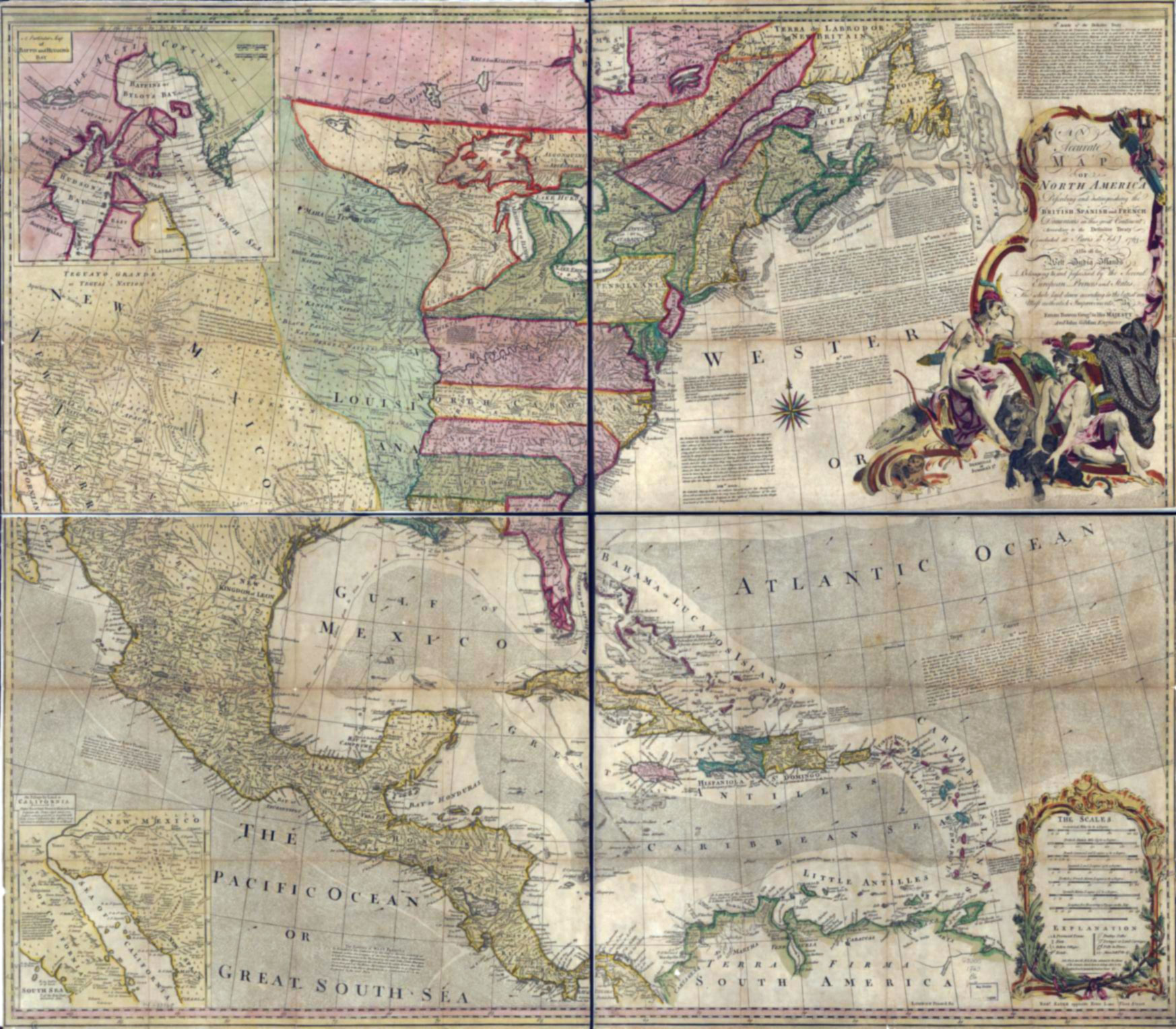
An accurate map of North America. Attributed to Emmanuel Bowen 1763

An accurate map of North America.
Attributed to Emmanuel Bowen 1763
Library of Congress [accessed 19 January 2026]

An accurate map of North America.
Describing and distinguishing the British, Spanish and French dominions on this great continent;
according to the definitive treaty concluded at Paris 10th Feby. 1763.
Also all the West India Islands belonging to, and possessed by the several European princes and states. The whole laid down according to the latest and most authentick improvements.
London, Printed for Robt. Sayer.

Attributed to Welsh cartographer Emanuel Bowen [1694–1767].

The Treaty of Paris, also known as the Treaty of 1763, was signed on 10 February 1763 by the kingdoms of Great Britain, France, and Spain, with Portugal in agreement, following Great Britain and Prussia’s victory over France and Spain during the Seven Years’ War. The signing of the treaty formally ended the conflict between France and Great Britain over control of North America (the Seven Years’ War, known as the French and Indian War in the United States), and marked the beginning of an era of British dominance outside Europe. Great Britain and France each returned much of the territory that they had captured during the war, but Great Britain gained much of France’s possessions in North America [1].

Ernest Voorhis [1859–1933] in Historic Forts and Trading Posts mistakenly says this map shows Jasper House, “built in 1799 at outlet of Brûlé Lake and called Rocky Mountain House” [2].

This map includes:
Parts Unknown
References:

  • 1. Wikipedia. Treaty of Paris 1763 [accessed 17 February 2026]
  • 2. Voorhis, Ernest [1859–1933]. Historic Forts and Trading Posts of the French Régime and of the English Fur Trading Companies. Ottawa: Department of the Interior, 1930, Map No. 98. University of British Columbia Library [accessed 3 January 2026]

Devine’s map North West part of Canada 1857

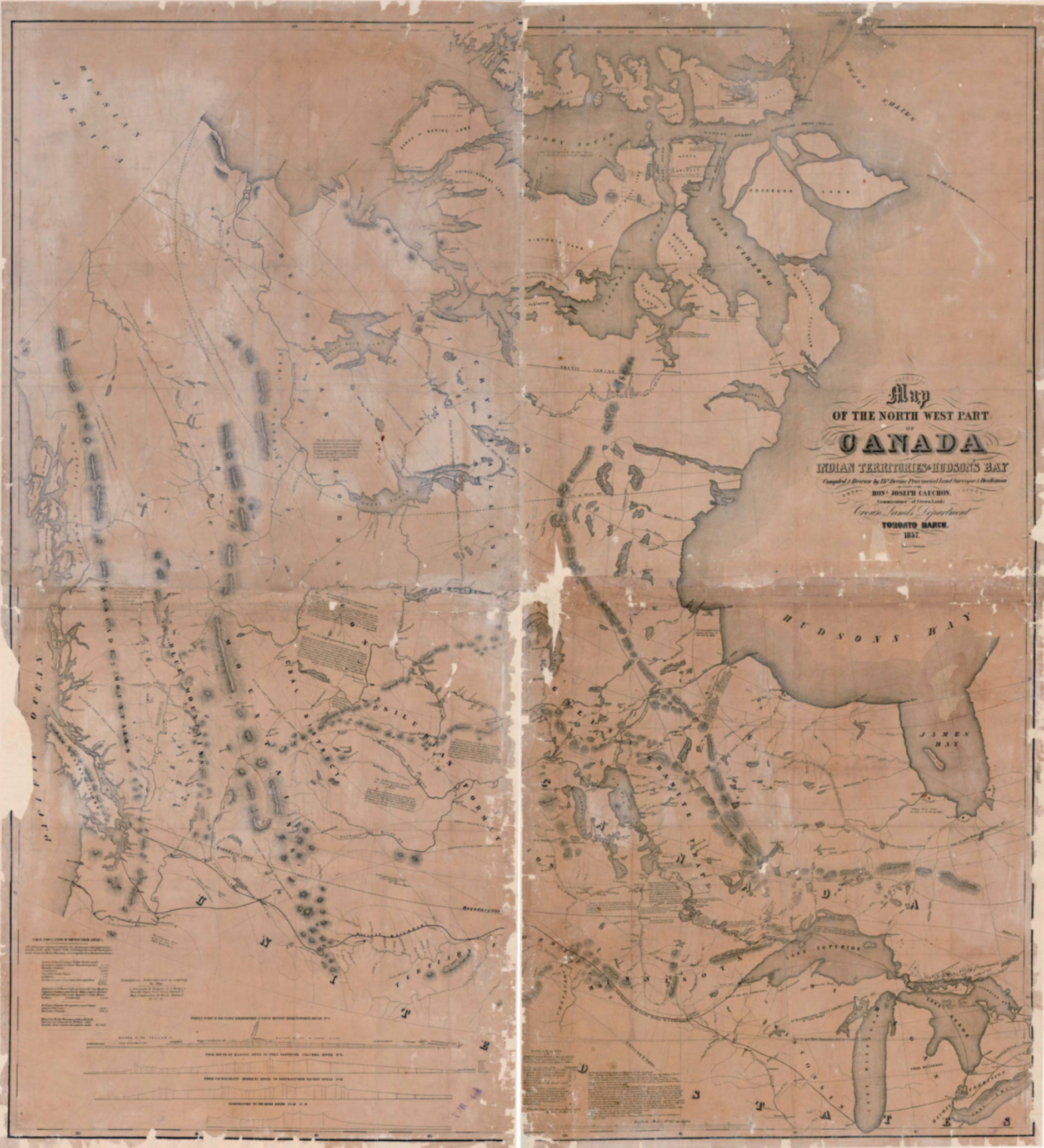
Map of the North West part of Canada. Indian Territories & Hudson's Bay

Map of the North West part of Canada.
Indian Territories & Hudson’s Bay
Library and Archives Canada [accessed 19 January 2026]

Map of the North West Part of Canada.
Indian Territories & Hudson’s Bay

Compiled & Drawn by Thos. Devine, Provincial Land Surveyor & Draftsman, by Order of the Hon. Joseph Cauchon, Commissioner of Crown Lands
Crown Lands Department
Toronto March, 1857.

Profiles of a) Route for Pacific railroad from St. Pauls Mississippi River to Puget Sound No. I, b) Mouth of Kansas River to Fort Vancouver Columbia River No. II. c) Council Bluff Missouri River to San Francisco Pacific Ocean No. III; d) Westport to the River Savier Utah No. IV Erebus & Terror Bay 1 1/2″ x 2 1/4″

Map No. 12 in Voorhis [1].

This map includes:
Acton House
References:

  • 1. Voorhis, Ernest [1859–1933]. Historic Forts and Trading Posts of the French Régime and of the English Fur Trading Companies. Ottawa: Department of the Interior, 1930. University of British Columbia Library [accessed 3 January 2026]
De L’Isle’s map of Western North America 1752

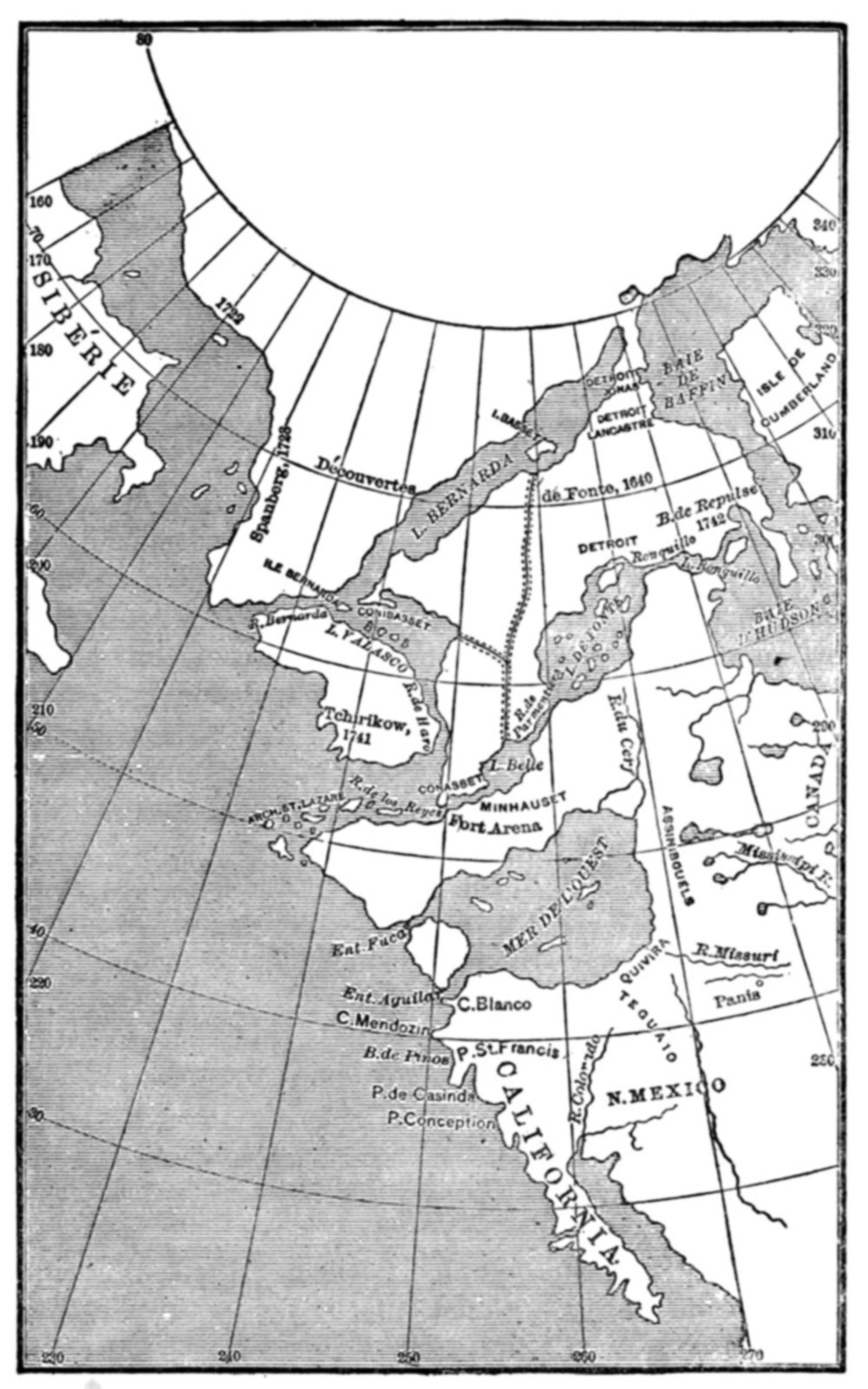
De L’Isle’s map 1752

De L’Isle’s map 1752
The Great Company [accessed 17 January 2026]

This map is labeled as “De L’Isle’s Map, 1752” in The Great Company, a history of the Hudson’s Bay Company by Henry Beckles Willson [1869–1942] [1]. Guillaume de L’Isle [1675–1726] was a French cartographer known for his popular and accurate maps of Europe and the newly explored Americas.

The far northwest area showing a “L. Bernarda” is labelled “Découvertes de Fonte, 1640.” The hatched lines presumably indicate mountains chains.

FONTE, BARTHOLOMEW DE, reputed to have made a voyage to the northwest coast of America in the course of which a passage from the Pacific to the Atlantic oceans was discovered; fl. 1640.

The account of this voyage, first published in the Monthly Miscellany or Memoirs for the Curious, April and June 1708, took the form of a letter by de Fonte in which he described himself as “then Admiral of New Spain and Peru, and now Prince of Chili.” This apocryphal account is now attributed to the editor or owner of the London magazine, James Petiver. There is no reliable evidence to authenticate either the existence of de Fonte himself or of the voyage. The publication of this highly imaginative account led to a lively controversy in the mid-18th century in which Arthur Dobbs, the Irish challenger of the exclusive charter rights of the HBC and a proponent of the discovery of the northwest passage by de Fonte, was joined by Henry Ellis and Theodorus Swaine Drage in arguing in favour of the authenticity of the account. Of even greater interest was the manner in which two prominent French geographers, Joseph-Nicolas Delisle and Phillipe Buache, attempted to interpret de Fonte’s imaginary geography in maps, notably the “Carte générale des découvertes de l’Amiral de Fonte et autres navigateurs espagnols, anglois et russes, pour la recherche du Passage à la Mer du Sud” published in November 1752 (see J.-N. Delisle, Nouvelles cartes des découvertes de l’Amiral de Fonte (Paris, 1753) ) [2].

This map includes:
Rocky Mountains [?]
References:

  • 1. Willson, Henry Beckles [1869–1942]. The Great Company. Being a History of the Honourable Company of Merchants-Adventurers Trading Into Hudson’s Bay. 1900. Gutenberg [accessed 17 January 2026]
  • 2. Ireland, Willard E. Fonte, Bartholomew De. University of Toronto, 2003. Dictionary of Canadian Biography Vol. 1 [accessed 15 February 2026]

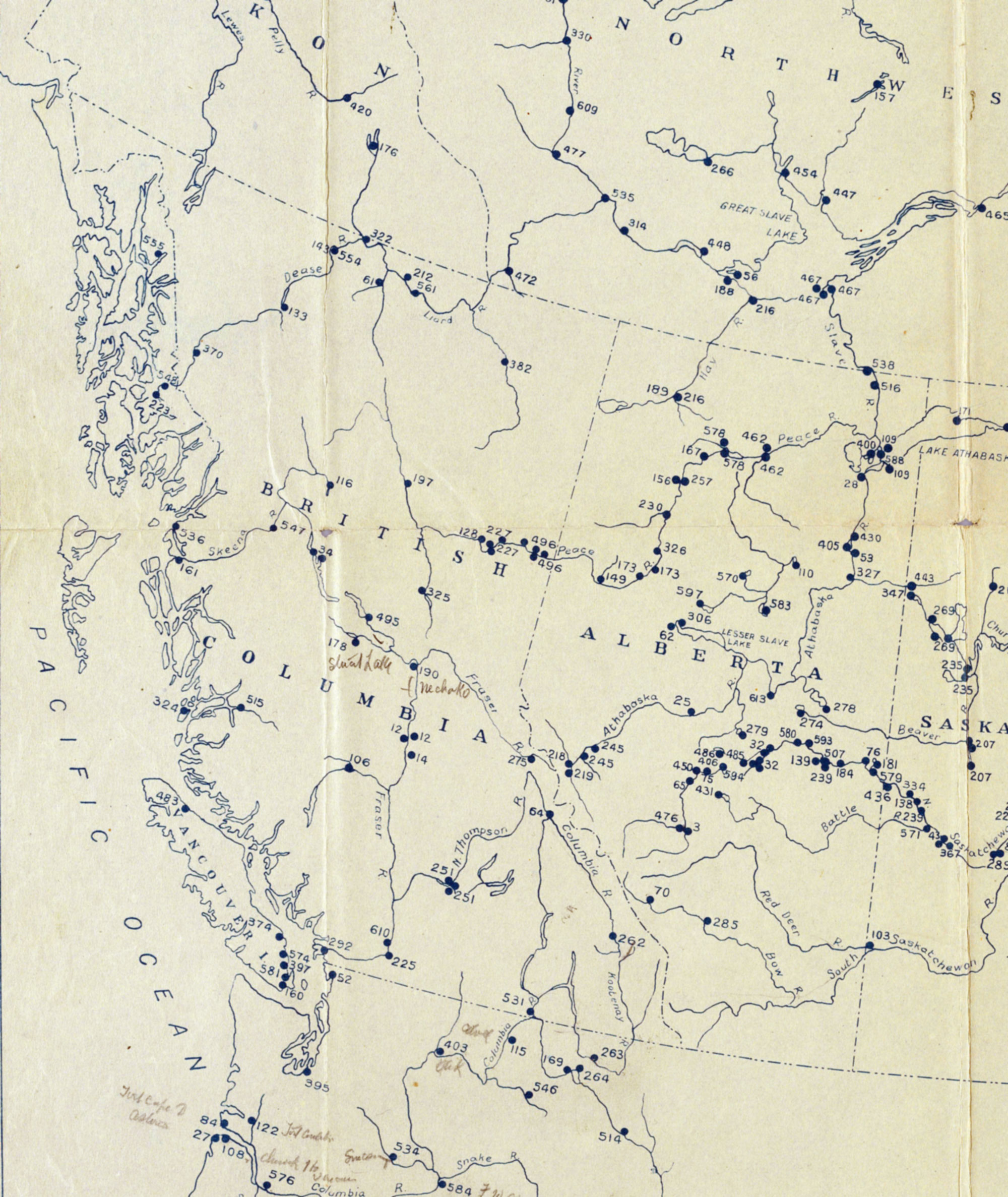
Historic Forts and Trading Posts 1930

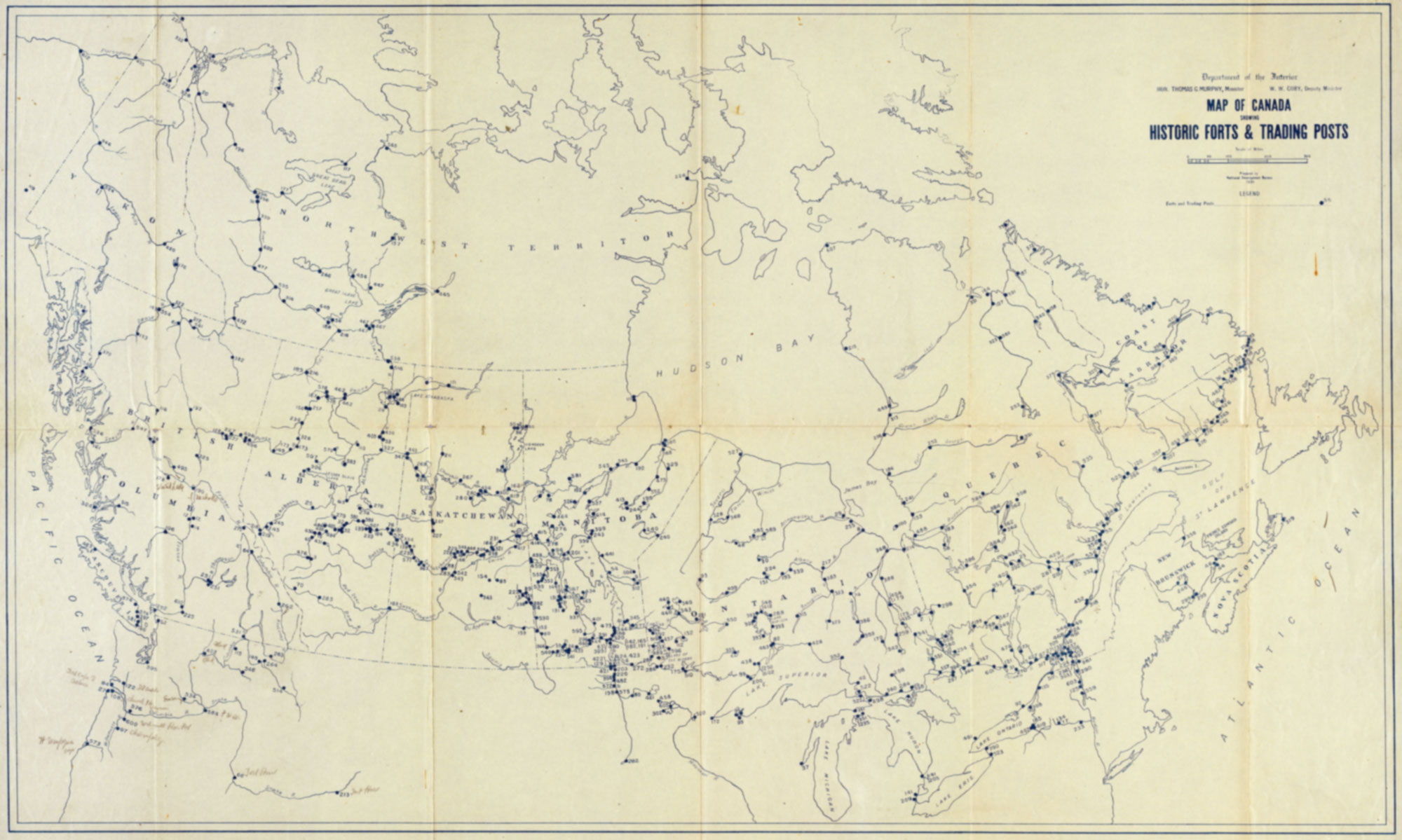
Map of Canada showing Historic Forts & Trading Posts. Department of the Interior, 1920

Map of Canada showing Historic Forts & Trading Posts.
Department of the Interior, 1920


Detail

Detail

Map of Canada Showing Historic Forts and Trading Posts
Department of the Interior, 1930
Prepared by National Development Bureau

This map includes:

References:

  • Voorhis, Ernest [1859–1933]. Historic Forts and Trading Posts of the French Régime and of the English Fur Trading Companies. Ottawa: Department of the Interior, 1930. University of Britih Columbia Library [accessed 3 January 2026]

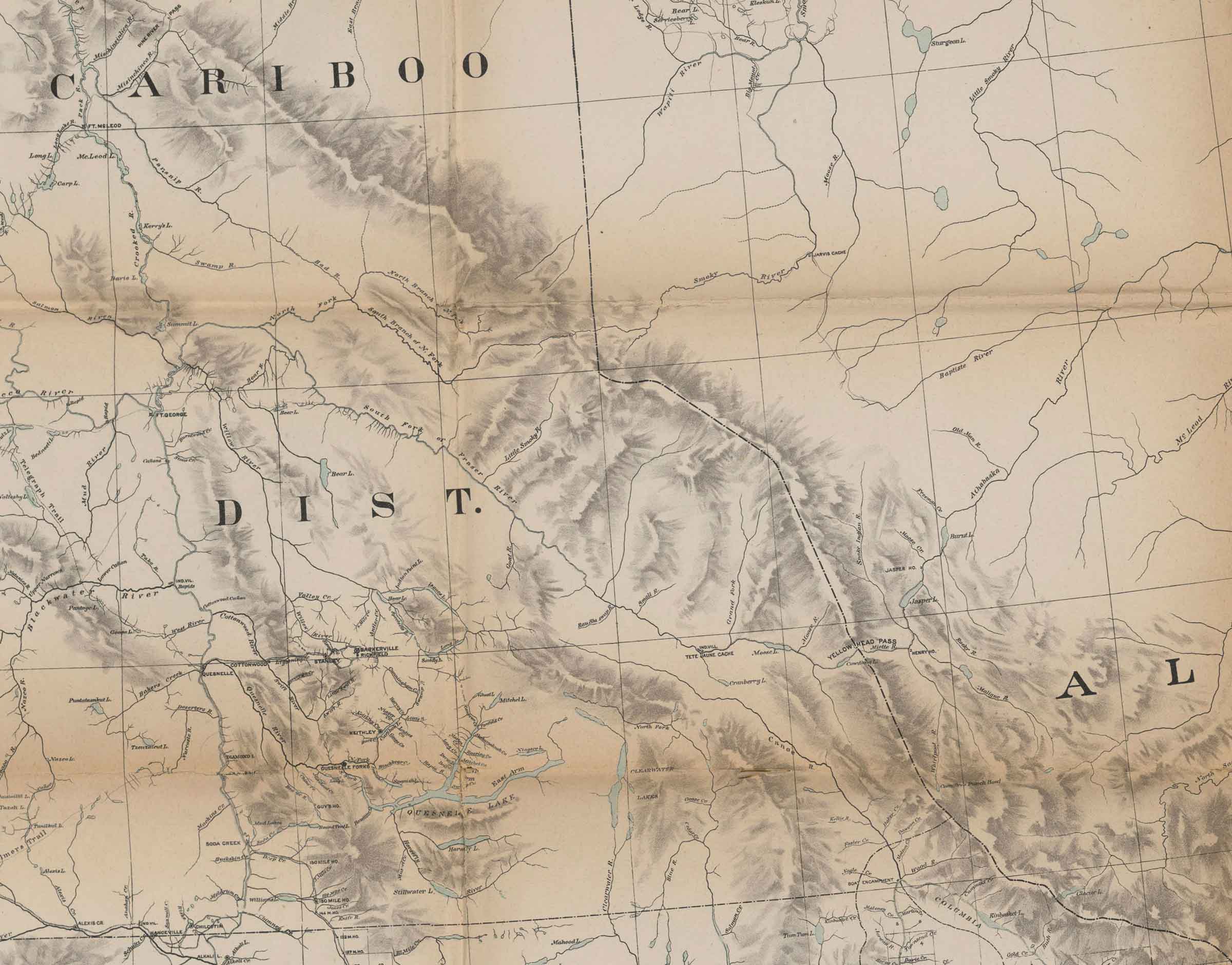
Jörgensen Map Province of BC 1895

Map of the Province of British Columbia, 1895. (Detail)

Map of the Privince of British Columbia, 1895. (Detail) Internet Archive [accessed 16 April 2025]

Map of the Province of British Columbia
Compiled by direction of the Honourable G. B. Martin,
Chief Commissioner of Lands and Works, Victoria, B.C.
Compiled and drawn in the Department of Lands and Works
by Gotfred Jörgensen C.E. 1895

Gotfred Emil Jörgensen (flourished c. 1890–1910) was a Danish-American civil engineer active in British Columbia, Canada, and Washington State in the late 19th and early 20h centuries. Jörgensen is elusive, and there is no record of his birth in Denmark or his relocation to the Pacific Northwest. He lived for a time in Seattle, where he appears in the 1891 directory as a Civil Engineer, but most of his work was done for the British Columbia Department of Lands and Works. In his earliest maps, he appears as a “draughtsman,” by 1891 he is listed as a “civil engineer,” and by 1909 he is the “Survey General of British Columbia.” It is possible he returned to Denmark in the early 20th century. He is most admired for his large-scale maps of Victoria City and British Columbia.

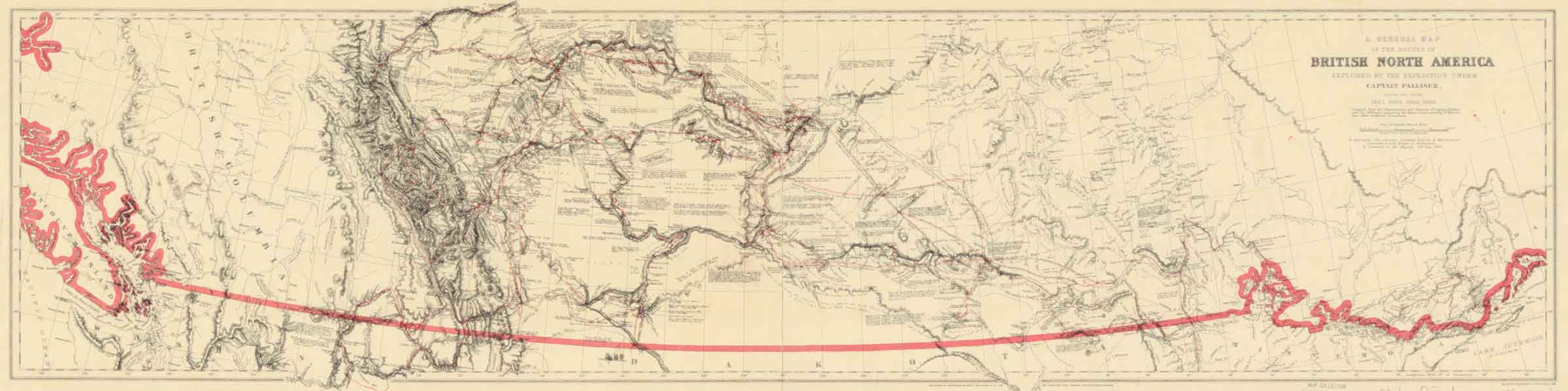
Palliser Map 1863

General map of the routes in British North America explored by the expedition under Captain Palliser during the years 1857, 1858, 1859, 1860

General map of the routes in British North America explored by the expedition under Captain Palliser during the years 1857, 1858, 1859, 1860 Internet Archive [accessed 26 February 2025]


Palliiser’s routes [detail]

Palliiser’s routes [detail]

A General Map of the Routes in British North America Explored by the Expedition under Captain Palliser, during the years 1857, 1858, 1859, 1860. Compiled from the Observations and Reports of Captain Palliser and his Offcers, including the Maps constructed by Dr. Hector, and other authentic documents. To accompany “The Journals, Detailed Reports, & Observations” presented to both Houses of Parliament, by Command of Her Majesty, 19th May, 1863. Standord’s Geographical Estab. London, 1865

Captain John Palliser [1817–1887] was a geographer who hailed from County Meath, Ireland. After service in the military he participated in a hunting exploration among the native peoples of the American West that was chronicled in his book, Adventures of a Hunter in the Prairies, published to much acclaim in 1853.


Later that decade, the Royal Geographic Society proposed to the Colonial Office that Palliser explore Canadian territory between Lake Superior and the Rocky Mountains, which was approved by Secretary of State for the Colonies, Henry Labouchere. His instructions to Palliser was to attain a general and scientific knowledge of the regions in areas of land, agriculture, coal and minerals.


This map shows the routes taken by the British North America Exploring Expedition over its four year period. Despite a £13,000 budget that was three times the original estimate its findings provided the Government with invaluable evidence on the topographical and economic potential of the country.

References:

  • Palliser, John [1817–1887]. Solitary Rambles and Adventures of a Hunter in the Prairies. London: John Murray, 1853. Internet Archive [accessed 27 February 2025]
  • Palliser, John [1817–1887]. Further Papers Relative to the Exploration by the Expedition Under Captain Palliser of That Portion of British North America Which Lies Betwees the Northern Branch of the River Saskatchewan and the Frontier of the United States; And Between the Red River and the Rocky Mountains, and Thence to the Pacific Ocean.. London: George Edward Byre and William Spottiswoode, 1860. Canadiana [accessed 10 March 2025]
  • Spry, Irene Mary Biss [1907–1998], editor. The Papers of The Palliser Expedition 1857-1860. Champlain Society, 1968. Internet Archive [accessed 26 February 2025]

Peter Pond’s map of Western North America 1785

[Map of the region from Hudson Bay to the Pacific Ocean and from Lake Michigan to the Arctic Ocean]

[Map of the region from Hudson Bay to the Pacific Ocean and from Lake Michigan to the Arctic Ocean]
Library and Archives Canada [accessed 24 February 2025]

[Map without title of the region from Hudson Bay to the Pacific Ocean and from Lake Michigan to the Arctic Ocean]

Fur trader Peter Pond [1793–1807] pushed farther north and west than any other trader in the 1770s and 1780s. He was the first white man to cross Portage La Loche (also known as Methye Portage) to the Athabasca River and Lake Athabasca. The discovery linked the Mackenzie River watershed with the rivers flowing to Hudson Bay. His activities led to the first organization named the North West Company. His reputation for violence, however, invited the suspicion of other traders both inside and outside the concern and eventually forced his withdrawal from the company.

Pond was the first to outline the general features of the Mackenzie River system. His findings fired Alexander Mackenzie [1764–1820] with the possibilities of discovery in the north and led him to follow the course of the river to its frozen mouth in 1789. Pond’s maps and suggested course of the waters of Athabasca are enduring testaments to him as a pioneer in the last great fur-bearing area of North America.

This map includes:
Athabasca River [as “R. Arabasca”]
Peace River [as “River of Peace”]

Tribes
Assiniboine Indians [as “Assiniboine of Canoes”]
Beaver Indians
References:

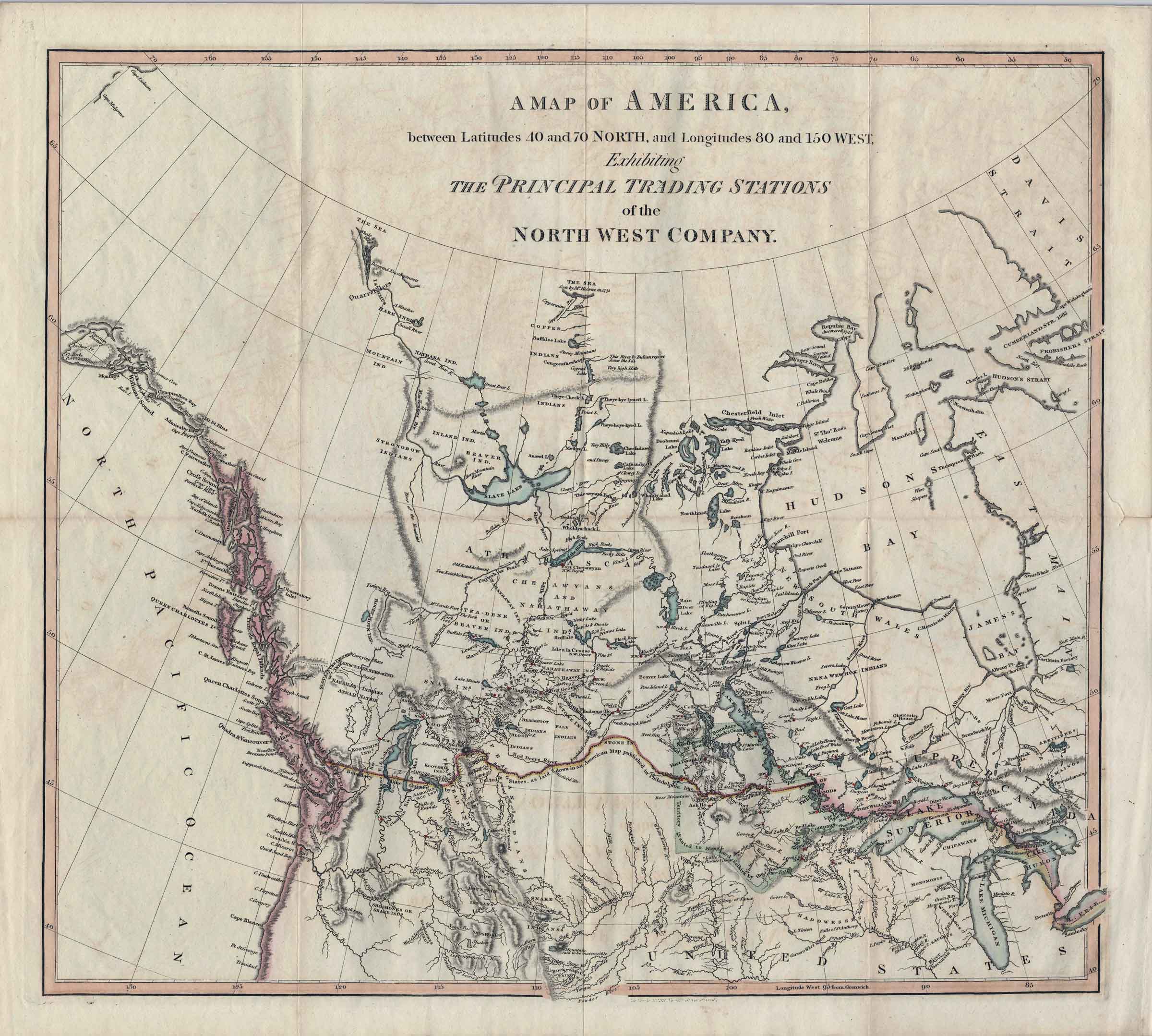
McGillivray map North West Company 1817

A map exhibiting the principal trading stations of the North West Company, 1817

A map exhibiting the principal trading stations of the North West Company, 1817
University of British Columbia Library


A map exhibiting the principal trading stations of the North West Company,1817 [detail]

A map exhibiting the principal trading stations of the North West Company,1817 [detail]
University of British Columbia Library

A Map of America,
Between Latitudes 40° and 70° North, and Longitudes 80° and 150° West,
Exhibiting the Principal Trading Stations of the
North West Company.

The map appears in Notice respecting the boundary between His Majesty’s possessions in North America and the United States, 1817, a 12-page booklet attributed to Simon McGillivray [1785–1840]. [1] McGillivray played a role in merging the family-owned North West Company with the rival Hudson’s Bay Company in 1821.

This map is similar to Sax’s map of North America, 1818.

This map is cited by Ernest Voorhis [1859–1933] in Historic Forts and Trading Posts as Map No. 5, “America exhibiting principal trading stations of North West Co. in Davidson’s North West Co., London 1817” [2]. Gordon Charles Davidson [1884–1922] published The North West Company in 1918, containing the same map [3].

This map includes:
Athabasca Country
Athabasca Pass
Canoe River
Canoe Encampment [A NWC post indicated here]
Finlay River [as “Finlay’s Bra.”]
Fraser River [as “Fraser’s R.”]
Mackenzie River [as “MacKenzie Riv.”]
Peace River [as “Unjigah or Peace R.”]
Unjigah River [as “Unjigah or Peace R.”]

Tribes
Atnah Indians
Beaver Indians
Blackfoot Indians
Blood Indians
Kootana Indians
Nagailer Indians
Nanscud Denees
Rocky Mountain Indians
Snake Indians [or Snare Indians, “now destroyed”]
Snav Indians
Stony Indians
References:

  • 1. McGillivray, Simon [1785–1840], attributed. Notice respecting the boundary between His Majesty’s possessions in North America and the United States; with a map of America, between latitudes 40° and 70° North, and longitudes 80° and 150° West; exhibiting the principal trading stations of the North-West Company; and intended to accompany the narrative of occurrences in the Indian countries of North America, connected with the Earl of Selkirk, the Hudson’s Bay and the North-West Companies. London: B. McMillan, 1817. University of British Columbia Library
  • 2. Voorhis, Ernest [1859–1933]. Historic Forts and Trading Posts of the French Régime and of the English Fur Trading Companies. Ottawa: Department of the Interior, 1930. University of British Columbia Library [accessed 3 January 2026]
  • 3. Davidson, Gordon Charles [1884–1922]. The North West Company. Reissued 1967 by Russell & Russell, 1918. HathiTrust [accessed 21 January 2026]