Category Archives: Map

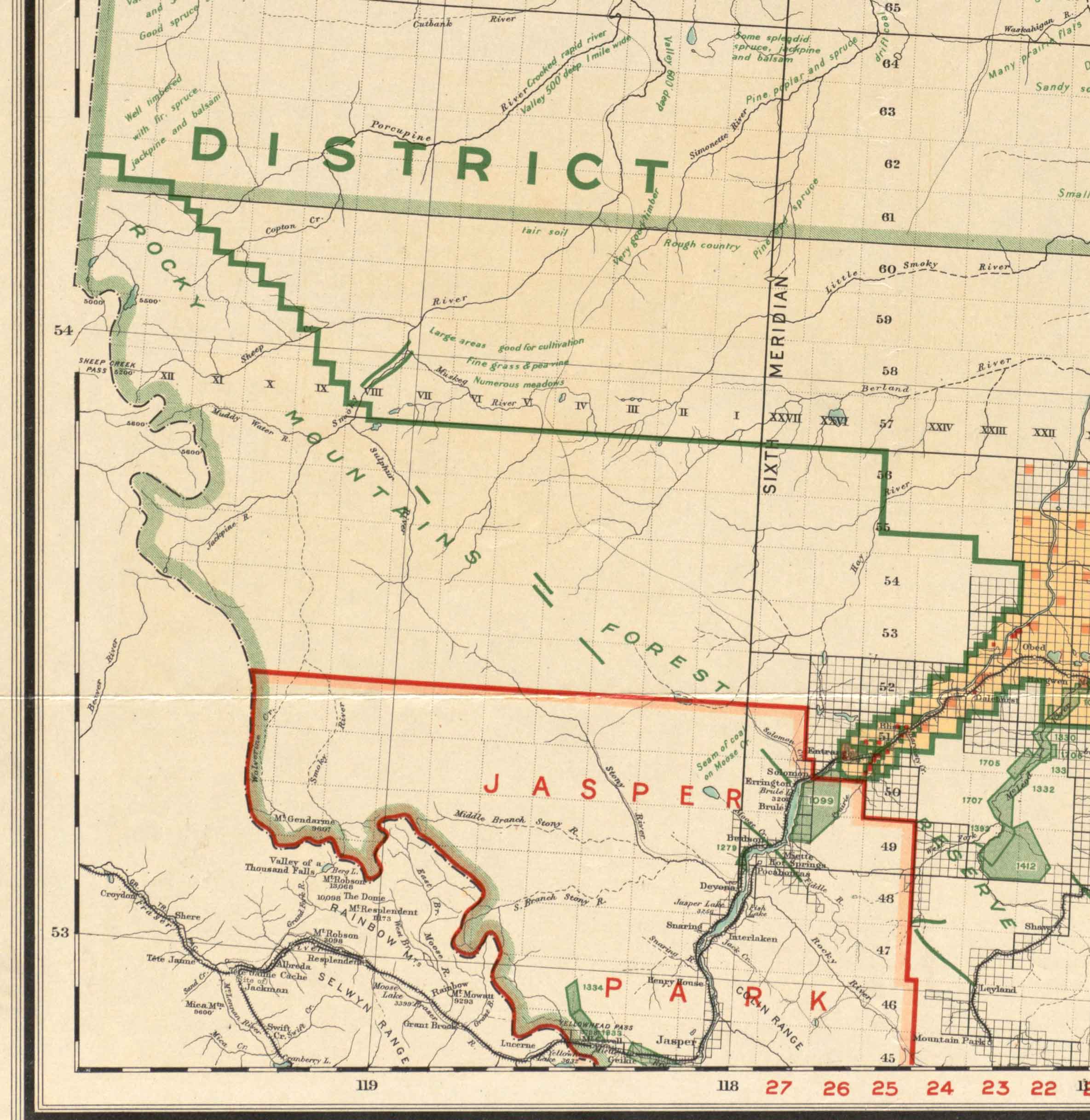
Northern Alberta 1919 map

Northern Alberta showing disposition of lands. Department of the Interior, 1919 (detail)

Northern Alberta showing disposition of lands. Department of the Interior, 1919 (detail)
Norman B. Leventhal Map & Education Center

Department of the Interior Canada
Honourable Arthur Meighen, Minister
Northern Alberta
Map showing disposition of lands
1919

Including lands reserved for purposes of solider settlement.

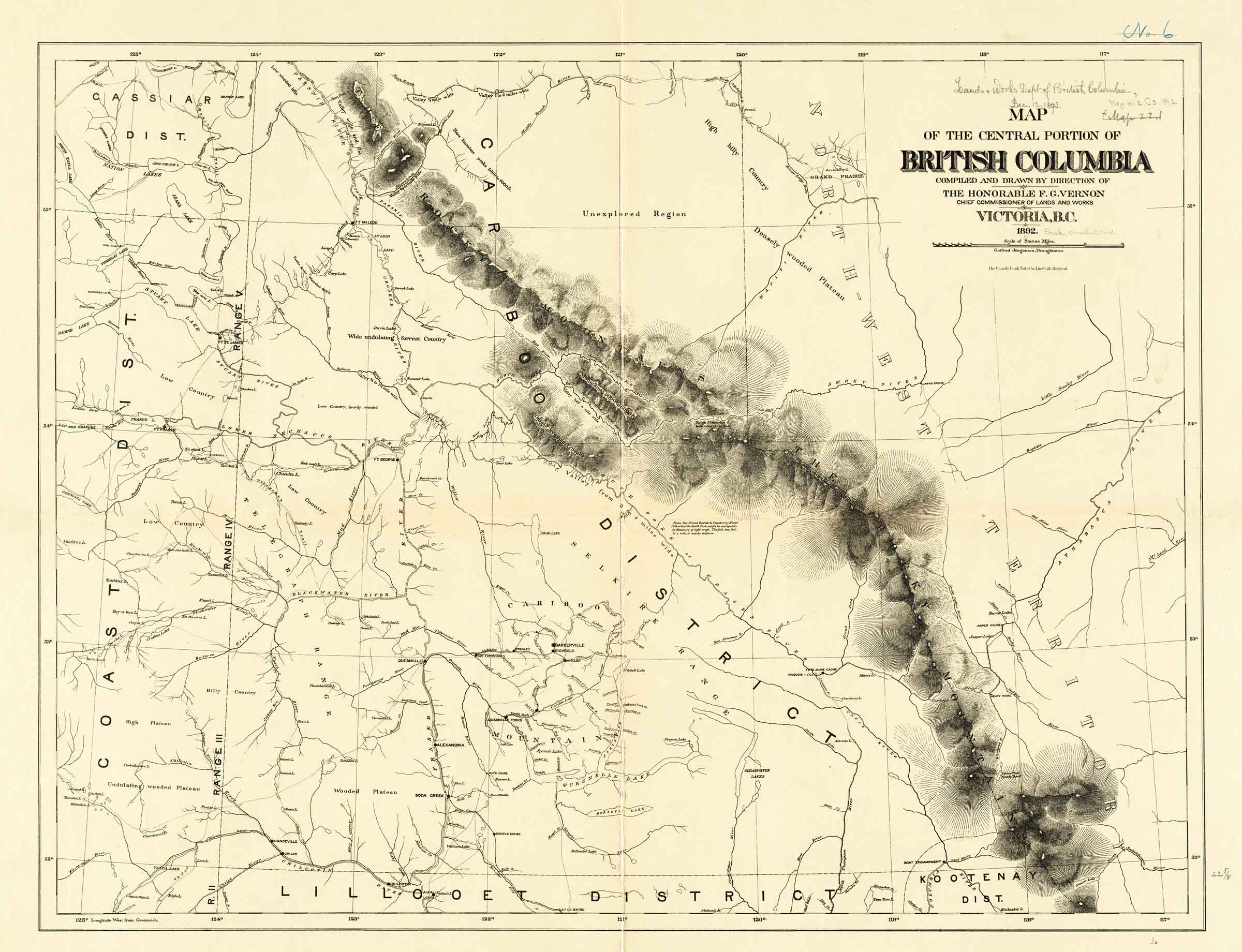
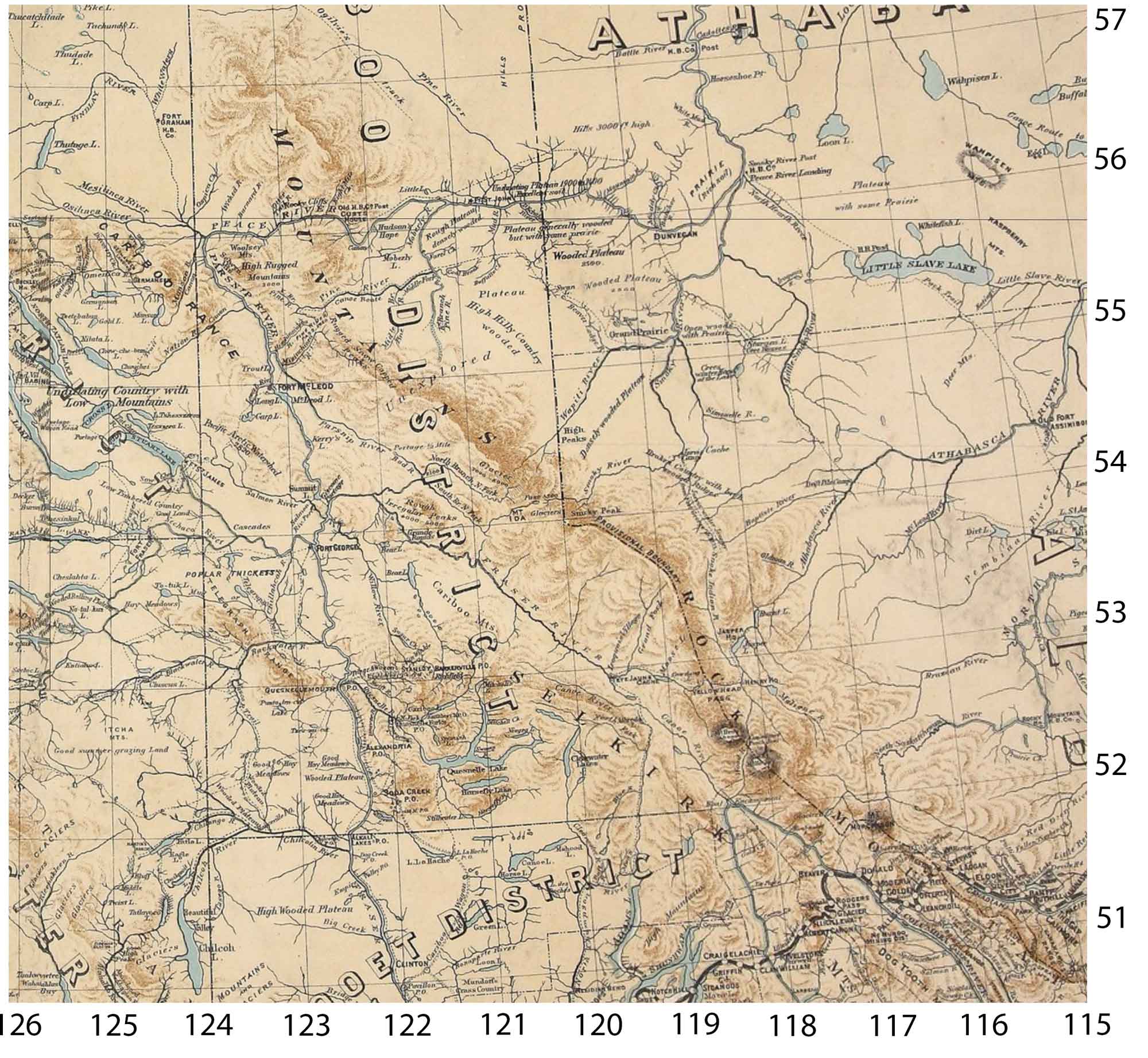
BC Lands Map Central 1892

Map of the central portion of British Columbia. 
British Columbia Department of Lands and Works, 1892

Map of the central portion of British Columbia.
British Columbia Department of Lands and Works, 1892
Norman B. Leventhal Map & Education Center

Map of the central portion of British Columbia compiled and drawn by direction of the Honorable F.G. Vernon, Chief Commissioner of Lands and Works
Victoria, B.C.
1892
Gotfred Jorgensen, Draughtsman.

Note along the South Fork of the Fraser River:

From the Grand Rapids to Cranberry River (185 miles) the South Fork might be navigated by steamers of light draft. The fall, 2 feet to a mile, is nearly uniform.

Note at Tête Jaune Cache: Iroquois I. Vill.

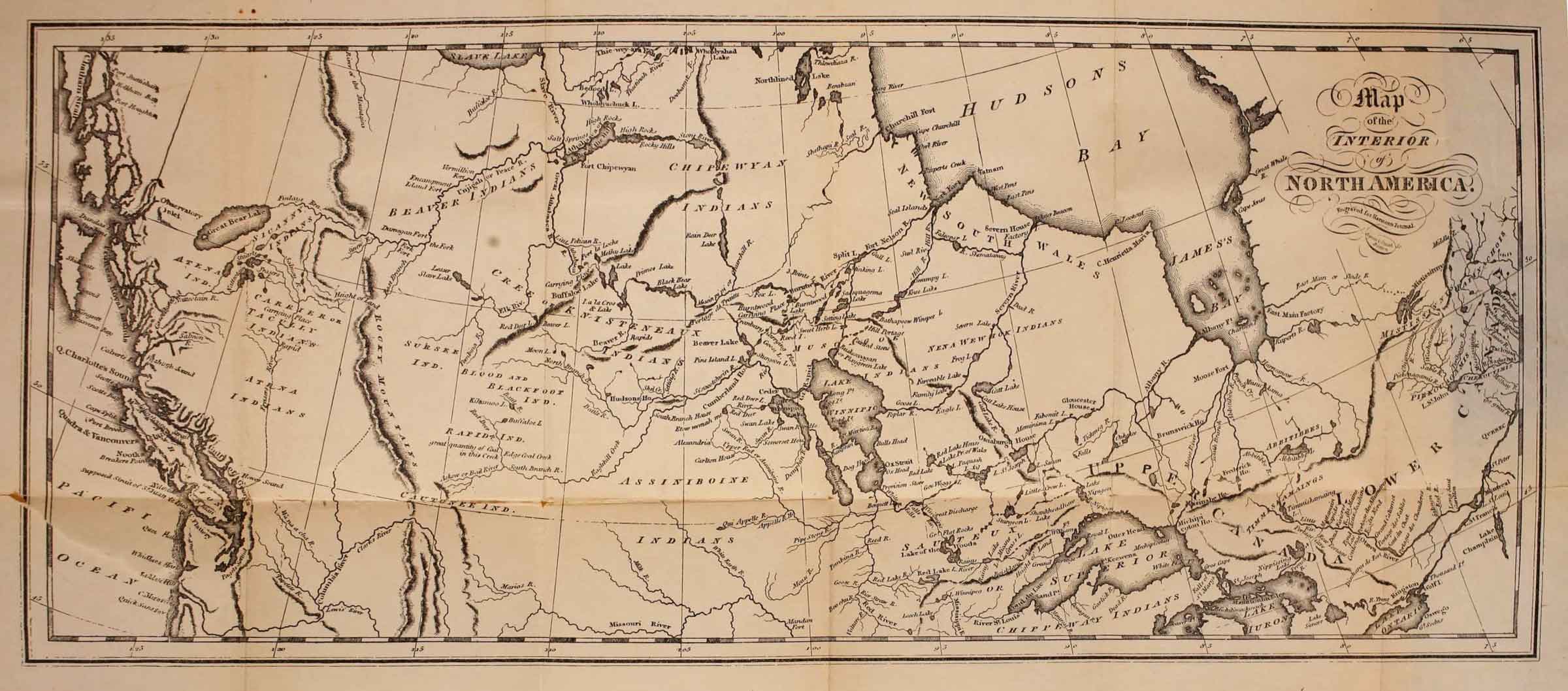
Harmon’s map interior of North America 1820

Map of the interior of North America, engraved for Harmon’s Journal

Map of the interior of North America, engraved for Harmon’s Journal Internet Archive


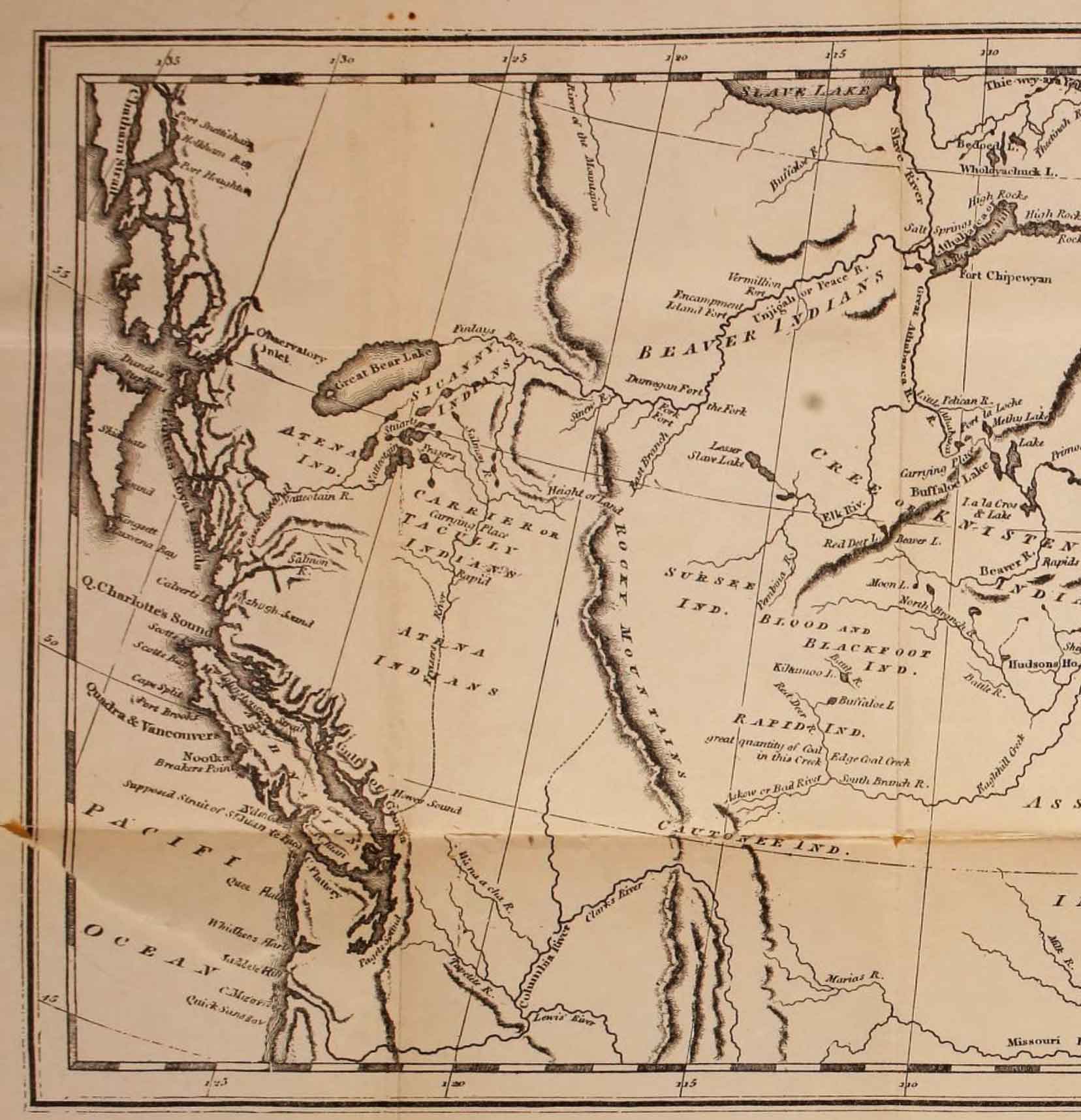
Map of the interior of North America (detail), engraved for Harmon’s Journal

Map of the interior of North America (detail), engraved for Harmon’s Journal

Daniel Williams Harmon [1778–1843] was a fur trader and diarist. Harmon was born in Bennington, Vermont, and died in Sault-au-Récollet (Montreal North), Lower Canada. He joined the North West Company in 1800 and gradually moved westward. He took as a common-law wife Elizabeth (Lizzette) Laval or Duval (ca. 1790 – 1862) in 1805, at South Branch House on the South Saskatchewan River. They legally married in 1819, at Fort William, Ontario, and had 12 children.

Harmon arrived in New Caledonia in 1809. There he served for ten years at Fort Saint James and Fort Fraser.

The map seems largely based on Mackenzie’s map North America 1803.

This map includes:
Finlay River
Fraser River
Unjigah River [as “Unjigah or Peace R.”]

Tribes
Atena Indians
Beaver Indians
References:

  • Harmon, Daniel Williams [1778–1843]. A Journal of Voyages and Travels in the interior of North America between the 47th and 58th degree of North latitude, extending from Montreal nearly to the Pacific Ocean, a distance of about 5000 miles, including an account of the Principal occurrences during a residence of nearly nineteen years in different parts of that country. To which are added A Concise Description of the face of the Country, Its Inhabitants, their manners, customs, laws, etc.. Burlington, Vermont: 1820, endpocket. Internet Archive

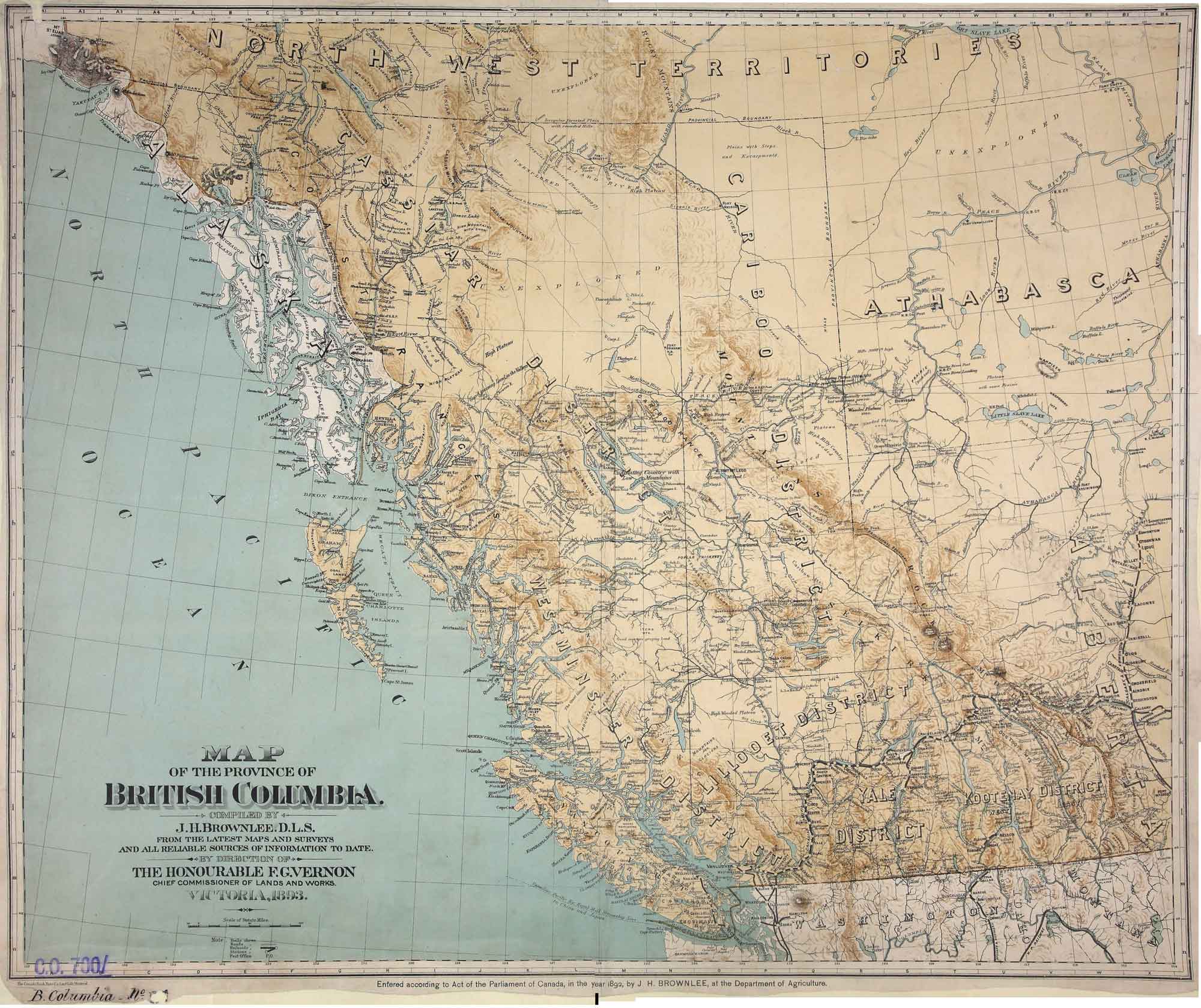
Brownlee’s map Province of BC 1893

Map of the Province of British Columbia. Compiled by J. H. Brownlee, D.L.S., from the latest Maps and Surveys and all reliable sources of information to date.

Map of the Province of British Columbia. Compiled by J. H. Brownlee, D.L.S., from the latest Maps and Surveys and all reliable sources of information to date.
UVic Libraries


Detail of map of BC compiled by J. H. Brownlee, D.L.S.

Detail of map of BC compiled by J. H. Brownlee, D.L.S.
UVic Libraries

Map of the Province of British Columbia.
Compiled by J. H. Brownlee, D.L.S.
From the latest Maps and Surveys and all reliable sources of information to date.
By direction of
The Honourable F. G. Vernon,
Chief Commissioner of Lands and Works.
Victoria, 1893.
Lithographed by the Canada Bank Note Co. Limited, Montreal.

Physical repository: National Archives (Great Britain)

References:

  • Brownlee, James Harrison, D.L.S. [d. 1934]. Montreal: Map of the province of British Columbia. Compiled by J.H. Brownlee, D.L.S. from the latest maps and surveys and all reliable sources of information to date by direction of the Honourable F.G. Vernon, Chief Commissioner of Lands and Works. (1893). UVic Libraries

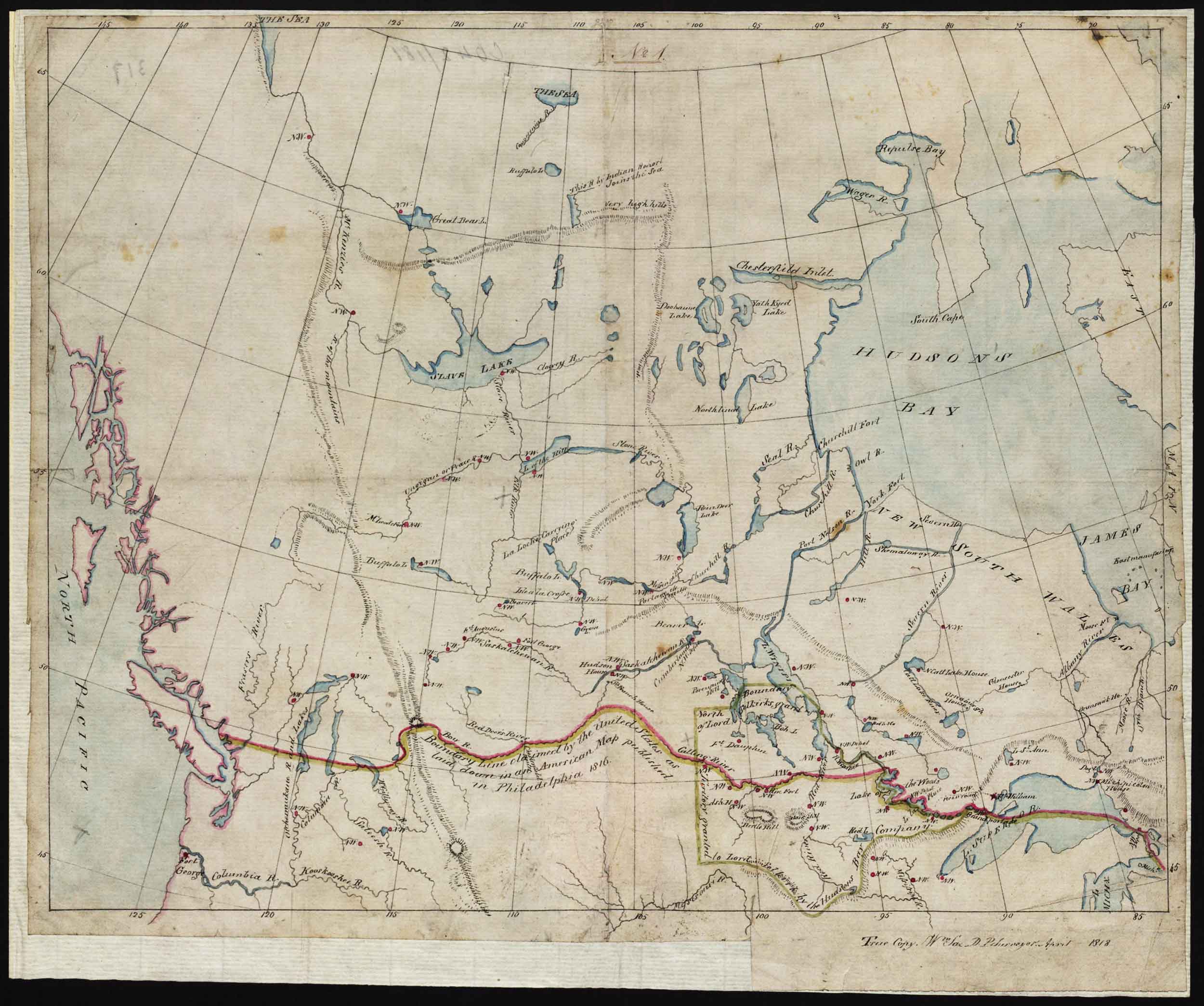
William Sax map North America 1818

Map of Indian Territories to accompany the report of the Coltman mission. William Sax, 1818. The red horizontal line is “Boundary line claimed by the United States as laid down in an American map published in Philadelphia 1816.”

Map of Indian Territories to accompany the report of the Coltman mission. William Sax, 1818. The red horizontal line is “Boundary line claimed by the United States as laid down in an American map published in Philadelphia 1816.”
Library and Archives Canada [accessed 19 February 2025]


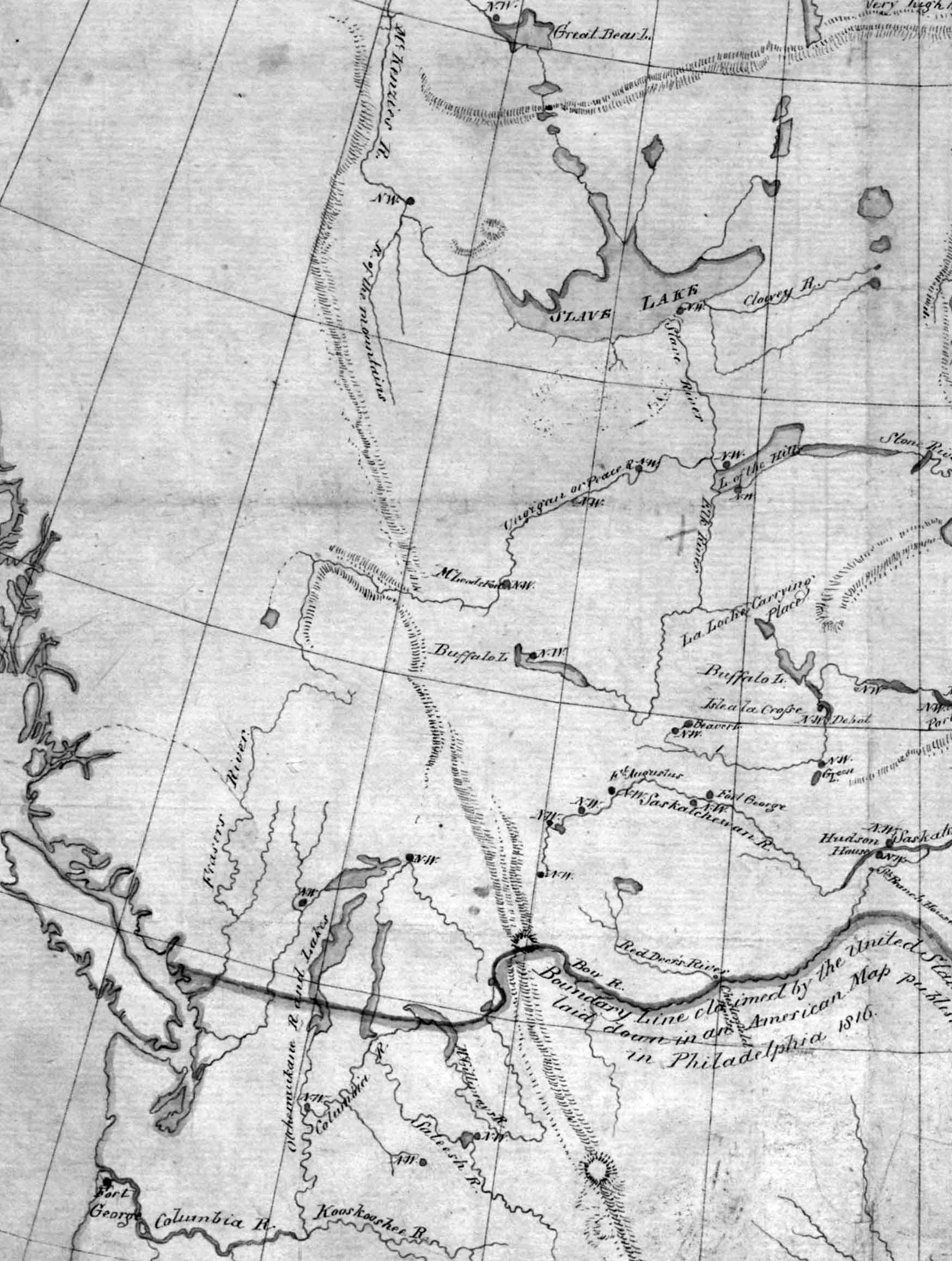
North America. The continent west of the Great Lakes north of about 45°N. Detail

North America. The continent west of the Great Lakes north of about 45°N. Detail
Library and Archives Canada [accessed 19 February 2025]


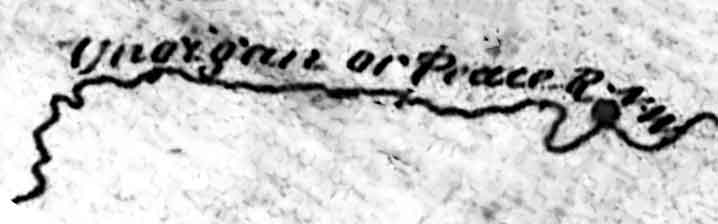
Detail of Peace River

Detail of Peace River
Library and Archives Canada [accessed 19 February 2025]

William Sax [1774–1840], First Clerk in the Surveyor General’s Office of Canada, was active ca. 1795 – 1835. He drafted this map to accompany the 1818 report of William Bacheler Coltman, commission of the peace for the Indian territory of the northwest, regarding the struggle between the Hudson’s Bay Company and the North West Company for hegemony in the fur trade.

This map includes:
Columbia River
Fraser River [as “Fraser’s River”]
Mackenzie River
Peace River [as “Unjigah or Peace River”]
Unjigah River
References:

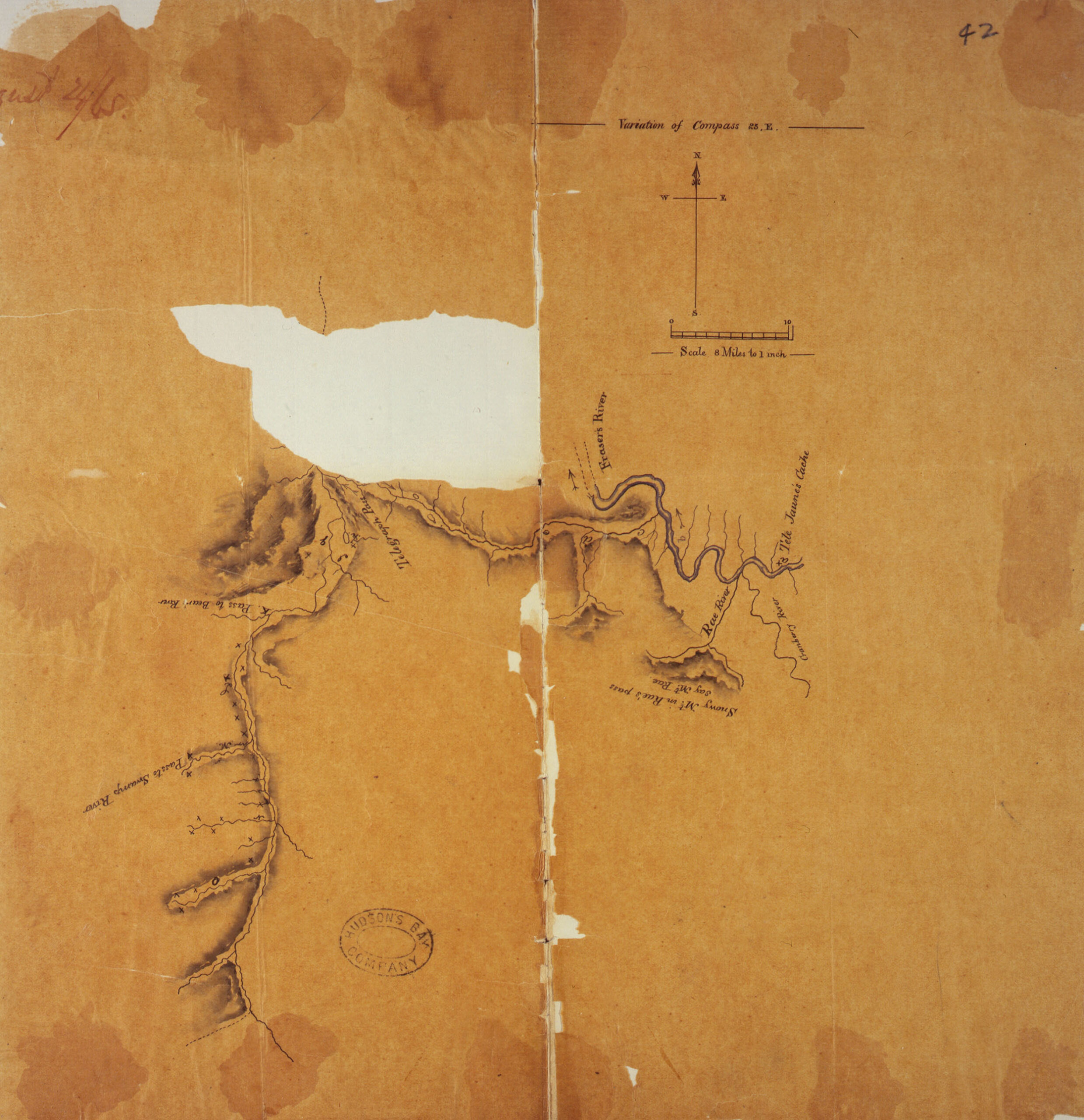
Survey of Telegraph Creek

Survey of Telegraph Creek and upper part of Shuswap River near Tete Jaune Cache, May 1865

Survey of Telegraph Creek and upper part of Shuswap River near Tete Jaune Cache, May 1865 University of Victoria

J.W. McKay, Survey of Telegraph Creek and upper part of Shuswap River near Tete Jaune Cache, May 1865. Hudson’s Bay Company Archives, E.15/13 fo. 42.

The Colonial Despatches of Vancouver Island and British Columbia 1846-1871, Edition 2.4, ed. James Hendrickson and the Colonial Despatches project. Victoria, B.C.: University of Victoria.

In 1864

References:

  • Rae, John [1813–1893]. “Report on telegraph survey to the Pacific, 1864.” Sanford Fleming papers, MG 29 B 1, Vol. 40, File 284, National Archives of Canada, Ottawa (1864)

1911 Schäffer map

Section of Canadian Rocky Mountains visited during 1907 and 1908

Section of Canadian Rocky Mountains visited during 1907 and 1908
Internet Archive


Outline Map of
SECTION OF CANADIAN ROCKY MOUNTAINS.
Visited during 1907 and 1908.
Sources of information : J. McEvoy’s Survey Map of 1900, Dr. J. Norman Collie’s Sketch Map

Insert: Map of Alberta and British Columbia from “Map of Dominion of Canada 1910.” Shows railway routes, constructed and proposed: Canadian Pacific Railway, Grand Trunk Pacific Railway, Canadian Northern Railway.


Mary T. S. Schäffer Warren [1861–1939] explored around Mount Robson in 1908, shortly before the arrival of the Grand Trunk Pacific. This map accompanied the account of her travels, Old Indian Trails.

References:

  • Schäffer Warren, Mary T. S. [1861–1939]. Old Indian trails. Incidents of camp and trail life, covering two years’ exploration through the Rocky Mountains of Canada. [1907 and 1908]. New York: Putnam, 1911, p. 361. Internet Archive

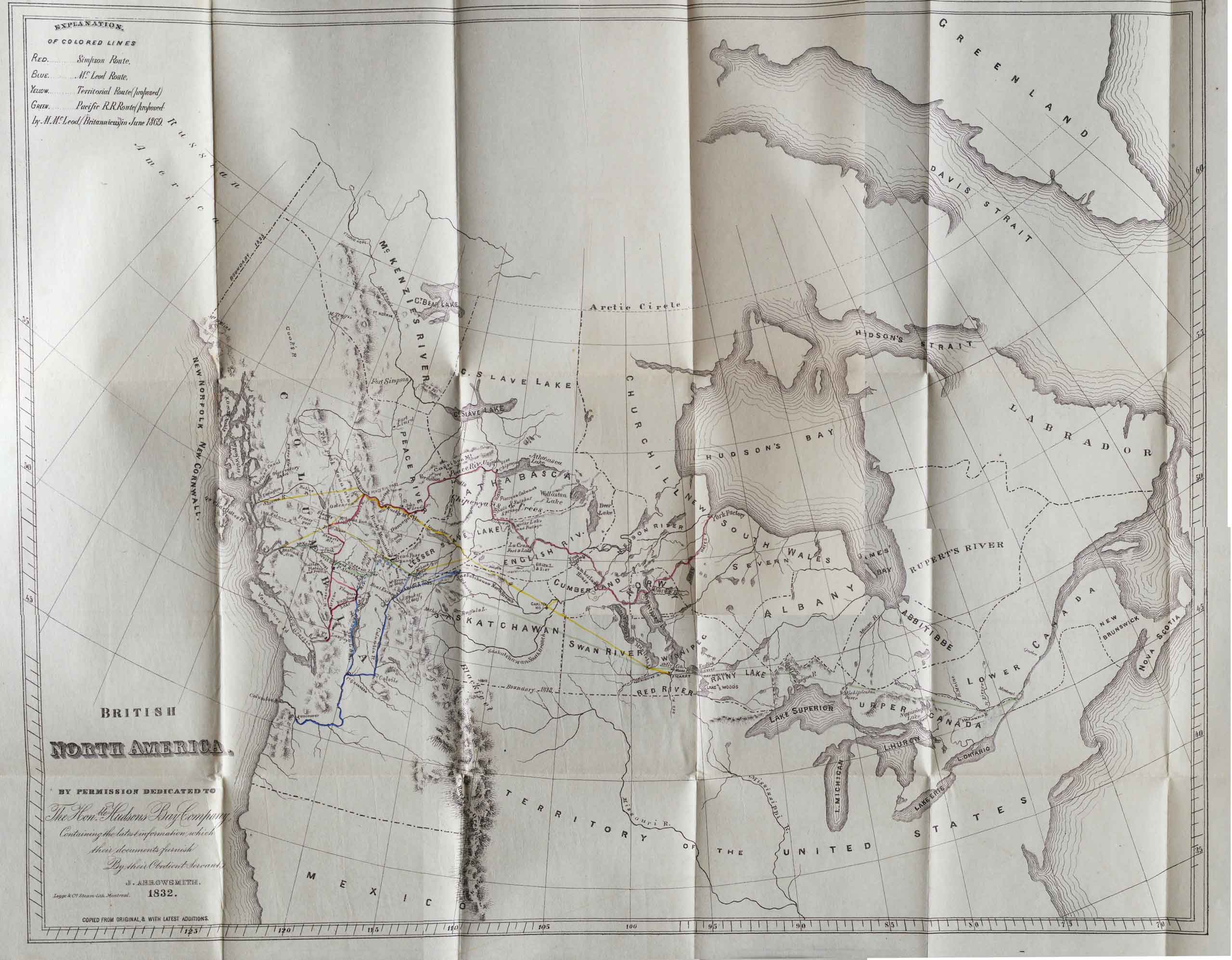
John Arrowsmith’s map British North America 1832

J. Arrowsmith, 1832. British North America

J. Arrowsmith, 1832. British North America University of British Columbia Library


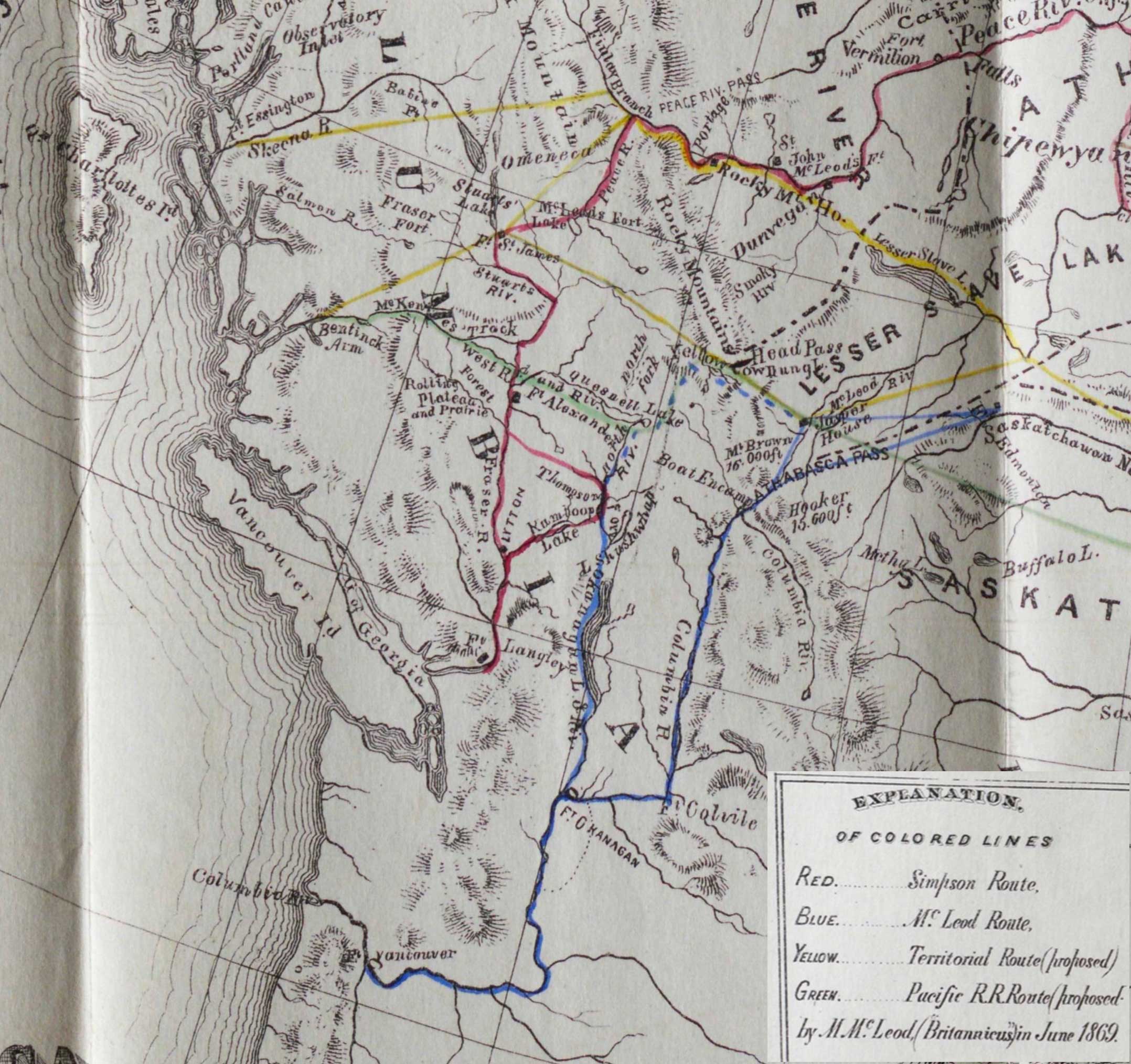
J. Arrowsmith, 1832. British North America (detail)

J. Arrowsmith, 1832. British North America (detail)

British North America
By Permission Dedicated to the Hon. Hudsons Bay Company
Containing the latest information which their documents furnish
By their Obedient Servant
J. Arrowsmith 1832.
Legge & Co Steam-lith./ Montreal

This edition of the map is from from Archibald McDonald’s journal of an 1828 trip accompanying George Simpson [1792–1860]. It includes a notice that the map is “Copied from original, & with latest additions.” The latest additions might be the “colored lines,” Red being the Simpson Route, Blue the McLeod Route, Yellow the proposed Territorial Route, and Green the proposed Pacific R.R. route. Additions credited to “M. McLeod (Britannicus) in June 1869.”

On the map the Athabasca River is labelled “McLeod Riv.” Fort George is not named.

Map No. 101 in Voorhis [1].

References:

  • 1. Voorhis, Ernest [1859–1933]. Historic forts and trading posts of the French Régime and of the English Fur Trading Companies. Ottawa: Department of the Interior, 1930. University of British Columbia Library [accessed 3 January 2026]

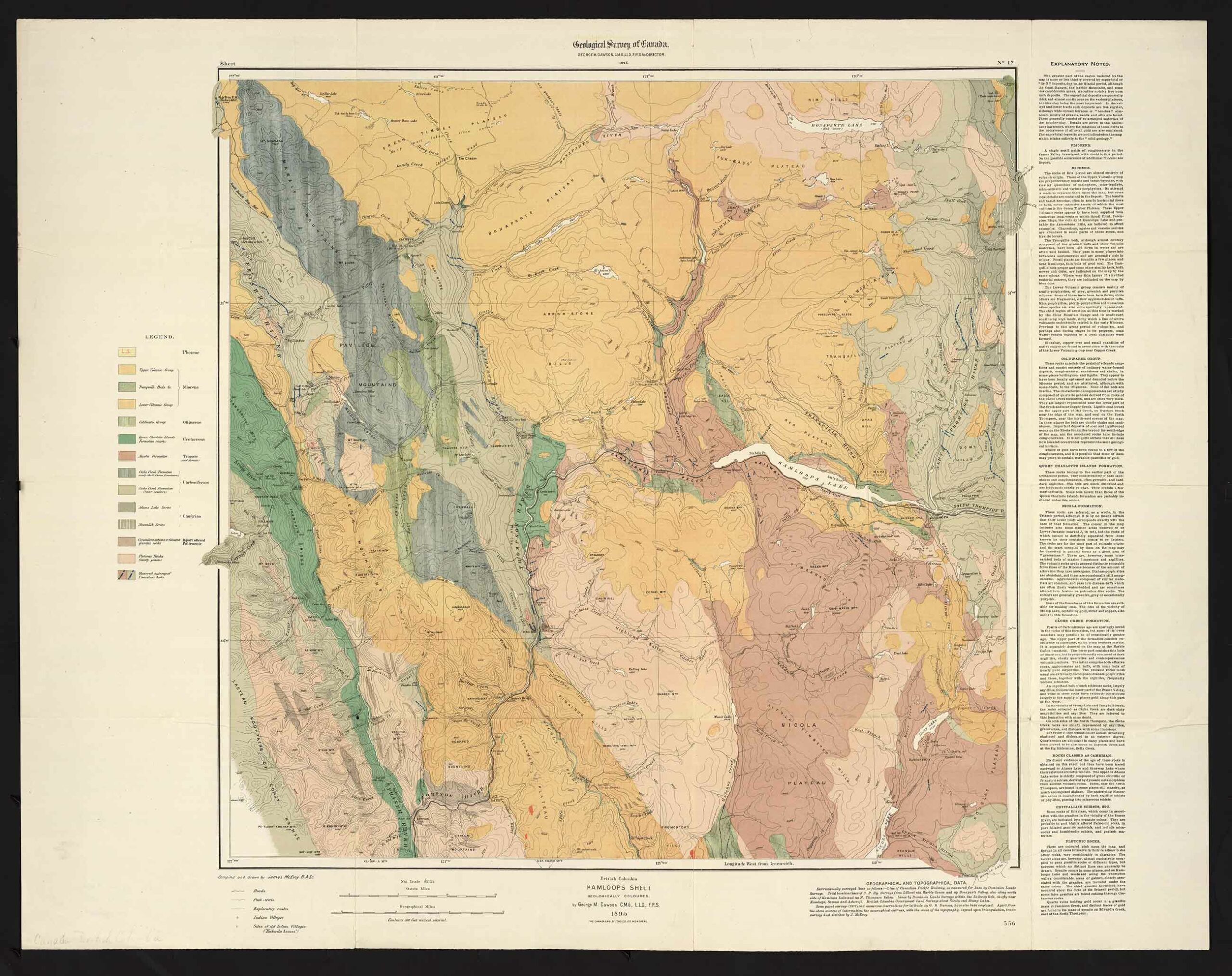
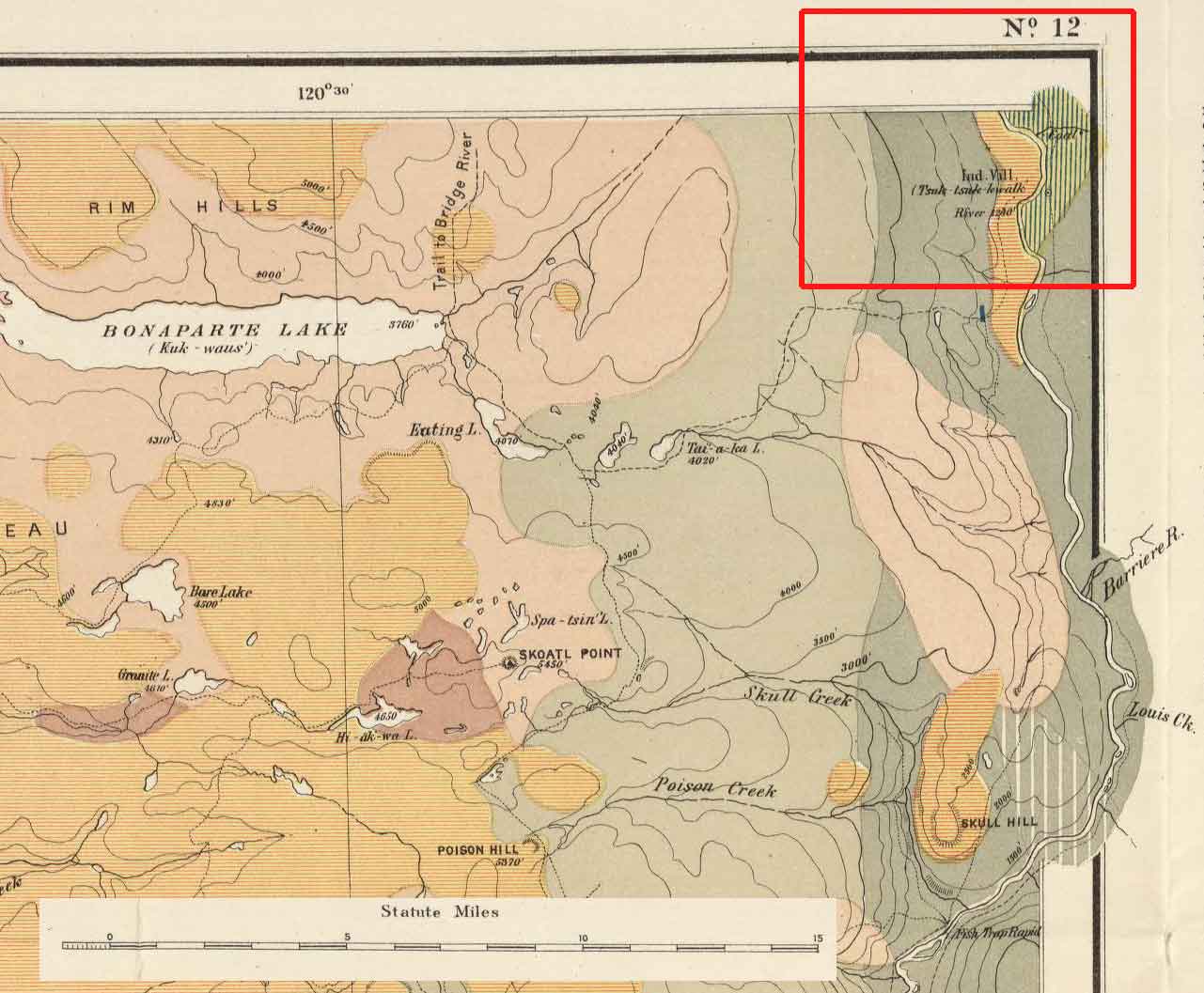
Dawson’s Kamloops Sheet 1895


Geological Survey of Canada
British Columbia
KAMLOOPS SHEET
GEOLOGICALLY COLOURED.
by George M. Dawson C.M.G., L.L.D., F.R.S.
1895
Compiled and drawn by James McEvoy B.A.Sc.

George Mercer Dawson [1849–1901] engaged in geological work in the southern inland portion of British Columbia during the years 1877, 1888, 1889 and 1890, frequently accompanied by James McEvoy [1862–1935].

This map includes:
Tsuk-tsuk-kwalk
References:

  • Dawson, George Mercer [1849–1901]. “Notes on the Shuswap people of British Columbia.” Transactions of the Royal Society Canada, Section 2 (1891). University of British Columbia

Grand Trunk Pacific Railway maps – J. A. Lower, 1939

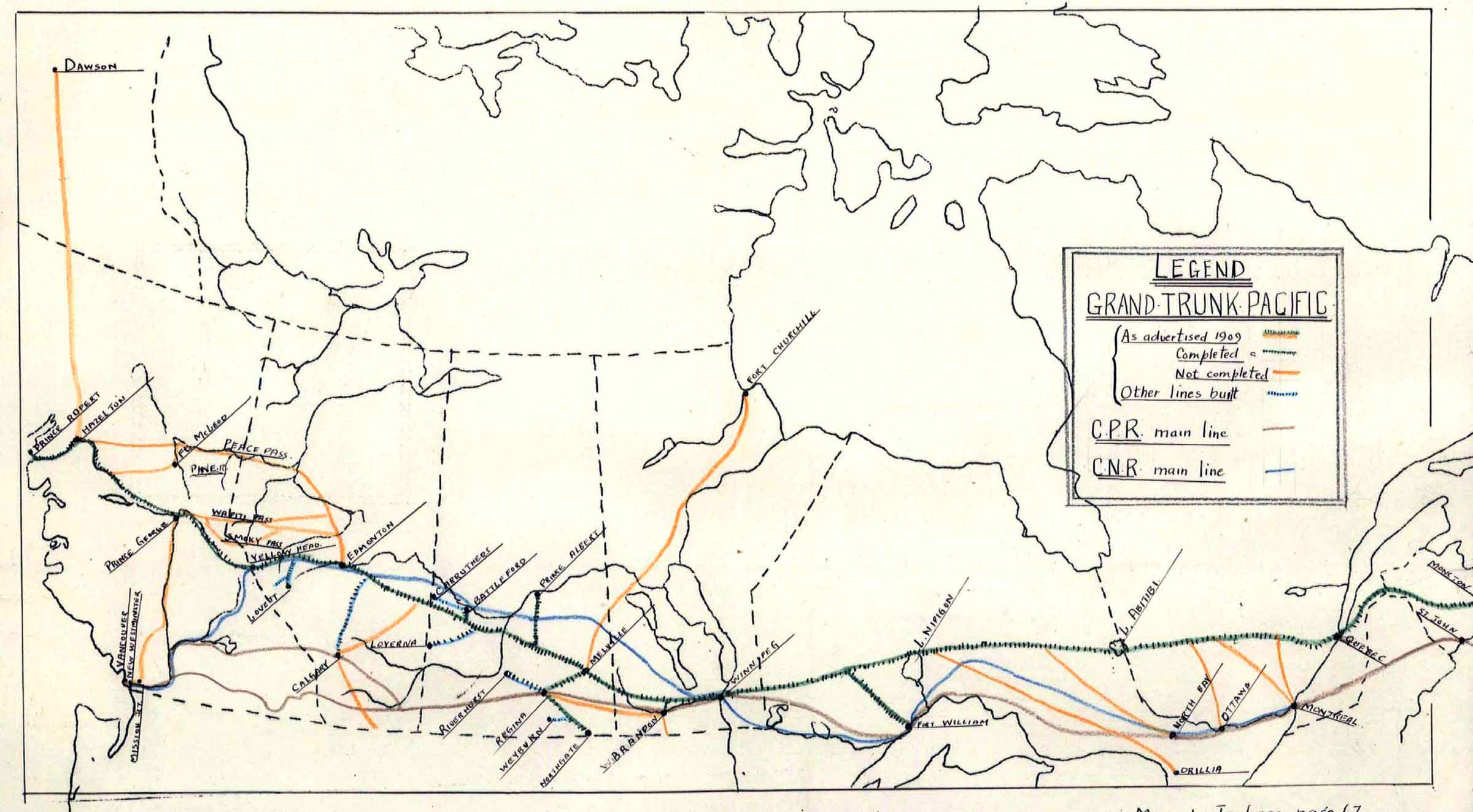
Lower, Joseph Arthur. The Grand Trunk Pacific Railway as projected

Lower, Joseph Arthur. The Grand Trunk Pacific Railway as projected


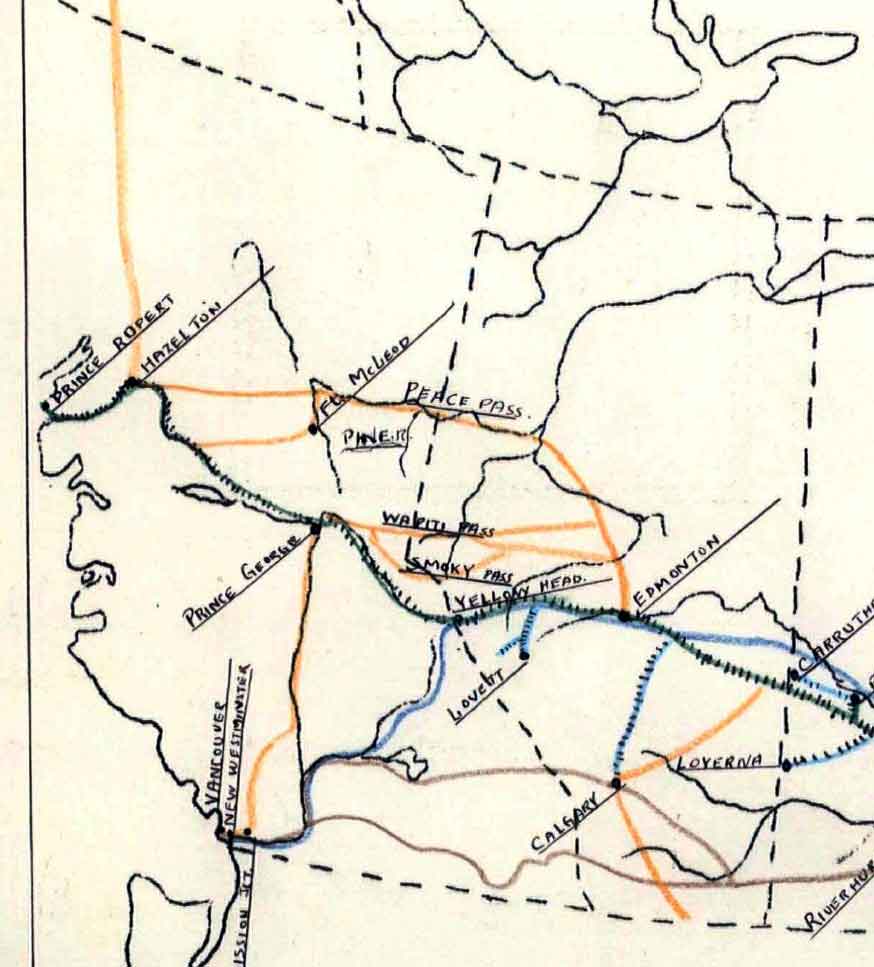
Lower, Joseph Arthur. The Grand Trunk Pacific Railway as projected, detail

Lower, Joseph Arthur. The Grand Trunk Pacific Railway as projected, detail


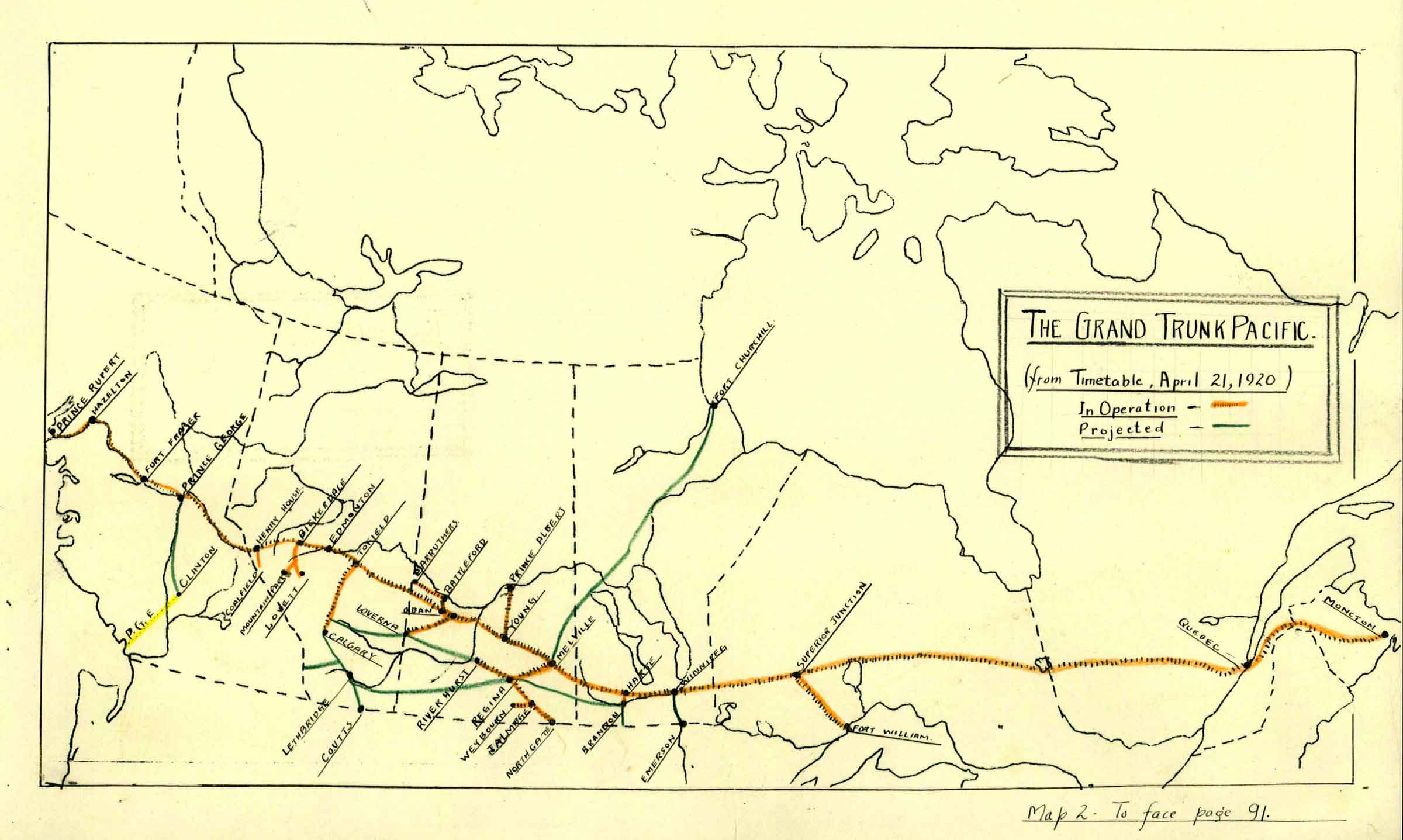
Lower, Joseph Arthur. The Grand Trunk Pacific Railway, projected and operational routes, 1920

Lower, Joseph Arthur. The Grand Trunk Pacific Railway, projected and operational routes, 1920

References: